
Cement mortar lining is a layer of cement and sand mortar placed against the bore of a steel water pipe. Its protection mechanism is both chemical and physical. Cement hydration leaves a strongly alkaline condition at the steel face, and steel held that way passivates rather than corrodes. The mortar body then occupies the space where pipe scaling would otherwise build, so a main keeps its carrying capacity through decades of service. Thickness separates it from every resin lining: millimetres of rigid mortar. Cement-mortar lining has protected water mains since the 1800s and remains widely specified for steel water mains.
Radisson Impex is a pipe coating contractor in Mumbai, and cement mortar lining is one of the internal systems we apply. Our company was established in 2012 and holds ISO 9001 certification. Our lining scope takes in steel pipe with bores of 3 inches through 36 inches, at lengths reaching 18 metres and unit weights reaching 24 tonnes. Mild steel, LTCS and alloy steel are the substrates, across seamless, ERW, LSAW and spiral welded products, with fittings, bends and flanges lined on the same job. Applied mortar measures 6.5 mm to 12 mm, and the work follows AWWA C205 where your project names that document. Rates are set per square metre against a 200 square metre minimum.

Cement Mortar Lining Service Options
Factory lining at our Vasai works, plus in-place lining on site.
-
At our facility
Factory lining
- Vasai factory
- Pipe transport arranged
-
At your project site
In-place lining
- Installed pipelines
- Lined without removal
How Cement Mortar Lining Protects a Steel Bore
Three mechanisms operate inside a lined main: passivation of the steel at the mortar interface, a rigid barrier of real thickness, and a protected bore that limits the conditions that lead to tuberculation. Together, these mechanisms explain the continued use of cement-mortar lining in steel water pipelines. Mortar is the one system in our internal pipe coating range measured in millimetres.

-
Passivation at the Mortar Interface
Steel sitting against hydrated cement behaves differently from steel sitting against water. Alkalinity from the cement keeps a passive oxide layer stable on the pipe wall, and that layer stops the corrosion reaction. Fine shrinkage cracking does not automatically compromise protection; acceptable cracks may heal autonomously under suitable moist conditions, subject to the applicable specification.
-
A Barrier With Real Thickness
At 6.5 mm to 12 mm, the lining takes the abrasion from suspended silt in a raw water main, giving wear a thick section to work through. Rigidity is a noteworthy feature of this system. The lining resists flowing media well and tolerates impact less well than the pipe around it, so lined lengths don't take the knocks that bare ones shrug off.
-
Tuberculation Control and Carrying Capacity
Tuberculation causes costly utility revenue losses through reduced water flow long before pipes actually leak. Corrosion nodules grow off an unprotected wall, roughen it, and progressively strangle the flow area until pumping heads climb and delivery falls short of design. Cement mortar lining steel pipe removes the condition those nodules need. It limits internal corrosion and tuberculation, helping maintain the hydraulic cross-section assumed in the pipeline design.
Cement Mortar Lining Specifications
These cement-lined pipe specifications state what we accept and what we apply. The table summarises the pipe sizes, pipe types and materials we line, the lining scope and the principal standard for water-pipeline work.
| Parameter | Scope |
|---|---|
| Lining system | Internal cement and sand mortar lining applied to the pipe bore |
| Standard | Carried out in accordance with AWWA C205 where the project specification names it |
| Lining thickness | 6.5 mm to 12 mm |
| Bore size range | 3 inch to 36 inch |
| Pipe types accepted | Seamless, ERW, LSAW, spiral welded (HSAW) |
| Substrates accepted | Mild steel (MS black), LTCS, alloy steel |
| Line pipe | API 5L line pipe, Grade B through X120 |
| Components lined | Straight pipe, fittings, bends, flanges |
| Substrate condition | New pipe, plus cleaning and re-lining of old, used or rusted pipe |
| Maximum pipe length | 18 metres |
| Maximum weight per pipe | 24 tonnes |
Cement Mortar Lining Standards
Cement mortar lining of water pipelines is governed by different documents depending on the pipe material, and that split matters when a tender quotes a designation. AWWA C205 covers shop-applied lining of steel water pipe. AWWA C602 covers cement mortar lining of pipelines that are already installed. Several designations below were written for ductile iron pipe and are listed for reference when a tender quotes them. A cement mortar lined steel pipe falls under AWWA C205 for shop lining or AWWA C602 for lining in place, and the ductile-iron documents apply to ductile-iron pipe.
- USA (AWWA)
- AWWA C205-24Cement-Mortar Protective Lining and Coating for Steel Water Pipe, 4 In. (100 mm) and Larger, Shop Applied. Covers material, application and curing of the mortar lining and the external mortar coating, plus field jointing of lined and coated pipe
- USA (AWWA)
- AWWA C602-23Cement-Mortar Lining of Water Pipelines in Place, 4 In. (100 mm) and Larger. Written for lining new and old steel, ductile iron and cast iron pipelines that have already been installed
- USA (ANSI/AWWA)
- ANSI/AWWA C104/A21.4-22ANSI/AWWA C104/A21.4-22 covers cement mortar lining for ductile iron pipe and fittings. Shop-applied lining on ductile iron pipe and on ductile and grey iron fittings
- International (ISO)
- ISO 4179:2024Ductile iron pipes and fittings for pressure and non-pressure pipelines. Cement mortar lining
- Europe (EN)
- EN 545:2010Ductile iron pipes, fittings, accessories and their joints for water pipelines. Cement mortar lining forms part of the standard internal specification, DN 40 to DN 2000
- India (IS)
- IS 11906:1986 (reaffirmed 2022)Recommendations for cement mortar lining for cast iron, mild steel and ductile-iron pipes and fittings for transportation of water. The Indian document that reaches mild steel
Two points require particular attention when AWWA C205 is referenced in an Indian tender. AWWA C205 covers steel water pipe of 4 inches and larger. Our smallest bores sit below that size, so the standard for those lengths needs agreement before award. AWWA C205 covers both internal cement-mortar lining and external reinforced cement-mortar coating. Concrete weight coating, used for negative buoyancy on submerged lines, is a separate service.
Features and Benefits of Cement Mortar Lining
Six properties keep CML in water specifications despite the arrival of newer lining chemistries, and each shows up on a project as cost, hydraulics or risk.
-
Limited shrinkage cracking can undergo autogenous healing under suitable curing and service conditions. Cement mortar can develop shrinkage cracks, but acceptable fine cracking does not necessarily compromise the alkaline environment at the steel interface. Alkalinity carried through the mortar keeps the exposed steel passive.
-
Hydraulic capacity that holds. Design flow holds because the lining limits tuberculation. On a transmission main, that saves pumping energy every year the line runs.
-
Abrasion tolerance from thickness. Raw water carrying silt wears a lining rather than a film, and 6.5 mm to 12 mm of mortar gives that wear somewhere to go.
-
Materials that suit a water utility budget. Cement and sand cost a fraction of the resins used in bore linings, so the lined metre comes in more cost-effective on large-diameter mains.
-
A bore finish suited to potable duty. Mortar has a long record on potable mains and gives a smooth mineral surface, and fresh linings can raise water pH and alkalinity for a short period after installation.
-
Old pipe can be relined. Rusted lengths clean back to bare steel and take fresh mortar.
Cement Mortar Lining Process
Cement mortar pipe lining runs in three stages: the bore is cleaned, mortar is placed against the wall to the specified thickness, and the lining cures before the pipe moves. Straight lengths, fittings and bends all follow that cement lining procedure, and what changes between them is how the mortar reaches the surface.
-
Bore Preparation
Preparation decides how well the mortar sits. The internal surface is cleaned of mill scale, loose rust, oil and any previous lining, because mortar placed over a contaminated wall will not hold its position while it sets. We inspect the prepared bore before mortar is batched.
-
Mortar Application to the Bore
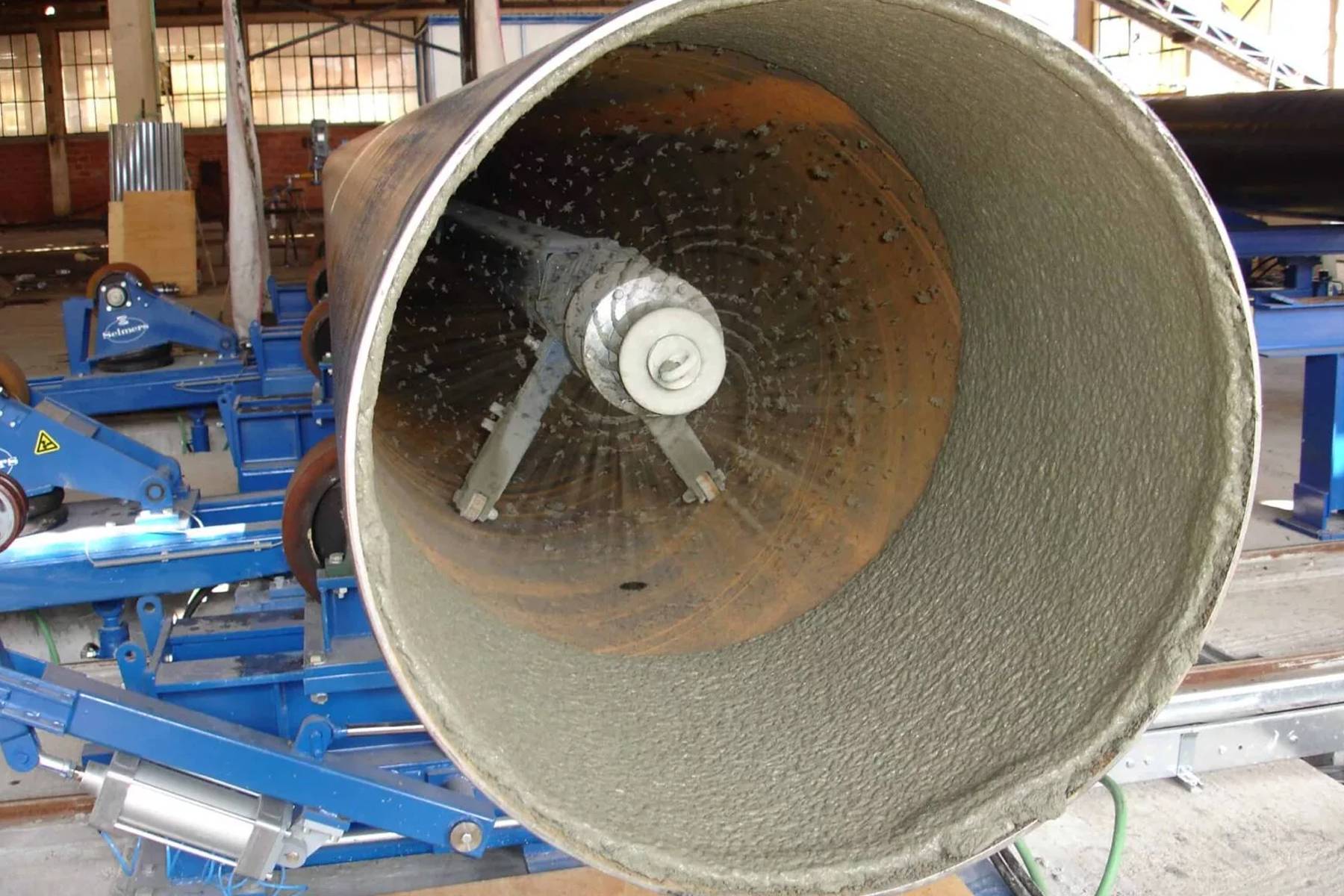
Mortar goes onto the cleaned wall and is worked to the thickness your specification states. AWWA C205 calls for the lining on straight pipe to be applied by centrifugal spinning or by a method producing equivalent results, and it provides for mechanical placement, pneumatic placement or hand application on mitres, bends, reducers and other shapes that spinning cannot reach. The finish that the standard asks for is smooth and dense, which carries the hydraulic argument for the lining.
-
Curing and Handover
Cement gains its properties by hydration, so the lining is held under controlled conditions until it has cured. The cured bore is then examined, thickness records go into the job file, and the lining report travels with the pipe.
Cement Mortar Lining Thickness and Performance
Our standard lining capability is 6.5 mm to 12 mm. The specified thickness depends on the pipe bore and project requirements, and any thickness outside this range is confirmed separately before the job starts. Binder choice and post-cure handling are the other two variables worth settling before a purchase order is placed.
Where Your Pipe Fits in the 6.5 mm to 12 mm Band
Larger bores generally carry more mortar, while a small distribution size takes less. Your own specification governs the figure. Where it states none, we propose one against the bore size and confirm it in writing before starting.
Cement Selection for the Service Water
Binder type follows the water. Ordinary Portland cement covers treated potable and general water duty. Sulphate resisting cement answers sulphate-bearing water and sewage service, high alumina cement appears in some sewerage specifications, and blast furnace slag cement turns up on European documents. The specification names the binder, so send the water analysis wherever the duty is anything other than treated supply.
Handling the Cured Lining
Lined pipe needs handling discipline that bare pipe does not. Mortar is strong in compression and unforgiving of impact and bending, so lengths get supported along the barrel rather than slung at the ends. Damage found before installation is repaired before the pipe goes into the line.
Send Us Your Pipe Schedule for a Coating Quote
Send the full schedule with the enquiry and the scope prices as one lot.
Cement Mortar Lining Testing and Inspection
Verification on a mortar lining works differently from verification on a coating film. Thickness and cure state decide whether the lining performs, and the finished bore is then checked for surface quality and cracking. Each check is measured and recorded against every job.
-
Lining thickness
Depth readings are taken around the bore and along the length, then compared with the thickness and tolerance in your specification. Every figure we apply sits within our 6.5 mm to 12 mm range.
-
Cure verification
The lining is confirmed as properly hydrated and hardened before the pipe is released, because mortar released early will dust and erode under first flow.
-
Surface and bond examination
The finished bore is checked for the smooth, dense surface the standard requires and for hollow or debonded areas. Anything found is cut out, rebuilt and re-examined.
-
Crack inspection
Shrinkage and temperature cracks are measured against the limits in your specification. Under AWWA C205, cracks up to 1/16 inch (1.6 mm) wide generally need no repair, and wider cracks are repaired unless they are shown to heal autogenously in constant moisture.
Cement Mortar Lining Industrial Applications
Cement mortar lining is used mainly on water pipelines, and the four end uses below cover the main applications. Bore size, water chemistry and flow duty separate them.
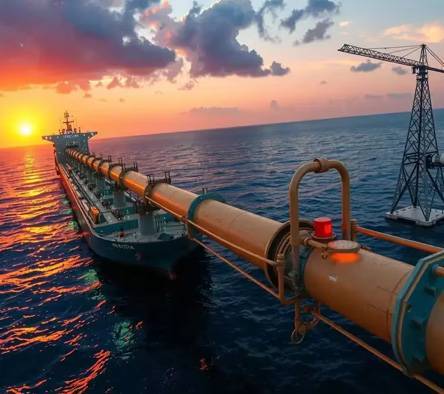
Potable and Raw Water Transmission Mains
Long distance water transmission is the original application and remains the largest. A transmission main is sized on a hydraulic calculation assuming the bore stays as built, and mortar is the lining that has demonstrated it will. Raw water schemes drawing from rivers add suspended solids, which the lining thickness absorbs. Where a project calls for an epoxy lining in drinking-water service, food grade epoxy coating is the option we apply.

Water Distribution Networks
Distribution runs at smaller bores and higher fitting counts than transmission. Cement lining protects the steel by the same mechanism at these sizes, and fittings, bends and flanges take the same mortar as the straight lengths, so protection stays unbroken where flow is most disturbed. Municipal systems are also where tuberculation surfaces first, as complaints about discoloured water.

Sewage and Effluent Rising Mains
Effluent duty is harder on a lining than clean water. Sulphide, swinging pH and abrasive solids all attack the bore, and sewerage specifications commonly call for a sulphate resisting binder in response. Mortar can serve rising mains when the binder and thickness match the effluent. On aggressive effluent, a thicker lining, a different cement type or a seal coat is agreed against the effluent analysis.
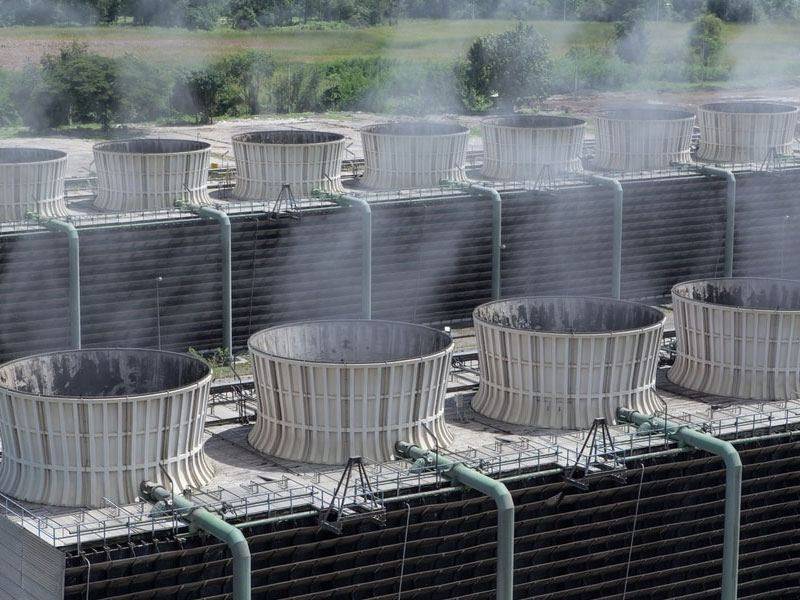
Cooling Water and Industrial Process Lines
Plant cooling circuits move large volumes of treated water through steel headers, and internal corrosion there fouls heat exchangers downstream. The lining separates the steel substrate from the circulating water and limits internal corrosion products. Fire water ring mains sit in the same category: rarely flowing, permanently wet, and dependent on a bore that has not closed up when the system is finally called on.
Cement Mortar Lining Cost
Lining is charged per square metre of bore area, and the minimum order on a cement mortar job is 200 square metres. There's no single rate, because two pipes of identical length can carry very different amounts of work. Five things move the figure on a quotation:
- Bore size and total lined length, since a narrow bore costs more per square metre to reach and finish
- Specified thickness within the 6.5 mm to 12 mm range
- Binder called for by the water analysis, as sulphate resisting and high alumina cements price above ordinary Portland
- Substrate condition, because stripping an old lining is work that new pipe does not need
- Proportion of bends, fittings and flanges in the schedule, since shaped components take longer per square metre than plain barrel
Why Choose Radisson Impex for Cement Mortar Lining
Water utility work rewards cement mortar lining contractors who can document what they applied.
- Thickness is a stated capability at 6.5 mm to 12 mm rather than an open question, and the applied figure comes from your specification inside that band.
- Work follows AWWA C205 where a project names it, and we'll tell you plainly where a designation in your tender was written for a pipe material other than steel.
- Shaped components are lined alongside straight lengths, so a mixed schedule does not need splitting between two vendors.
- Used and rusted pipe goes back to clean steel and takes fresh mortar.
- Thickness records, cure verification and bore examination results are issued as certificates.
Cement Mortar Lining: Frequently Asked Questions
What is Cement Mortar Lining and what is its purpose?
Cement Mortar Lining (CML) is an internal barrier of cement and graded sand applied to water pipelines. It limits tuberculation and internal corrosion by creating a dense, highly alkaline environment that passivates the steel wall.
Is there a code or standard for Cement Mortar Lining?
Yes. AWWA C205 is the standard for shop-applied lining on steel water pipe of 4 inches and larger, and we work to it where the project names it. For bores below 4 inches, the governing standard is agreed before award. In India, IS 11906 gives recommendations for cement mortar lining of cast iron, mild steel and ductile iron pipes and fittings for water.
What Cement Mortar Lining thickness do you apply?
We apply linings between 6.5 mm and 12 mm thick. The figure follows your pipe bore size and project specification, and thickness readings are recorded in the lining report.
Which pipe sizes and materials can you Cement Mortar Line?
We line pipe bores from 3" to 36" across Mild Steel Pipe, LTCS Pipe, and Alloy Steel Pipe up to 18 meters long, handling Seamless Pipe, ERW Pipe, LSAW Pipe, fittings, bends and flanges.
How is Cement Mortar Lining applied to the pipe?
The bore is cleaned, mortar is applied against the wall to the specified thickness, and the lining is cured under controlled conditions before the pipe is released.
Which cement is used for aggressive or sewage service?
Sulphate-resistant cement is commonly specified for sewage and aggressive water service, and high alumina cement appears in some sewerage specifications. The binder follows your project's water analysis.
Is Cement Mortar Lining suitable for potable water pipelines?
Yes. Drinking water transmission is the primary application for cement mortar lining. Fresh linings can raise water pH and alkalinity for a short period after installation.
Can old or previously lined pipe be relined?
Yes. We mechanically clear out damaged linings and rust tubercles, blast the bore back to sound, bare steel, and cast a fresh mortar layer and apply a fresh mortar lining to restore a smooth, protected bore.
Do you provide Cement Mortar Lining services across India?
Yes. We provide cement mortar lining services for EPC contractors and government projects across India, with test certificates and lining reports supplied with every job.
Contact us About Your Lining Scope. Send the pipe schedule, the water analysis and the lining specification, and we'll come back on availability and price.