
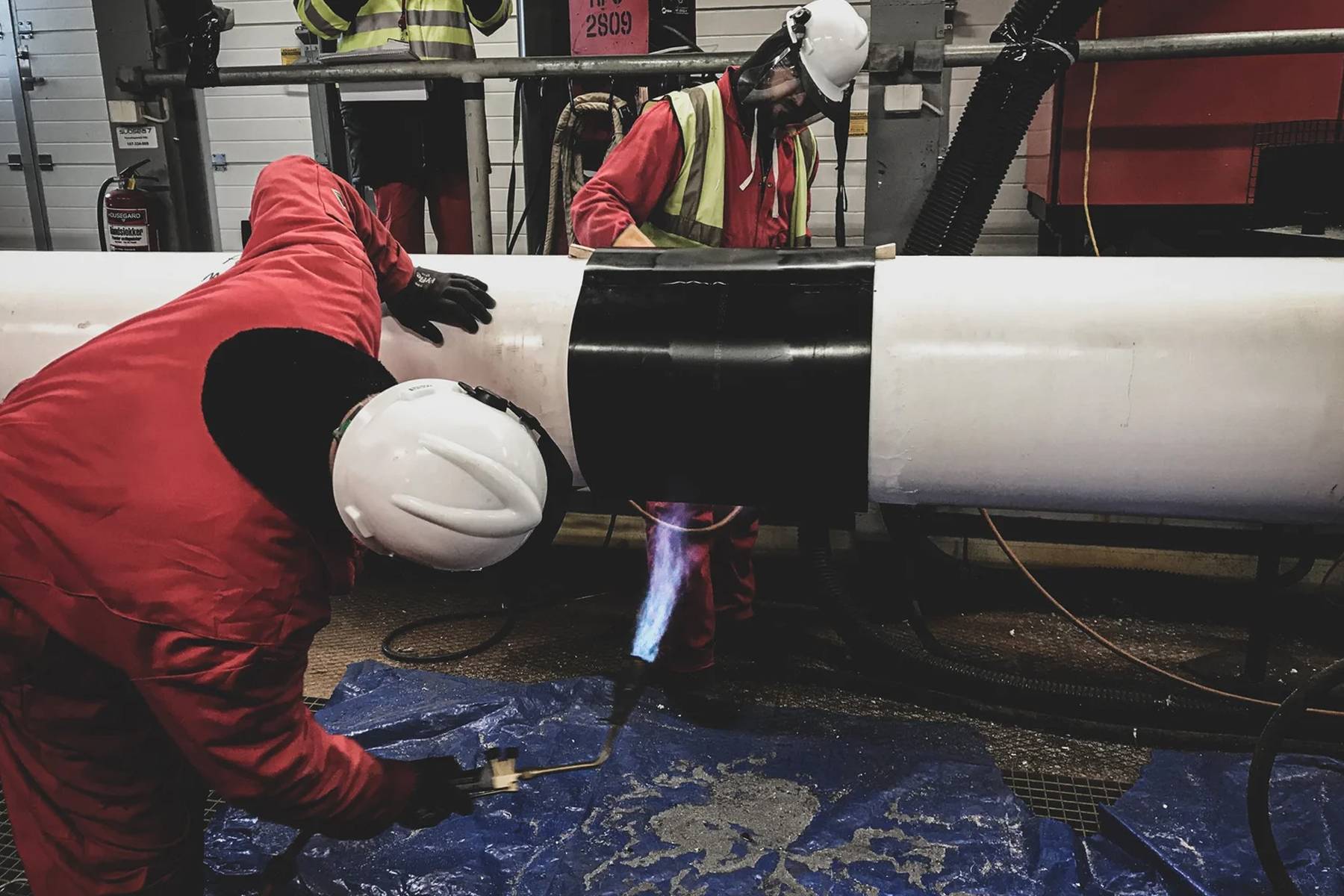
A heat shrink sleeve is a pre-stretched polymer wrap that shrinks around the steel when heated. It covers the exposed area around the girth weld, where two coated pipe sections are joined. Cross-linked polyolefin forms the sleeve’s backing. An adhesive on the inside softens when heated and helps the sleeve seal tightly around the weld and the nearby coating. The same sleeve can be used on bends, reducers, and tie-ins. Tees, valves, and other complex shapes usually require tape or mastic systems. Heat shrink sleeves are commonly used on buried and submerged pipelines because the weld area is completed after the pipe leaves the coating plant.
Radisson Impex supplies heat shrink sleeves for steel pipes and fittings. Our company started in Mumbai in 2012 and is ISO 9001 certified. It may be wraparound or tubular, with an adhesive lining or a separate epoxy primer. Its size depends on the pipe diameter and the cutback at each end. The sleeve must be compatible with the mainline coating. An adhesive that bonds well to polyethylene may behave differently on bare epoxy. Most enquiries come from EPC contractors and government-tender projects. Sleeves are priced per joint, so the total cost depends on the number of joints.
Heat Shrink Sleeves Service Options
Sleeves are supplied pan-India.
-
Supplied to you
Sleeve supply
- Sized to your pipe
- Supplied pan-India
How a Heat Shrink Sleeve Works
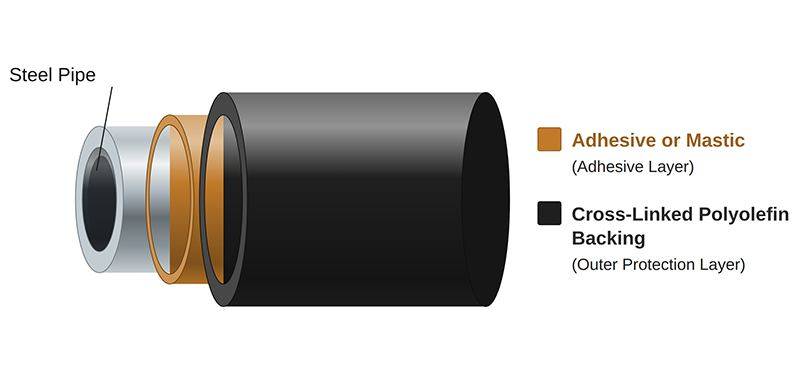
Three components share the work in a heat-shrinkable sleeve: a cross-linked polyolefin backing that holds a remembered shape, an adhesive layer on the inner face, and the recovery force that heat releases in that backing.
-
The Cross-Linked Polyolefin Backing
The backing is a polyolefin sheet, polyethylene on most pipeline products, cross-linked so its polymer chains hold a memory of the dimension they were formed at. Cross-linking gives the sheet an elastic behaviour it wouldn't have as a plain thermoplastic. The sheet is then heated, stretched, and cooled while held in the stretched state, which locks the expanded dimension in until heat arrives again. Mechanical duty falls to this layer as well. Backfill against a weld band is no gentler than backfill against the barrel, so the polyolefin has to absorb the same stone and shear that the mainline jacket absorbs.
-
The Adhesive Layer
Adhesive on the inner face is a hot-melt compound: solid at ambient temperature, mobile once the sleeve warms. Flow is the property that matters. The compound has to wet the prepared steel, fill the anchor profile that preparation leaves, and climb the step where the mainline coating stops, sealing the sleeve to steel and sleeve to coating as one continuous film. A heavier compound suits a proud weld cap or a deep cutback step. Three-layer systems put a liquid epoxy onto the blasted steel first and then take the sleeve over it, which gives the joint the same epoxy-against-steel arrangement the mainline three layer system already has.
-
Recovery Under Heat
Recovery is the contraction the backing performs once heat carries it past its crystalline melting range. Shrink ratio describes how much contraction a product delivers, written as supplied diameter against recovered diameter, and the figure belongs to the individual sleeve rather than to the category. A sleeve made to recover onto a 12 inch line and one made for a 48 inch line are different products. Recovery drives the adhesive layer as well. As the backing pulls in, it presses the softened compound sideways, and a continuous bead of adhesive appearing at both edges is the visible evidence that the squeeze took place.
Heat Shrink Sleeve Specifications
A heat shrinkable sleeve is specified by the joint it has to cover rather than by a catalogue size. The table sets out what an enquiry has to carry.
| Parameter | Basis |
|---|---|
| Coating | Heat shrinkable sleeve for external protection of pipeline joints and fittings |
| Backing material | Cross-linked polyolefin |
| Inner layer | Hot-melt adhesive, with a liquid epoxy primer on three-layer systems |
| Configuration | Wraparound, closed with a separate patch, or tubular, slid on before welding |
| Pipe outside diameter | Stated by the buyer; sets sleeve length (circumference plus closure overlap) |
| Cutback length | Stated by the buyer; together with the overlap onto sound coating, sets the sleeve width |
| Mainline coating on the line | 3LPE, 3LPP or FBE, as stated by the buyer, so adhesive compatibility can be confirmed |
Shrink ratio, recovered thickness, adhesive type and temperature rating belong to an individual product rather than to the category, and are confirmed against the sleeve offered.
Heat Shrink Sleeve Standards
Heat shrink sleeves are covered by field joint and coating material standards. The designations below are the ones most commonly named in project specifications for field joint and repair coatings.
- International (ISO)
- ISO 21809-3:2016, with Amendment 1:2020Petroleum and natural gas industries. External coatings for buried or submerged pipelines used in pipeline transportation systems. Part 3: Field joint coatings. Covers qualification, application and testing of the coatings put on steel left bare after pipes and fittings are joined by welding, with heat-shrinkable materials as one of the named coating types. Amendment 1 introduced mesh-backed systems, and a revision is in preparation
- International (ISO)
- ISO 21809-11:2019Same series, Part 11: Coatings for in-field application, coating repairs and rehabilitation. It covers repair and rehabilitation coatings on bends, tees, fittings and valves of buried lines. Field joint coatings are outside its scope and sit under ISO 21809-3.
- USA (AMPP)
- NACE SP0303-2025 (formerly NACE RP0303), published by AMPPField-Applied, Heat-Shrinkable-Sleeve Coating System for Pipelines: Application, Performance, and Quality Control. Written specifically for heat-shrinkable sleeves on oil and gas lines, covering qualification, application, inspection and repair on underground steel pipelines.
- USA (AWWA)
- AWWA C216-22Heat-Shrinkable Cross-Linked Polyolefin Coatings for Steel Water Pipe and Fittings. Material, application and field procedure requirements for underground and underwater steel water pipelines. Earlier editions carried a longer title naming special sections, connections and fittings
- Europe (EN)
- EN 12068:1998, issued in English as BS EN 12068:1999Cathodic protection. External organic coatings for the corrosion protection of buried or immersed steel pipelines used in conjunction with cathodic protection. Tapes and shrinkable materials. Sets functional requirements and test methods, and remains current
- Germany (DIN)
- DIN 30672-1:2026-07Field joint and repair coating materials for the corrosion protection of buried pipelines. Part 1: requirements and product testing. It replaced DIN 30672-1:2019-05. Part 2, DIN 30672-2:2026-07, covers application and quality control on site.
Conformance to any of these belongs to the sleeve and is demonstrated by the test data issued against it.
Features and Benefits of Heat Shrink Sleeves
Six properties explain why heat shrink sleeves are widely used for protecting field joints on coated pipelines, and each one lands on a project as programme time, risk or cost.
-
A joint finished to the level of the line. The sleeve puts polyolefin and an adhesive bond over the weld, so the bare band at the girth weld stops being the weakest part of the system.
-
One piece per joint. A single wrap replaces the several turns and overlaps a wrapped joint needs, which cuts the number of places where an error can be introduced.
-
Short wait before backfill. Once the sleeve has recovered and cooled, the joint is ready far sooner than a liquid coating that has to cure in the trench.
-
Workable geometry. Bends, reducers, proud weld caps and the shoulder where a cutback meets sound coating all take a sleeve. The material conforms as it contracts.
-
Evidence is available on the spot. Adhesive squeeze-out, a peel strip cut from a sacrificial joint, and a holiday test all answer at the joint.
-
Recognised in the specifications already written. Field joint clauses in international, European, and North American documents name heat shrinkable materials as a coating type.
How a Heat Shrink Sleeve Is Applied
The sequence runs the same way on every joint: prepare, preheat, position, shrink, then check. Each step below sets out what happens and why it matters.
-
Preparation
The crew cleans the exposed steel and takes the adjacent coating back to a sound, abraded shoulder so the adhesive has something to key into. Preparation grade comes from the project document and from the data sheet for the sleeve, and the two need to agree before the heating is started. Moisture, mill scale, oil and weld spatter all have to go.
-
Preheat
Steel goes up to the temperature the sleeve requires before the material comes in contact with it. Preheating lets the adhesive flow rather than merely soften, and it drives off surface moisture. Crews measure it with a contact thermometer or an infrared gauge instead of judging by colour, because the acceptance figure is a number on a data sheet.
-
Positioning
A wraparound sleeve goes around the joint at the marked centreline, with the closure patch applied over the overlap. A tubular sleeve was threaded onto the pipe before the weld was made, and it is now slid along into position. Either way it has to sit centred, covering sound coating equally at both ends.
-
Shrinking
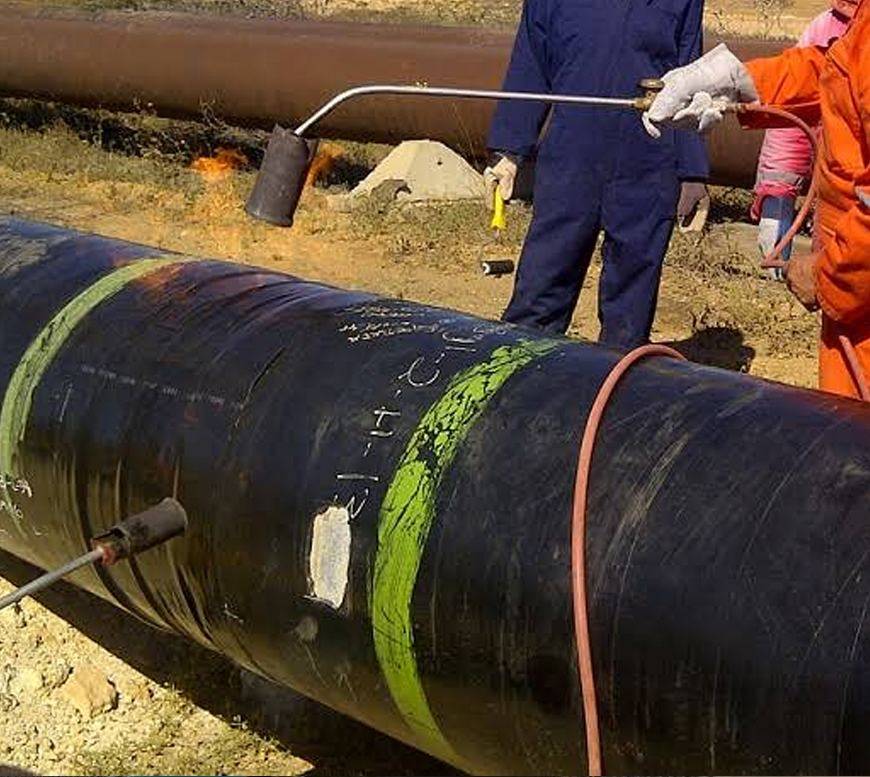
Heat comes from a propane torch with a suitable head or from a hot air gun, applied in a pattern that pushes trapped air ahead of the recovery front rather than sealing it in. The crew works the circumference first, then out toward each end, and keeps the flame moving so no area scorches. Recovery is complete when the sleeve has conformed to the weld cap and the coating step, with adhesive visible at both edges.
-
Checking while warm
Rolling the still-warm sleeve settles it against the profile and removes small voids. Any wrinkle, burn-through or unbonded area is dealt with at the joint, because the trench is the last opportunity anyone gets to look at it.
Sleeve Selection and Compatibility
Sleeve selection starts with the coating already on the pipe, then works through diameter, cutback and service temperature. The first of those decides the rest. An adhesive that won't hold onto the mainline shoulder leaves water a path at every joint, and no amount of correct sizing recovers that.
Lines finished in 3LPE coating present a polyethylene shoulder to the sleeve, so the backing chosen is normally polyethylene as well and the adhesive is selected to bond to it. Where the line carries 3LPP coating for higher operating temperature, the joint has to hold that temperature too, which moves the choice toward a polypropylene-backed sleeve and an adhesive rated to match. A line in fusion bonded epoxy gives the sleeve a thin, hard, chemically different surface to bond to, and specifications for that duty commonly call for the epoxy-primed three-layer construction so the joint mirrors the epoxy chemistry on either side of it.
Diameter and cutback determine the physical size. Heat shrink sleeve coating sizes are read off the pipe rather than picked from an inside-diameter chart. Sleeve width has to span the bare band and overlap the sound coating at both ends by the margin the specification names, while sleeve length on a wraparound is the recovered circumference plus the closure overlap.
Send Us Your Pipe Schedule for a Coating Quote
Send Us Your Joint Schedule for a Sleeve Quotation. Give us the pipe size, the joint count and the coating already on the line, and we'll come back on the system and the price.
Inspection and Acceptance
Acceptance of a recovered sleeve rests on what can be observed at the joint and on what a destructive test taken from a sacrificial sample shows. Four checks appear on most field joint clauses.
-
Visual condition after recovery
The inspector looks for full conformance to the weld cap and the coating step, an unbroken adhesive bead at both ends, and the absence of wrinkles, voids, burns or a lifted closure patch.
-
Peel adhesion
A strip cut from the recovered sleeve is pulled back at the angle and temperature the specification states, and the load recorded is compared with the figure published for that product.
-
Holiday detection
A holiday detector run over the finished sleeve at the voltage the specification sets finds pinholes, thin spots and burn-through that a visual check can miss.
-
Recovered thickness
Readings on the finished sleeve confirm that the backing and adhesive have reached the minimum thickness the specification requires after recovery.
Where a contract calls for witnessed field joint testing, the agency named in that contract carries it out at the joint. Batch records for the sleeves themselves come from the test data issued against the production run, and we pass those through with the material.
Heat Shrink Sleeves Industrial Applications
Heat shrink sleeves for pipeline duty go onto the joints, fittings and repaired sections of buried and submerged steel lines. Four end uses take up most of the volume in Indian projects.

Oil and Gas Transmission Lines
Long-distance crude, product and gas transmission puts more girth welds into a project than any other application, and each of them wants a joint coating equal to the mainline system. Design lives measured in decades, with almost no maintenance access afterwards, make the field joint the natural weak point on these lines. Higher operating temperatures on hot oil and compressor discharge sections push the specification toward polypropylene backings.
Water Transmission and Sewage Rising Mains
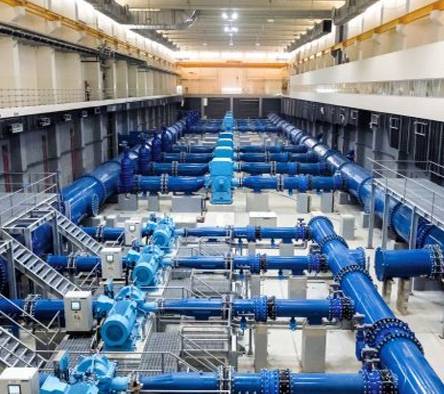
Large-diameter water mains and effluent rising mains sit in soils that change along a route, and they run wet on the outside for much of their life. Sleeves protect the welds on those lines against the same soil chemistry that the barrel faces. Diameters run large here, and the wraparound form does most of the work because tie-ins and repairs are common on schemes extending an existing network.
City Gas Distribution Networks
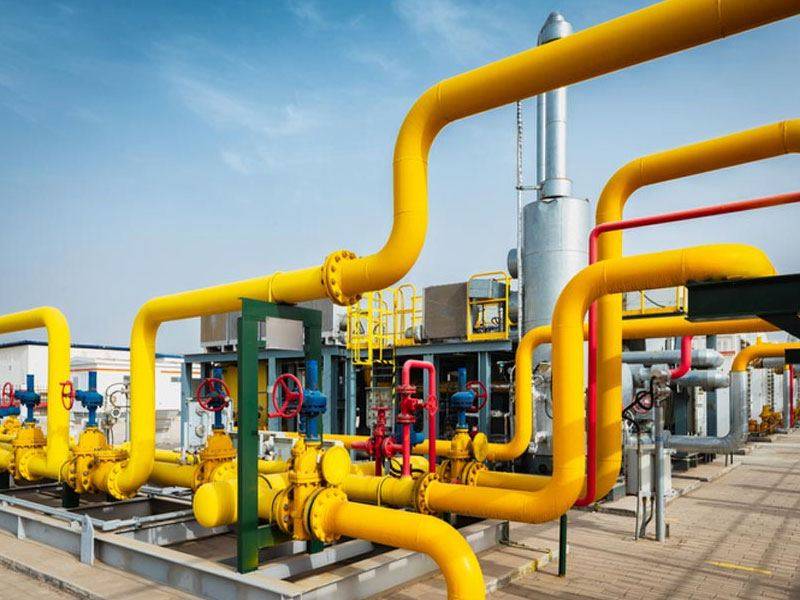
Distribution work brings smaller diameters, more fittings and a crowded urban route. Joints come quickly on a city gas network. Sleeves cover the girth welds and bends, while tees, service connections and other complex shapes are usually finished with tape or mastic systems.

Submerged Crossings and Marine Sections
River crossings, canal sections and marine approaches keep a pipeline in permanent water contact, and a joint coating there gets no dry season to recover in. Sleeves qualified for submerged duty carry the adhesive and backing combination that holds a bond under continuous immersion. Crossings also see the roughest installation loads, so backing strength counts for as much as the seal.
Heat Shrink Sleeves Compared With Tape Systems
Choose a sleeve where the joint needs a build comparable to the mainline coating and a heat source is available at the joint. Choose tape where heat is impractical, where the shape defeats a moulded product, or where the specification names a cold-applied wrap. The table reads as selection guidance rather than a preference.
| Factor | Heat shrink sleeve | Polyolefin tape | Cold-applied petrolatum and bituminous tape |
|---|---|---|---|
| Backing | Cross-linked polyolefin | Polyethylene film | Fabric or film carrier saturated with petrolatum or bitumen |
| Bond mechanism | Hot-melt adhesive flowed under heat | Pressure-sensitive adhesive, wrapped under tension | Conformable mastic that displaces moisture rather than curing |
| Applied by | Heating and recovery onto the joint | Wrapping in a spiral with a stated overlap | Wrapping and moulding by hand |
| Equipment at the joint | Torch or hot air gun plus a temperature gauge | Wrapping machine or hand wrapping | Hand tools only |
| Best suited to | Girth welds on coated line pipe | Straight runs and long lengths | Valves, flanges, bolted assemblies and irregular fittings |
| Surface tolerance | Needs prepared, dry, preheated steel | Needs a clean, primed surface | Tolerates damp and marginally prepared surfaces |
Where a project asks for a wrapped joint instead of a shrunk one, polyolefin tape coating covers the polyethylene-backed wraps used on straight lengths, and the petrolatum and bituminous families sit with cold-applied tape coatings, which is what most specifications reach for on valves, flanges and shapes no moulded product fits.
Ordering and Cost of Heat Shrink Sleeve
This work is quoted by the joint rather than by the metre, because that is how a project counts it and how a purchase order gets written. A line with 400 welds needs 400 sleeves plus a wastage allowance, and each one is sized off the pipe rather than the length of the run. Five factors determine where a quotation lands:
- Pipe outside diameter, which sets the sleeve length
- Cutback length plus the overlap the specification asks for, which sets the sleeve width
- Sleeve construction, since an epoxy-primed three-layer system is priced above a plain adhesive-lined one
- Service temperature and the standard the project document names, which together decide what product qualifies
- Total joint count, because a full line schedule and a handful of tie-ins are different purchases
- For the best price on Heat Shrink Sleeve coating, contact us today at Radisson Impex with your requirements.
Why Choose Radisson Impex for Heat Shrink Sleeves
Sleeve enquiries usually turn on three things: whether the material suits the coating already on the line, whether the technical question is answered before the purchase order goes out, and whether the paperwork survives inspection. Four points describe how a sleeve order runs with us.
- Compatibility with 3LPE, 3LPP and FBE lines is assessed before a quotation goes out, since those are coating systems we work with.
- We work to your project document, so shrink ratio, adhesive type and temperature rating come from a product that actually qualifies under it.
- Wraparound and tubular forms both quote, which keeps new construction and tie-in work on a single purchase order.
- Batch test data for the sleeves supplied on your job goes into the handover file.
Heat Shrink Sleeves: Frequently Asked Questions
What is a Heat Shrink Sleeve used for on a pipeline?
A heat shrink sleeve for pipeline protects the bare band of steel left at a girth weld after two coated pipe lengths are joined. It also goes onto bends, simple fittings and repaired areas that the mainline coating didn't reach. Recovery under heat bonds it to the steel and to the adjacent coating, so the joint finishes sealed against soil moisture like the rest of the line.
How are Heat Shrink Sleeves installed on a pipe joint?
Five steps, all carried out by the crew at the joint: the steel and the coating shoulder are cleaned and abraded, the joint is preheated to the temperature the product calls for, the sleeve is positioned centrally, heat is applied so the backing recovers and the adhesive flows, then the warm sleeve is rolled and checked.
What is the difference between Wraparound and Tubular Heat Shrink Sleeves?
A wraparound sleeve is a flat sheet taken around a joint already in position and closed with a separate patch, which makes it the choice for tie-ins, repairs and existing lines. A tubular sleeve is a continuous cylinder threaded onto the pipe before the weld is made, so it carries no closure seam.
What size Heat Shrink Sleeve is needed for a given pipe?
Sleeve size follows the pipe outside diameter and the cutback. Width has to cover the bare band and overlap sound coating at both ends, and length on a wraparound equals the recovered circumference plus the closure overlap.
Which standard covers Heat Shrink Sleeves for pipelines?
ISO 21809-3:2016 is the principal international reference, covering field joint coatings for buried and submerged pipelines and naming heat-shrinkable materials as one of the coating types. NACE SP0303-2025 addresses field-applied sleeves on their own, AWWA C216-22 covers heat-shrinkable cross-linked polyolefin on steel water pipe, and EN 12068 covers tapes and shrinkable materials used alongside cathodic protection. We work to whichever of those a project document names.
Can Heat Shrink Sleeves be used on 3LPE and FBE coated pipe?
Yes, and the mainline coating decides which sleeve. A polyethylene shoulder from a three layer polyethylene line normally takes a polyethylene-backed sleeve, and an FBE line commonly calls for the epoxy-primed three-layer sleeve so the joint carries the same chemistry against the steel.
Do you supply Heat Shrink Sleeves across India?
es. We supply sleeves pan-India, sized to the pipe on your enquiry. We supply sleeves across India from our Mumbai base. Most of the demand reaches us through EPC contractors and through schemes let on government tender. Availability is confirmed against each enquiry rather than promised from a published list.
Send Us Your Joint Schedule for a Sleeve Quotation. Give us the pipe size, the joint count and the coating already on the line, and we'll come back on the system and the price.