
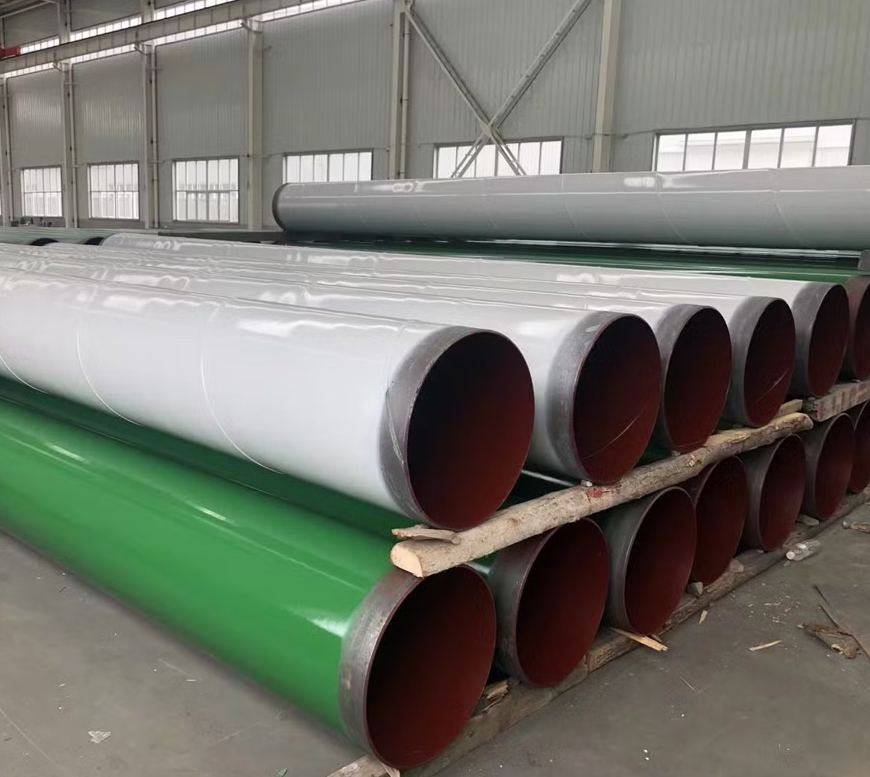
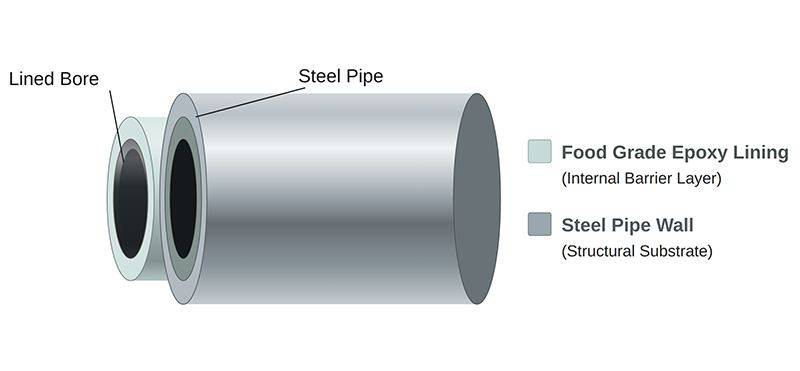
Food grade epoxy coating protects liquid supplies by separating steel pipe walls from drinking water or liquid food passing through the inside of the pipe. Formulators mix two liquid components to create this protective barrier, choosing ingredients strictly approved by food-contact regulations. Compliance demands rigorous proof. Manufacturers must demonstrate that the cured lining releases zero harmful chemicals, off-flavours, or odours into the pipeline stream, while also suppressing bacterial growth. A coating fails entirely if it prevents rust but contaminates the liquid.
Radisson Impex has applied pipe linings since 2012 and works to an ISO 9001-certified quality system. Internal coating accommodates pipe diameters from 3 inches to 120 inches across seamless, ERW, LSAW, and spiral-welded types. Processing capability reaches maximum dimensions of 18 metres per pipe length and 24 tonnes in weight. Application applies equally to mild steel (MS black), LTCS, carbon steel, and alloy steel substrates, including API 5L line pipe from Grade B through Grade X120.
Technicians line flanges, bends, and pipe fittings to match the exact coating quality of straight pipe runs. Reclamation processing restores corroded piping to bare metal before rebuilding the surface layer. Production teams blast surfaces to the Sa 2½ cleanliness standard, apply the exact film thickness specified in project documents, and issue test certificates for every completed order. These lining services directly support EPC contractors and public sector government tenders.
Food Grade Epoxy Coating Service Options
Drinking water linings, applied at our Vasai factory or at your project site.
-
At our facility
Factory coating
- Vasai factory
- Pipe transport arranged
-
At your project site
Onsite coating
- Pan India
- Coated at your project site
What Makes an Epoxy Coating Food Grade
Four things separate a food grade system from an ordinary lining: the substances the resin is formulated from, the migration evidence behind it, the contact classification your duty falls under, and its position among the liquid epoxies.
-
Formulation From a Permitted Substance List
In the US, food contact regulation for coatings works by permission. A resinous coating qualifies under 21 CFR 175.300 when its components are either listed in that section or permitted by other FDA food additive regulations or prior sanction. China and Japan use positive lists the same way, while the EU adds outright bans on named substances such as BPA.
-
Migration Testing and What It Measures
Migration is the movement of chemicals out of the cured film and into the product exposed to it. Overall migration counts everything that transfers, expressed as a mass limit. Specific migration tracks named substances one at a time, bisphenol A among them. IS 9845 sets out the Indian method for overall migration; EN 1186 and EN 13130 cover both overall and specific migration across Europe. Drinking water duty adds taste, odour, appearance and microbial growth checks on top.
-
Direct and Incidental Food Contact
Two exposure classes appear in the specifications, and each calls for different evidence. A direct food contact coating, written as DFC on some documents, meets the product continuously: that is the situation inside a potable water main or a process line carrying a foodstuff. Incidental food contact epoxy covers surfaces where transfer would happen only occasionally.
-
Food Grade Epoxy Among the Liquid Systems
Food grade epoxy is one branch of the epoxy coating systems we apply, and the chemistry underneath it is familiar enough. Base resin and curing agent are mixed shortly before work starts. The film then cross-links at workshop temperature, with no heat input to the pipe at any stage. Where your document calls for a solvent-free epoxy lining or names a two-component product by trade designation, we apply the specified system accordingly.
Food Grade Epoxy Coating Specifications
We apply two-component food grade epoxy linings to steel pipes from 3 to 120 inches to meet exact project specifications.
| Parameter | Scope |
|---|---|
| Coating system | Two-component food grade liquid epoxy, applied as an internal lining |
| Food-contact status | Carried by the coating product against its own certificate |
| Pipe types accepted | Seamless, ERW, LSAW, spiral welded (HSAW) |
| Substrates accepted | Mild steel (MS black), LTCS, Carbon steel and alloy steel |
| Line pipe | PI 5L line pipe, Grade B through X80, and up to X120 in PSL 2 where the project specifies it |
| Components coated | Straight pipe, fittings, bends, flanges |
| Substrate condition | New pipe, plus cleaning and re-lining of old, used or rusted pipe |
| Diameter range | 3 inches to 120 inches on the bore, and 1 inch to 120 inches where the coating goes on the outside |
| Maximum pipe length | 18 metres |
| Maximum weight per pipe | 24 tonnes |
| Surface preparation | Abrasive shot blasting to Sa 2½ |
| Coating thickness | Applied to the dry film thickness, your specification states |
Almost every food grade enquiry we receive concerns the internal coating of pipes, since the lining has to sit on the wetted surface to do anything at all.
Food Contact and Potable Water Standards
A food contact epoxy coating earns its status against a published document, and the market your project buys into decides which. Certificates are written against the designations below.
- USA (FDA)
- 21 CFR 175.300Resinous and polymeric coatings. Permits a resinous coating as the food-contact surface of an article, provided it is formulated from the listed substances and applied as a continuous film or enamel over the substrate
- USA (NSF)
- NSF/ANSI/CAN 61-2025Drinking Water System Components. Health Effects. Sets health effects requirements for contaminants imparted to drinking water, with barrier materials such as paints, coatings and tank liners within its scope
- USA (NSF)
- NSF/ANSI/CAN 600-2024Health Effects Evaluation and Criteria for Chemicals in Drinking Water. The companion document carrying the toxicological review procedure that NSF/ANSI/CAN 61 evaluations run against
- USA (AWWA)
- AWWA C210-24Liquid-Epoxy Coatings and Linings for Steel Water Pipe and Fittings. The current edition, renamed from the older Liquid-Epoxy Coating Systems for the Interior and Exterior of Steel Water Pipelines
- Europe (EU)
- Regulation (EC) No 1935/2004Materials and articles intended to come into contact with food. The framework regulation, repealing Directives 80/590/EEC and 89/109/EEC. Covers food process lines. It does not apply to fixed public or private water supply equipment, so drinking water mains follow the row below.
- Europe (EU)
- Regulation (EC) No 2023/2006Good manufacturing practice for materials and articles intended to come into contact with food
- Europe (EU)
- Commission Regulation (EU) 2024/3190Bans bisphenol A (BPA) in food contact materials, including varnishes and coatings, and restricts other hazardous bisphenols. It amends Regulation (EU) No 10/2011 and repeals Regulation (EU) 2018/213.
- Europe (test methods)
- EN 1186 and EN 13130 seriesOverall migration and specific migration test methods. Both series carry Plastics in the title, and coating certificates cite them as the analytical route rather than as a coating specification
- Europe (drinking water)
- Directive (EU) 2020/2184, Article 11, with Implementing Decisions (EU) 2024/365, 2024/367 and 2024/368, and Delegated Regulations (EU) 2024/369, 2024/370 and 2024/371Hygiene rules for materials in contact with drinking water, including positive lists, final-material tests, conformity assessment and product marking. These apply from 31 December 2026, with a transitional period to 31 December 2032 for products already holding a valid national approval.
- UK
- BS 6920-1:2014, with DWI Regulation 31 approval for public supply mains and WRAS approval for pipework inside buildings.Suitability of non-metallic materials and products for use in contact with water intended for human consumption, with regard to their effect on the quality of the water
- Germany
- DVGW W 270, with the KTW-BWGLAssessment of microbial growth enhancement on non-metallic materials in drinking water contact, alongside the evaluation criteria binding on organic coatings since 2021
- India
- IS 9845 : 1998Determination of Overall Migration of Constituents of Plastic Materials and Articles Intended to Come in Contact with Foodstuffs. Method of Analysis
- China
- GB 4806.10-2025National food safety standard. Painting and coating for food contact materials and products. Effective 2 September 2026, superseding GB 4806.10-2016
- Japan
- Food Sanitation Act Positive ListSynthetic resin substances permitted in food contact utensils, containers and packaging. Fully mandatory since 1 June 2025
IS 13871 turns up occasionally as a supposed potable water epoxy reference; it is in fact the Indian Standard for powder coatings, carrying no food contact provision at all.
Who Holds the Food-Contact Approval
Food-contact status belongs to the coating material. Every food contact epoxy coating carries it that way: the approval belongs to the coating product, but it only holds when the product is mixed, applied and cured exactly as its data sheet states. That part of the duty sits with us. We apply the approved product named in your specification, and its certificate, such as WRAS, NSF/ANSI/CAN 61 or a statement of compliance with 21 CFR 175.300, goes out with our quotation.
BPA and the Current European Position
This ban covers food contact materials. Drinking water mains fall under the separate EU drinking water rules. Commission Regulation (EU) 2024/3190 entered into force in January 2025. Since 20 July 2026, most food contact articles made with BPA can no longer be placed on the EU market for the first time, which is pushing formulators towards BPA non-intent (BPA-NI) chemistry. A BPA-NI epoxy coating isn't automatically part of every food grade range, so raise that requirement with the enquiry. Some food contact epoxy coatings on the Indian market have already been reformulated.
Features and Benefits of Food Grade Epoxy Lining
Six properties explain why a project pays for this system instead of a general-purpose lining, and each arrives as evidence, capacity or reduced risk.
-
Documentation an inspector can act on
The product certificate names the regulation, the test method and the conditions of use, so approving the lining becomes a paperwork exercise.
-
The conveyed product stays as clean as it arrived
Iron pickup, discolouration and taste all originate at bare steel meeting the flow, and a lined bore removes that source.
-
Resistance to biofilm on the wetted surface
Water approvals measure whether a material encourages microbial growth, so a system passed under DVGW W 270 or BS 6920 has been tested on that point.
-
Ambient cure, with no heat applied to the pipe
Liquid epoxy cross-links at workshop temperature, so thick-walled fittings and long-radius bends take the same lining as straight pipe.
-
Sound steel stays in service
Corroded water and process lines get stripped, blasted back and re-lined, recovering material that would otherwise be scrapped.
-
Bore area barely changes
A liquid epoxy film measures in microns, so hydraulic capacity stays close to the design figure.
Food Grade Epoxy Coating Process
The mixed epoxy goes onto the bore by spray within its pot life, coat by coat, with each coat laid within the overcoating window the data sheet sets. Cleanliness governs this work more tightly than any other lining we apply, since contamination beneath a food grade film defeats the reason for specifying one.
-
Blast Cleaning to Sa 2½
Abrasive shot blasting takes the surface to Sa 2½, the near-white grade ISO 8501-1. Mill scale, corrosion product and any previous lining come away, and the profile left behind gives the epoxy a mechanical key. Spent abrasive and dust are then cleared out. We look at the prepared surface before anyone begins the coating work, since blast grade governs coating life more than any other variable we control.
-
Mixing the Two Components
Base and curing agent go together in the proportion the data sheet states, and pot life begins at that moment. Ratio discipline matters beyond the usual reasons here: an off-ratio mix leaves unreacted material in the cured film, and unreacted material is precisely what migration testing exists to catch. Overcoating intervals come from the same sheet, and we hold to them rather than to the shift pattern.
-
Cure, Verification and Handover
Full cure comes first, before anything is lifted. We log thickness readings, spark test results, adhesion figures and cure state under the job number, and any defect the sweep finds gets rebuilt and re-checked at that spot. The signed file is then dispatched with the consignment. The process runs from bare blasted steel to a documented, released length.
Film Thickness and Performance
The thickness of a food grade epoxy lining comes from your project document, and three things follow from that figure: the specified dry film, the service conditions the cured system will meet, and the continuity that decides whether the lining performs at all.
The Specified Dry Film
Your specification carries the per-coat and total figures, and we build to them. Publishing a single house range would be unhelpful, since food grade products differ widely in solids content and recommended build, and our number applied over yours would put the lining out of compliance. Send the specification, and we will confirm the applied build in the quotation.
Service Temperature and Cleaning Regimes
Temperature limits belong to the product your specification names rather than to food grade epoxy as a category, and we take them from its data sheet. Lines subjected to hot wash-down or clean-in-place cycles need that check made deliberately, because a coating qualified for cold potable water may not survive repeated hot caustic contact. Send the operating temperature and the cleaning regime with the enquiry.
Continuity of the Film
One void is enough to start a corrosion cell spreading sideways under the lining, somewhere nobody can inspect once the line is welded up. On a food grade duty that void also puts the product in contact with bare metal. Adhesion loss causes comparable trouble, letting fluid creep between the film and wall. Measurement catches both faults before despatch.
Send Us Your Pipe Schedule for a Coating Quote
Submit your complete pipe schedule today to receive optimised, high-volume pricing for your food grade epoxy coating project.
Testing and Inspection of Food Grade Epoxy Coating
Every food grade lining is verified against your specification before despatch through the following checks.
-
Dry film thickness (DFT)
Readings across the lined surface get compared one by one against the figure in your specification.
-
Holiday or spark testing
A probe sweeps the cured film at the specified voltage, and each pinhole it registers is rebuilt and re-swept before sign-off.
-
Adhesion or pull-off testing
A dolly bonded to the film is pulled until separation, and the recorded force indicates whether the lining will stay put in service.
-
Curing testing
Cure state gets confirmed before despatch, since cure is what fixes the resin so that migration stays inside the tested limit.
Contracts calling for witnessed testing or a resident inspector are worked that way, and we make room for the agency you nominate. The certificate and the coating report go out with the pipe. Records count for more on a lining than on an external film, since the coated face disappears from view once the line is joined.
Food Grade Epoxy Coating Industrial Applications
Food grade epoxy lining is specified wherever the internal surface meets drinking water or a foodstuff, and the fittings installed with that pipe take the same treatment. Four duties account for most enquiries.

Drinking Water Transmission and Distribution Mains
Municipal steel mains are the largest single duty for potable water epoxy coating in India. Utilities line the bore to hold iron, colour and taste out of the supply, and to keep hydraulic capacity across a long design life. Cathodic protection does nothing inside a buried main, so the lining is its only defence. Where a project specifies a heat-cured powder film instead, internal FBE lining meets the same requirement through different chemistry.
Food and Beverage Process Lines
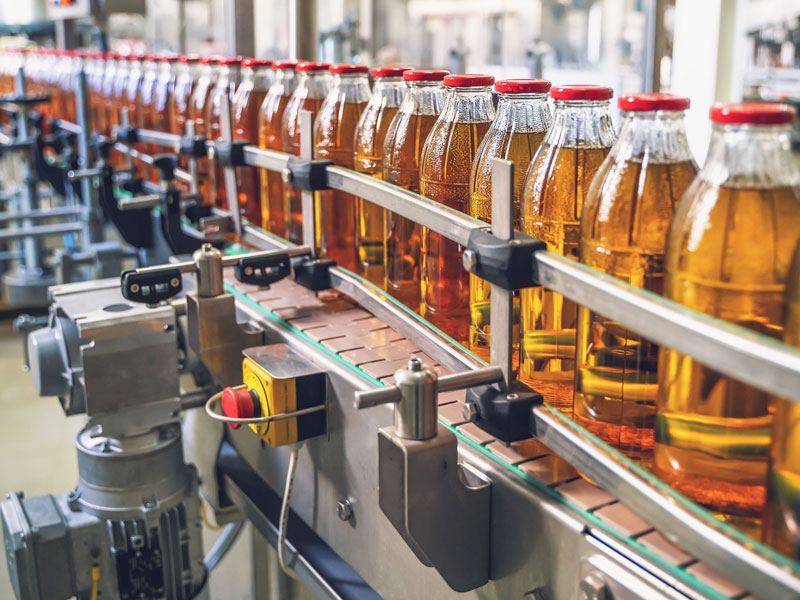
Process piping carrying a foodstuff sits under the strictest version of the requirement, since contact is direct, continuous and often warm. A sanitary epoxy coating on the bore has to combine an inert surface with a film smooth enough to drain and clean properly, and the cleaning chemistry becomes a selection criterion of its own. Product certification governs this duty completely.

Water Treatment and Storage Network Pipework
Treatment works, and service reservoirs run steel pipework between processes that are aggressive in different directions: dosing lines, clear water headers, backwash mains, pump suction and delivery. Food grade epoxy paint for MS pipe is the routine request here, and mild steel takes the lining well once blasted properly.

Re-Lining Existing Water and Process Lines
Ageing mains that still hold sound wall thickness are worth recovering. Old lining and corrosion product come out, the bore goes back to Sa 2½ bare steel, and the potable water epoxy coating is rebuilt to the current specification. That usually means a product qualified under rules that didn't exist when the line was first coated.
Food Grade Epoxy Compared With Other Pipe Linings
Specify food grade epoxy when the bore meets drinking water or a foodstuff and the contract wants product certification standing behind the film. Each alternative below answers a different question.
| Factor | Food grade epoxy | Phenolic epoxy | Amine cured epoxy | Cement mortar lining |
|---|---|---|---|---|
| Selection driver | Certified contact with water or foodstuff | Solvent and hot chemical immersion | Cure speed and film hardness | Water mains where a thick alkaline cement lining is specified |
| Governing evidence | The product's own food-contact certificate | Product data sheet against the service chemistry | Product data sheet against the service chemistry | AWWA C205 |
| Film character | Thin bonded liquid film | Thin bonded liquid film | Thin bonded liquid film | Rigid mortar lining, 6 mm to 10 mm nominal (AWWA C205) |
| Bore sizes we serve | 3 inch to 120 inch | 3 inch to 120 inch | 3 inch to 120 inch | 4 inch to 36 inch |
| Effect on bore area | Negligible | Negligible | Negligible | Reduces internal cross-section measurably |
Where hot solvents or aggressive process chemistry drive the choice instead of food contact, the novolac route set out on our phenolic epoxy coating suits that duty. Cure behaviour forms a separate axis, so amine-cured epoxy coating names how a film hardens rather than what it may safely touch. Where a project calls for a thick cement lining instead, our cement mortar lining service follows AWWA C205, which covers steel water pipes of 4 inches and larger. We offer this service from 4 inches to 36 inches in thicknesses of 6 mm to 10 mm.
Food Grade Epoxy Coating Price in India
Charging runs per square metre of lined surface, and 200 square metres is the smallest scope we take on. Publishing one rate would mislead, since the food grade epoxy coating price attached to a square metre shifts with the pipe and with the document behind it. Six variables set the figure we quote:
- Coated surface area in total, and the internal diameter it is spread across, since a small bore absorbs more labour per square metre
- Specified dry film thickness and how many coats the document asks for
- The approved product is named in that document, since food-grade materials are more expensive than general-purpose epoxies
- Substrate condition, since stripping a corroded line demands far more preparation than a new length of pipe does
- Component mix, given that bends, fittings and flanges need more handling than straight lengths
- The test and documentation regime the contract imposes
Why Choose Radisson Impex for Food Grade Epoxy Coating
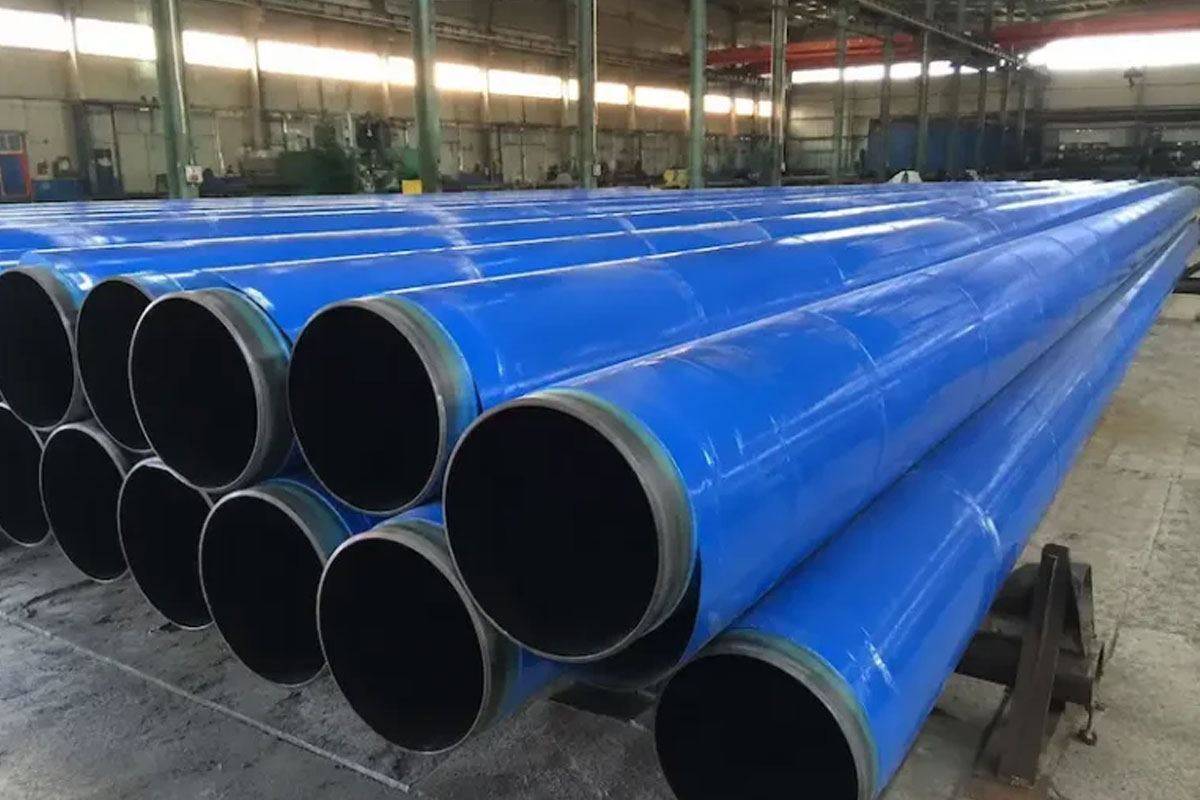
Four points worth weighing before a food grade lining scope goes out to tender.
- The approved product in your document is the product we apply, and its certificate goes out with the quotation.
- Flanges, bends and fittings receive an identical lining to straight pipe, since an ambient cure puts no constraint on the shape of the item.
- Blast grade, film thickness and the test regime follow your project specification, not a house standard.
- Every job leaves with its thickness, spark, adhesion and cure results written up, and outside inspectors may witness any part of the work.
Food Grade Epoxy Coating: Frequently Asked Questions
What makes an Epoxy Coating Food Grade?
Two things make an epoxy coating food grade: a formulation built only from substances the regulation permits, and test evidence that the cured film releases nothing harmful into whatever it comes in contact with. 21 CFR 175.300 is the American reference for resinous coatings, and NSF/ANSI/CAN 61 covers drinking water contact.
Why do you say FDA-compliant rather than FDA-approved?
The FDA doesn't approve or certify individual coatings. A formulator demonstrates that its product complies with the relevant section of 21 CFR, so FDA-compliant epoxy coating is the accurate phrasing and an FDA-approved epoxy coating claim is not.
Is Food Safe Epoxy Coating suitable for potable water pipelines?
Yes, provided the product holds a drinking water approval such as NSF/ANSI/CAN 61, WRAS or KTW-BWGL. AWWA C210-24 then sets the application and testing rules for liquid-epoxy linings on steel water pipe.
Can Food Grade Epoxy be applied to MS pipe?
Yes. Mild steel is the substrate we see most: food grade epoxy paint for MS pipe is our most common enquiry, and LTCS and alloy steel run the same route. The bore is blasted to Sa 2½ first, and the profile that remains is what the epoxy keys into.
Do you coat the inside of the pipe or the outside?
Food grade lining goes on the bore, since that is the surface meeting the water or product. External coating on the same length is quoted as separate work.
Request a customised quote for food grade epoxy coating by submitting your pipe schedule, conveyed product, and coating specifications today.