
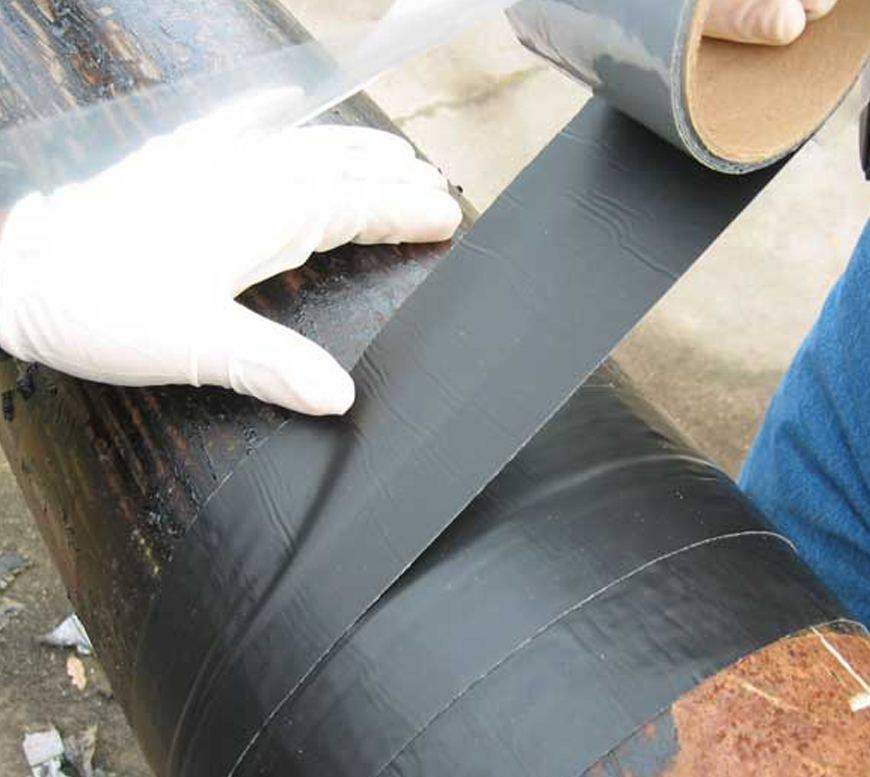
Cold applied tape coating protects the exterior of a steel pipe with a wrapped film that requires no heat during application and no curing afterwards. A liquid adhesive primer wets the prepared steel, an inner corrosion protection tape with a permanently tacky adhesive winds over it under tension, and an outer tape adds the mechanical layer that has to survive backfill. Everything in the sequence happens at ambient temperature. Because the adhesive stays permanently plastic instead of setting hard, the wrap follows whatever shape sits beneath it: a longitudinal weld bead or the belly of a 90-degree bend. Conformability is an important feature of this coating, and it explains why cold applied polymeric tape coatings cover shapes that a fused film cannot follow.
Radisson Impex supplies cold-applied tape for wrapping steel pipes in India. Our company has been operating since 2012 from Mumbai, and we are ISO 9001 certified. Straight barrel, bends and fittings all take the same build. EPC contractors and government tenders usually specify our cold-applied tape coatings.
Cold Applied Tape Coatings Service Options
Branded cold applied tapes, supplied pan India.
-
Supplied to you
Tape Supply
- Branded tapes
- Quoted to your specification
How Cold Applied Tape Coating Works Without Heat
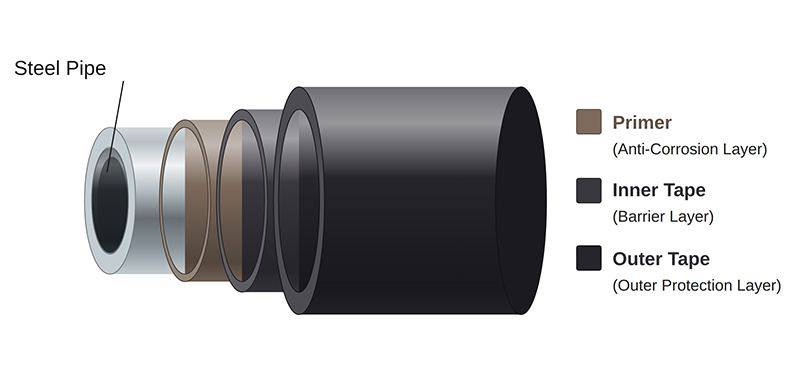
Three components make up a typical cold-applied tape system, each carrying one job: a liquid adhesive primer, an inner layer tape holding the corrosion protection, and an outer layer tape holding the mechanical protection. No flame, no oven and no chemical cure appears anywhere in that sequence.
-
Adhesive Primer
The primer is a liquid, brushed, rolled or sprayed onto prepared steel and left to flash off. Its job on the prepared steel is wetting. Blasted steel carries a profile of peaks and valleys, and a PSA tape pressed straight onto that profile bridges the valleys rather than filling them, leaving air paths for water. Primer flows in first and hands the butyl a compatible surface to grip. Skip it, and the wrap won't hold.
-
Inner Layer Corrosion Tape
The inner wrap does the anti-corrosion work. A permanently tacky adhesive, butyl rubber on most modern systems, sits on a polyethylene backing and meets the primed pipe under controlled tension at a stated overlap. That adhesive never hardens at any stage. It creeps slowly under load, which lets the wrap close up minor indentations and hold its seal through years of thermal movement underground.
-
Outer Layer Mechanical Protection Tape
Mechanical duty belongs to the outer layer tape. Backing runs thicker and adhesive firmer than on the inner tape, and it absorbs impact during loading, shear as the length drops into the trench, and abrasion from stony fill. A single tape system leaves one layer doing both jobs, which suits mild ground and selected backfill. Where a document names a two-layer or three-layer tape system, the extra ply is the outer mechanical wrap.
Cold Applied Tape Coating Specifications
The following table outlines the key specifications for cold applied tape coating.
| Parameter | Scope |
|---|---|
| Coating system | Liquid adhesive primer, inner layer corrosion tape, outer layer mechanical protection tape |
| Application condition | Ambient temperature throughout, with no pre-heating and no cure stage |
| Pipe types | Seamless, ERW, LSAW, spiral welded (HSAW) |
| Line pipe | API 5L line pipe, Grade B through X120 |
| Components coated | Straight pipe, fittings, bends |
| Outside diameter range | 1 inch to 200 inch |
| Maximum pipe length | 18 metres |
| Maximum weight per pipe | 24 tonnes |
| Surface preparation | To the grade your specification states, and abrasive shot blasting to Sa 2½ where it states none |
| Tape build | Layer count, tape class and total thickness applied to the customer specification |
Cold Applied Tape Coating Standards
This table summarises the principal cold applied tape coating standards used across major regions, with their designations, coverage, and current applicability.
- Europe (EN)
- EN 12068:1998Cathodic protection. External organic coatings for the corrosion protection of buried or immersed steel pipelines used in conjunction with cathodic protection. Tapes and shrinkable materials. Coatings are classed A, B or C by mechanical resistance and rated to a maximum operating temperature, producing designations such as B 30 and C 50
- Germany (DIN)
- DIN 30672-1:2026-07 and DIN 30672-2:2026-07Field coating materials for corrosion protection of buried pipelines. Part 1 covers requirements and product testing, Part 2 covers application and quality control. These replaced the 2019-05 editions, which had themselves replaced DIN 30672:2000-12
- USA (AWWA)
- AWWA C209-25Hand-Applied Tape Coatings for Steel Water Pipe and Fittings. Liquid adhesive and tapes are applied without the use of heat to uncoated pipe and fittings. Earlier editions were titled Cold-Applied Tape Coatings for the Exterior of Special Sections, Connections, and Fittings for Steel Water Pipelines
- USA (AWWA)
- AWWA C214-24Machine-Applied Polyolefin Tape Coatings for Steel Water Pipe. Prefabricated polyolefin tape is applied in coating plants at fixed sites, as a three-layer build of liquid adhesive, corrosion-preventive inner tape and mechanical protective outer tape. Renamed from Tape Coating Systems for the Exterior of Steel Water Pipelines
- USA (AWWA)
- AWWA C217-23Microcrystalline Wax and Petrolatum Tape Coating Systems for Steel Water Pipe and Fittings
- India (IS)
- IS 18910 : 2024Cold Applied (Polyethylene/Polyolefin) Tape Coating for Mild Steel Water Pipelines: Specification.
Features and Benefits of Cold Applied Tape Coating
Five properties explain where this method earns its place against plant-applied alternatives, and each affects a project in terms of schedule, cost or risk.
-
Ambient application throughout
Nothing gets preheated, and nothing has to cure, so a wrapped length is finished the moment the last turn goes down.
-
Geometry is the appropriate method
Bends, tees, reducers and flange necks take the same build as plain barrel, because a soft adhesive on a flexible backing conforms where a rigid film bridges.
-
Repair in the same system
Damage found before installation gets over-wrapped from the same roll, so the made-good area is the original coating rather than an unrelated patch.
-
An adhesive that closes behind minor damage
Butyl stays plastic across the coating's life, and a small indentation squeezes shut instead of opening into a holiday.
-
Written for cathodic protection duty
EN 12068 exists for coatings running alongside impressed current or sacrificial anode systems, which is the context most buried lines operate in.
Cold Applied Tape Wrapping Process
Cold applied tape wrapping runs in the following stages. With no heat entering the sequence, cold tape wrapping stands or falls on preparation quality and wrapping discipline.
-
Surface Preparation
Preparation follows the grade named in your specification. Where the document leaves it open, it is blasted to Sa 2½, the grade generally used, and the resulting profile gives the primer a key. Mill scale, rust, oil and any earlier coating come off first. The prepared surface is then examined and held dry, because a tape wrap has no later stage that recovers a poor start.
-
Priming and the Inner Wrap
Primer goes down and gets left until it has flashed off. The inner wrap follows spirally, at steady tension and at the overlap stated in the specification, which on a two-layer build is commonly half the tape width. Tension matters as much as overlap does. Too little and the tape tents over the weld bead, carrying air under the film; too much and the backing necks down at the crown of the seam.
-
Outer Wrap and Handover
The outer tape runs in the opposite direction of the spiral, again at a stated overlap, which throws its seams out of line with the inner layer's. Wrapped lengths are then examined end to end and holiday tested, and any discontinuity gets over-wrapped and re-tested before release.
Cold Applied Tape Types and Backings
Backing polymer and adhesive chemistry separate one cold applied tape from another, and two families cover almost every specification: polyethylene backed butyl rubber tape and petrolatum wax tape. Family choice moves both the rate and the service limit, so it belongs in the specification rather than at the wrapping stage.
Polyethylene Backed Butyl Rubber Tape
Polyethylene backing over a butyl rubber adhesive is the commonest construction on buried steel pipeline, and most tenders mean exactly this when they write cold applied tape without qualifying it. Datasheets call the result polyethylene tape coating. Polyethylene brings water resistance and a tough backing; butyl brings permanent tack.
Coal Tar Tapes (Not Cold Applied)
Coal tar tape is often grouped with wrapping tapes, but it is not a cold applied system. Under IS 15337, the tape is warmed with a flame before wrapping and needs a curing period before adhesion testing. It covers underground mild steel pipelines up to 50 °C.
Petrolatum and Wax Tapes
Petrolatum and microcrystalline wax tapes carry a saturated fabric rather than a polymer film. Nothing else in the cold applied group conforms to complicated shapes as readily, which is why AWWA C217 was written around them and why they suit irregular shapes. Mechanical strength is the trade, so buried duty pairs them with an outer mechanical protection tape.
Cold Applied Tape Coating Thickness and Service Limits
Applied build and service envelope both come out of your specification, and a buyer weighing tape against a plant applied system needs the limits stated without varnish. Three variables settle it: total thickness, operating temperature, and soil stress.
Applied Thickness and Layer Count
Total build depends on the tape class and the number of layers in the document name, and is wrapped to that figure. Single-tape, two-layer, and three-layer builds are three different coatings with three different rates, and most of the difference is in mechanical resistance.
Operating Temperature Range
Most cold applied tape systems are rated to 30 °C or 50 °C under EN 12068, and only specialist high temperature systems go further. Checking your line's operating temperature against the rated class of the named tape is the first screening step. Above its rated class, the adhesive softens and creeps under load, so the tape must be rated for the line's operating temperature.
Soil Stress and Mechanical Duty
Soil stress is the acknowledged weakness of a wrapped coating. Ground that shrinks and swells drags at the pipe surface, and an adhesive that stays plastic can be moved by that drag over time, so overlaps shift and tenting opens at the seam. Backfill selection, wrap tension and an adequate outer layer all bear on how far it goes. Where a route crosses expansive clay and the line runs warm, a fused coating is the honest recommendation.
Send Us Your Pipe Schedule for a Coating Quote
Reach out to us at Radisson Impex for the latest price of Cold Applied Tape Coatings.
Cold Applied Tape Coating Inspection and Records
Verification on a wrapped coating works differently from verification on a fused film, because no cure state exists to confirm and no chemistry has to develop before the pipe moves. What gets measured is the wrap itself, and four checks run on the work.
-
Holiday detection
A high-voltage spark test passes over the finished wrap and locates any point where the film is not continuous, which on tape usually means a lifted overlap or a tented section above the seam. Anything found is over-wrapped and re-tested.
-
Peel adhesion
A strip gets pulled back from the primed steel and from the layer under it, and the force required is recorded. Peel is the figure a tape specification argues over, since it resists the drag the ground applies later.
-
Applied thickness
Readings across the wrapped surface confirm total build against the tape class and layer count in your document.
-
Wrap geometry
Overlap percentage, wrapping tension and conformability over the longitudinal weld bead are examined along the length, because a wrap that measures correctly but tents at the seam hasn't done its job.
Cold Applied Tape Coating Industrial Applications
Buried steel pipe wrapped over its full length accounts for nearly all of this work, across four end uses. Above-ground sections need a tape system the manufacturer rates for UV exposure. What separates them is diameter, ground condition and the temperature the line runs at.

Oil and Gas Pipelines
Buried crude, product, and gas lines take pipeline wrapping tape where the route runs at moderate temperature and the programme favours a coating that goes on cold. City gas networks apply the same build at smaller diameters. Anti-corrosion tape here works alongside the cathodic protection system rather than in place of it, which is precisely the duty EN 12068 addresses.

Petrochemical and Process Piping
Within a plant boundary, buried process lines and fire water mains run short, crowded, and dense with fittings. Fitting count per metre is what makes tape attractive there. A reducer or a fitting takes the same tape build as a plain barrel, so no second coating system is needed.

Water and Wastewater Mains
Water utilities and irrigation schemes are major buyers of pipeline tape wrapping services in India. AWWA C214 covers plant-applied tape on steel water pipe, AWWA C209 covers hand-applied tape on pipe, joints and fittings, and AWWA C217 covers wax and petrolatum tape on special sections and fittings. Effluent rising mains take the same external treatment, since what attacks a rising main from outside is soil and groundwater.

Bends and Fittings
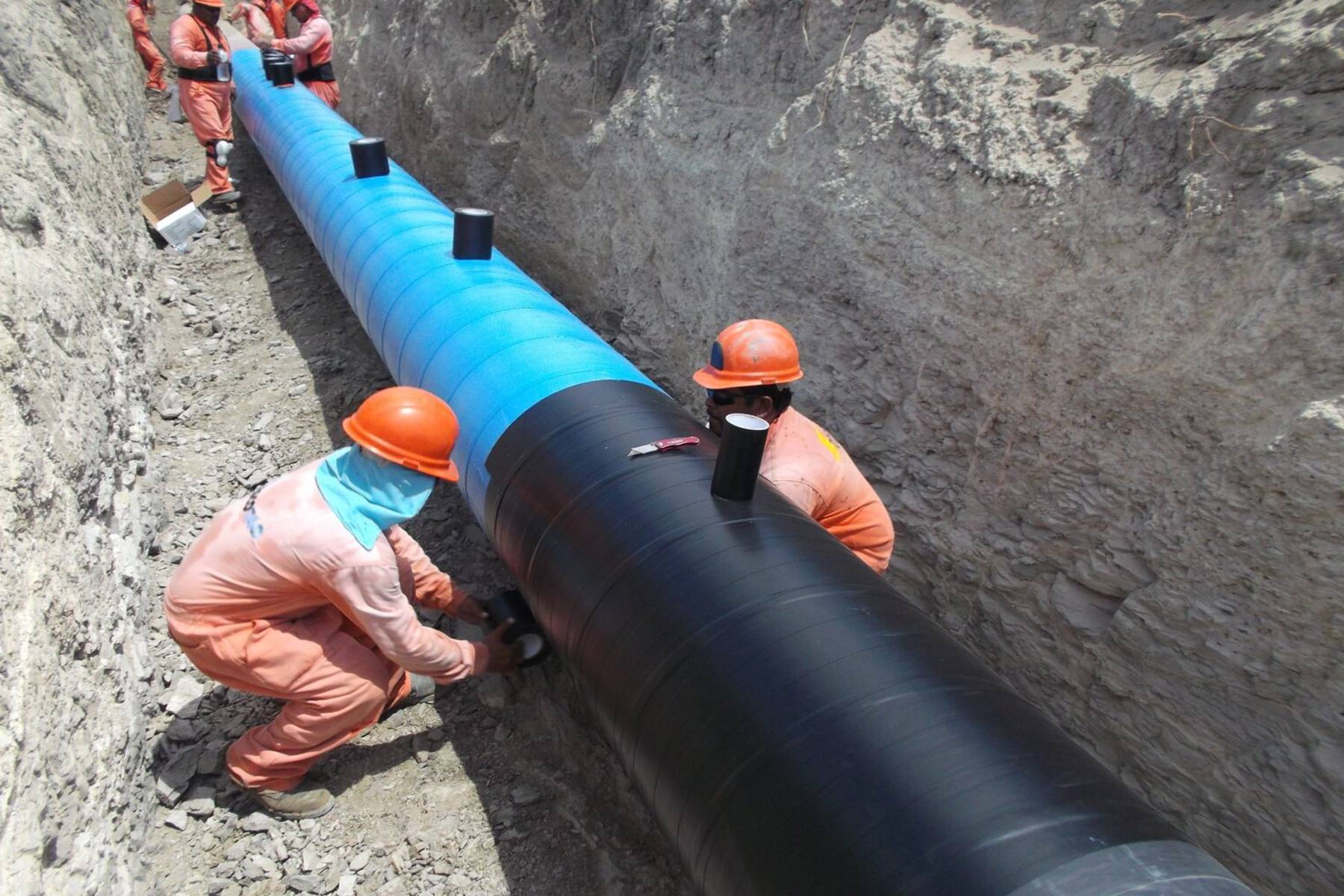
Cold-applied tape wrapping is well suited to complex pipe shapes and fittings. A 90-degree bend, a tee or a neck presents compound curvature, and hand-wound tape follows it turn by turn. These items are wrapped as part of a full pipeline scope, alongside the straight lengths they are installed with.
Cold Applied Tape Coating Cost
Wrapping is charged per square metre of wrapped surface. One published rate would misprice the work, since two schedules covering identical areas can differ enormously in effort. Four factors set the figure on a quotation:
- Diameter and the area to be wrapped, because a narrow pipe needs more turns of tape for each square metre
- Tape class and the number of plies your specification calls for, since a three-layer build prices well above a single tape system
- How much of the schedule is bends and fittings all of them wound by hand and slower than plain barrel
- Incoming condition of the steel, as stripping an old coating adds preparation hours new pipe never needs
Why Choose Radisson Impex for Cold Applied Tape Coating
Radisson Impex supplies branded cold applied tape systems for steel pipeline projects across India, matched to the class, ply count and overlap your project document calls for.
- Supplied against the specification. Tape class, backing, adhesive type and ply count are selected to match the grade and build stated in your document, whether that is a single tape system or a two- or three-layer build.
- Complete systems rather than loose rolls. Primer, inner corrosion tape and outer mechanical protection tape are supplied together as a compatible set, so the three components are not sourced separately and mismatched at the wrapping stage.
- Guidance on selection. Our team has worked with cold applied tape systems since 2012 and can advise on which tape class suits the operating temperature, ground condition and geometry on your line before the order is placed.
- Pan-India supply, with export enquiries undertaken. Material is supplied to project sites across India, and export orders are handled from our Mumbai base.
- ISO 9001 certified. Purchasing runs under a certified quality system, and manufacturer test certification is supplied with the material.
Frequently Asked Questions
What is Cold Applied Tape Coating?
Cold applied tape coating, abbreviated CAT or CATC on some tender documents, is an external anti-corrosion wrap applied to steel pipe at ambient temperature. Primer, an inner corrosion tape and an outer mechanical protection tape make up the build. Nothing is heated and nothing cures.
When should Cold Applied Tape Wrapping be specified instead of 3LPE or FBE Coating?
Specify tape where operating temperature stays moderate, the programme cannot carry a heat and cure stage, or the schedule is heavy with bends and fittings. Fused systems hold higher temperatures and resist soil stress better.
What surface preparation does Pipe Wrap Tape need?
The grade named in the project specification governs. Tape systems are generally applied over abrasive blast-cleaned steel, with mill scale, rust, oil and any earlier coating removed first. The primer goes onto a surface that is clean and dry, because adhesion is settled by the condition of the steel underneath it rather than by anything in the wrapping stage that follows.
Which standards cover Cold Applied Tape Coatings?
EN 12068 and DIN 30672 in Europe, AWWA C209, AWWA C214 and AWWA C217 in the United States, and IS 18910 (for polyethylene/polyolefin tape) in India.
What overlap is used when a pipe is wound with Cold Wrapping Tape?
Overlap is set by your specification. On a common two-layer build, it typically runs to half the tape width.
Send your pipe schedule along with the tape class and build stated in your coating specification, and we will revert with a quotation for the material.