
Phenolic epoxy coatings use a phenol novolac structure instead of standard bisphenol-A to provide better chemical resistance. Bisphenol-A molecules have only two reactive sites, while novolac chains have many. This creates a stronger coating with a higher heat resistance and makes it harder for solvents and acids to pass through. Engineers use phenol novolac coatings for high-temperature applications, hydrocarbon exposure, acidic condensate lines, and insulated pipes that experience repeated heating and cooling.
Radisson Impex is a pipe coating contractor, and phenolic epoxy is one of the liquid systems we apply. Pipe, fittings and flanges are all coated to the same specification. Our company was established in 2012, and we hold ISO 9001 certification. Externally, our range covers 1 inch through 200 inches outside diameter, on pieces up to 18 metres in length and up to 24 tonnes in weight. Mild steel (MS black), LTCS, and alloy steel are the substrates. We apply phenolic epoxy to API 5L line pipe from Grade B up to X120. Blasting takes the steel to SA 2½, the film is built to whatever thickness your document names, and four test records travel out with the consignment. Most enquiries arrive from EPC contractors and government tender work around India.
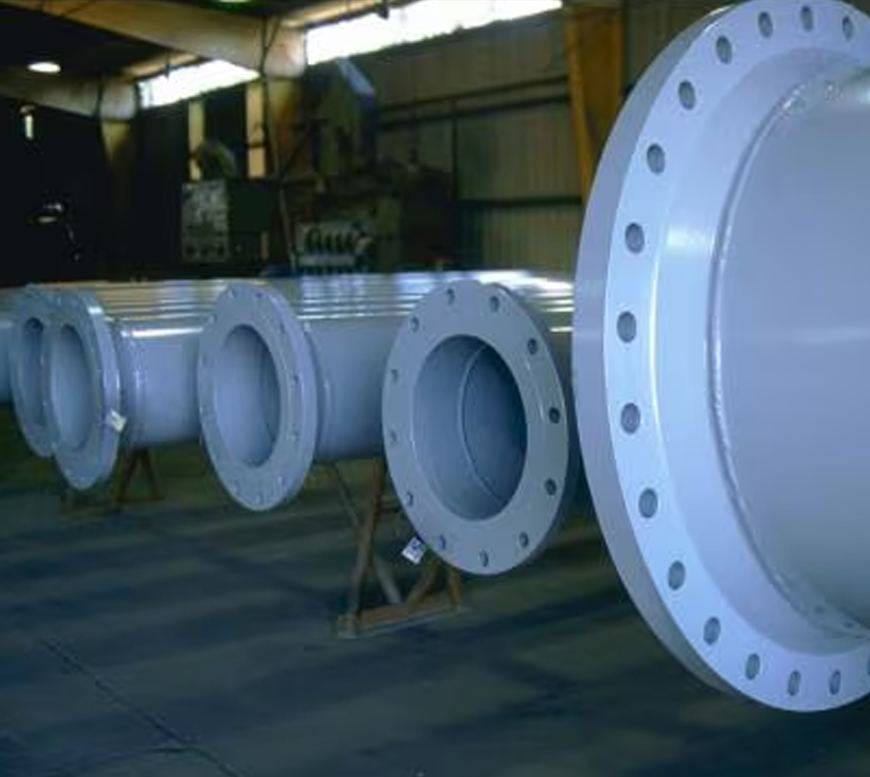
Phenolic Epoxy Coating Service Options
Applied at our Vasai factory or at your project site, pan-India.
-
At our facility
Factory coating
- Vasai factory
- Pipe transport arranged
-
At your project site
Onsite coating
- Pan India
- Coated at your project site
Phenolic Epoxy System Explained
Four things explain this system: the novolac backbone, the cross-link density that backbone produces, the two chemistries sharing the name, and the product range your specification requires.

-
The Phenol Novolac Backbone
Novolac is a phenol-formaldehyde resin made with an acid catalyst and a shortage of formaldehyde, leaving a chain of phenol rings joined by methylene bridges. Epoxidising that chain puts a reactive group on ring after ring. Aromatic rings matter here too: they are stiff and thermally stable, so the cured backbone resists softening far better than a flexible aliphatic segment does.
-
What Higher Cross-Link Density Buys
Cross-link density decides most of what a specifier cares about here. More reactive sites per molecule produce more junctions in the cured network, shorter chain segments between those junctions, and less room for a solvent molecule to work its way in and swell the film. Compared to bisphenol-A-cured epoxy, four key properties improve together: glass transition temperature rises, chemical resistance widens, heat resistance increases, and surface hardness improves.
-
Two Routes Share One Name
"Epoxy phenolic" describes two related but separate chemistries, and a drawing naming one may well mean the other. The older route blends epoxy resin with a phenolic resole and cures the blend under heat, a system used for decades on drum and can linings. The route specified on industrial steel today is an epoxy phenol novolac resin cured with an amine, commonly a polyamine adduct, which develops its properties without an oven. Both deliver acid and solvent resistance beyond a standard epoxy. Tender documents usually write the second one as epoxy phenolic novolac or phenolic epoxy novolac, and both of those labels mean the amine-cured novolac system. Settle which route your document intends before material is ordered, since the cure governs how the film is built.
-
Coating Materials We Work With
Novolac epoxy coating grades differ in solids content, permitted coat count and cure window, and those parameters are listed in the product data sheet. We ask for the phenolic epoxy coating data sheet covering the grade your specification names, and it reaches your inspection team ahead of the work. A document that asks instead for a phenolic epoxy paint data sheet is referring to the same document under a different name.
Phenolic Epoxy Coating Specifications
Explore our comprehensive phenolic epoxy coating specifications, detailing accepted pipe types, surface preparation standards, and material options.
| Parameter | Scope |
|---|---|
| Coating system | Two-component liquid phenolic epoxy, epoxy phenol novolac resin with an amine curing agent |
| Pipe types accepted | Seamless, ERW, LSAW, spiral welded (HSAW) |
| Substrates accepted | Mild steel (MS black), LTCS, alloy steel |
| Line pipe | API 5L line pipe, Grade B through X120 |
| Components coated | Straight pipe, fittings, bends, flanges |
| Substrate condition | New steel, plus cleaning and re-coating of old, used or rusted pipe |
| Outside diameter range | 1 inch to 200 inches externally; 3 inches to 200 inches where the coating goes on the bore |
| Maximum length | 18 metres |
| Maximum weight per piece | 24 tonnes |
| Surface preparation | Abrasive shot blasting to Sa 2½ |
| Dry film thickness | Built to the figure stated in the customer specification |
Phenolic epoxy coating for metal components falling outside those figures gets reviewed case by case, so name the item and the substrate when you enquire.
Phenolic Epoxy Coating Standards
Engineers combine liquid epoxy pipe documents with protective paint frameworks to define phenolic coatings. The table outlines seven applicable standards.
- Europe (EN)
- EN 10289:2002Steel tubes and fittings for onshore and offshore pipelines. External liquid-applied epoxy and epoxy-modified coatings. Written for liquid epoxy on seamless, longitudinally welded and spirally welded tube
- International (ISO)
- ISO 12944-2:2017Paints and varnishes. Corrosion protection of steel structures by protective paint systems. Part 2: Classification of environments. Sets atmospheric corrosivity categories C1 to CX and the water and soil categories Im1 to Im4
- International (ISO)
- ISO 12944-5:2019Part 5: Protective paint systems. The edition currently in force
- International (ISO)
- ISO 12944-9:2018Part 9: Protective paint systems and laboratory performance test methods for offshore and related structures. It cancels and replaces ISO 20340:2009
- International (ISO)
- ISO 19277:2018Petroleum, petrochemical and natural gas industries. Qualification testing and acceptance criteria for protective coating systems under insulation. Reviewed and confirmed in 2024
- Norway (NORSOK)
- NORSOK M-501, Edition 7 (2022)Surface preparation and protective coating. Edition 7 superseded Edition 6 of 2012 and added coverage for high temperature and cryogenic duty
- International (ISO)
- ISO 8501-1:2007Preparation of steel substrates before application of paints and related products. Visual assessment of surface cleanliness. Part 1: Rust grades and preparation grades. Sa 2½ is defined here
Features and Benefits of Phenolic Epoxy Coating
Novolac chemistry costs more than a standard epoxy. Six properties explain what the premium offers, and each shows up on the project as either service life or risk.
-
Resistance across a wider chemical range
A tighter network leaves solvents and acids less volume to occupy, so the film holds where an ordinary epoxy blisters or goes soft.
-
Heat tolerance without leaving the epoxy family
Lifting the glass transition temperature lets a familiar two-pack liquid serve hot lines, and a heat-resistant coating built this way still goes on with ordinary mixing discipline.
-
A film suited to lagged steel
Insulated pipe sits warm and wet for long stretches, and corrosion under insulation is the failure mode this chemistry is chosen for. ISO 19277 was written as a separate document to qualify coatings for this duty. It sets test methods and pass criteria for each CUI category, so check that the grade your specification names has been qualified for the category your line falls into.
-
Complex shapes take the same system
Hand application puts the identical build on bends, flanges and fittings, so protection does not thin out where corrosion starts.
-
Old steel can be recovered
Pipe already in service is blasted back to bare metal and recoated, keeping sound material working instead of buying replacements.
-
Evidence before release
Thickness, holiday, adhesion and cure results are recorded per job, and an inspection release turns on that paperwork.
Epoxy Phenolic Coating Chemical Resistance and Temperature Limits
Epoxy phenolic coating chemical resistance and the thermal ceiling share one source: the density of the cured network. Three things need to be separated before a system is chosen. What the film resists, how hot the line will run, and what happens when heat and moisture arrive together beneath insulation.
Chemical and Solvent Resistance
Solvent attack on an epoxy film is a swelling process before it becomes a failure. Solvent molecules push between polymer chains; the network expands, hardness and adhesion drop, and the barrier stops working long before anything shows on the surface. Shortening the chain segments between cross-links leaves less space to expand into, which is why novolac chemistry resists many solvents and acids that would swell or soften a bisphenol-A film. Resistance to strong solvents such as ketones and chlorinated solvents, and to strong oxidising acids, varies from grade to grade, so the product's chemical resistance chart must be checked for each fluid.
Service Temperature and Heat Resistance
Service temperature belongs to the grade rather than to the chemistry as a family. Published limits differ between products, and they differ again between dry heat, immersion and cyclic duty, so one company-wide number would mislead. A phenol novolac backbone carries the glass transition temperature above what the same epoxy reaches on bisphenol-A. ISO 19277 offers a frame of reference at the upper end, scoping its coating under insulation categories to operating temperatures from -45 °C to 204 °C for topside and aboveground service.
Corrosion Under Insulation
Corrosion under insulation is the main problem this chemistry is used to prevent. Insulation traps rainwater, condensation, and wash water against the pipe. When the pipe stays warm, this moisture causes the steel to corrode faster than it would in open air. Nothing is visible until the insulation comes off. ISO 19277:2018 addresses precisely this problem, setting qualification testing and acceptance criteria for protective coating systems under insulation and splitting the duty into environmental categories by operating temperature. A coating specified against those categories, over correctly blasted steel, is what stands between a hot line and a corrosion cell nobody can see.
Phenolic Epoxy Coating Application Process
Three stages take bare steel to a released length: blasting, mixing and film build, then cure and inspection. Bends, fittings and flanges are coated by hand alongside straight pipe.
-
Surface Preparation to Sa 2½
Abrasive shot blasting brings the substrate to Sa 2½, the very thorough blast-cleaning grade ISO 8501-1 defines. Scale, corrosion product and any earlier film are removed, and what remains is an anchor profile for the epoxy to grip. Cross-link density counts for nothing where the coating has no sound surface to hold. Preparation grade stays the largest single control on how long the system lasts, so the blasted steel is examined before mixing starts. Old pipe reaches that same grade once its previous coating has been stripped.
-
Mixing and Film Build
Resin and hardener should be combined at the ratio specified on the data sheet, and pot life begins when the components are mixed. Your specification governs everything that follows: how many coats, the wet film per coat, and the overcoat window that keeps chemical bonding alive between layers. Novolac systems treat that window less forgivingly than standard epoxies do, because a fully cured surface presents fewer reactive sites to the coat arriving on top. We hold the printed interval instead of the shift pattern. Dry film thickness enters as a specification input.
-
Cure, Inspection and Release
Cure has to be completed before the coating carries any property a specification assumes. An amine-cured novolac film keeps developing hardness and chemical resistance well after it is touch dry, and putting an under-cured coat into service is how a correctly specified system still fails. Thickness, holiday, adhesion and cure state are logged against the job; any discontinuity is repaired, and that area is checked again.
Send Us Your Pipe Schedule for a Coating Quote
Submit your steel dimensions and project specifications to our technical team today. Pricing the entire scope together unlocks customised rate structures for full project schedules versus individual component lines.
Phenolic Epoxy Coating Testing and Inspection
Every job carries the same four checks. Together, they pick up the defects most likely to reach installation unnoticed.
-
Dry film thickness (DFT)
A gauge takes readings over the coated area, each measured against the build your document specifies, coat by coat where it asks for that.
-
Holiday or spark testing
A detector runs over the cured film at the voltage the specification sets. Pinholes and thin spots it picks up are made good, then swept a second time.
-
Adhesion or pull-off testing
Bond strength to the steel is measured directly, and the value tells you whether the film will stay attached through handling and service.
-
Curing testing
The cure state gets confirmed ahead of release, since a film still reacting has not yet reached the hardness its data sheet promises.
Nominated inspection agencies and client inspectors witness the testing where a contract requires it. Signed records and the coating report leave with the pipe.
Phenolic Epoxy Coating Industrial Applications
Phenolic epoxy lining and external coating tolerate environments exposed to aggressive chemistry, heat, or both at once. Four groups account for most of the phenolic epoxy work we take on.
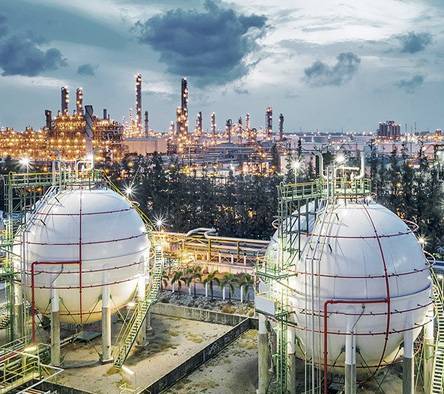
Refinery and Petrochemical Process Lines
Refinery pipework combines elevated temperature with hydrocarbon and solvent contact, and that pairing is what pushes a specification off standard epoxy. Transfer lines, pump-around circuits and the fittings running with them all sit in the duty, and coating goes on before a spool is installed.
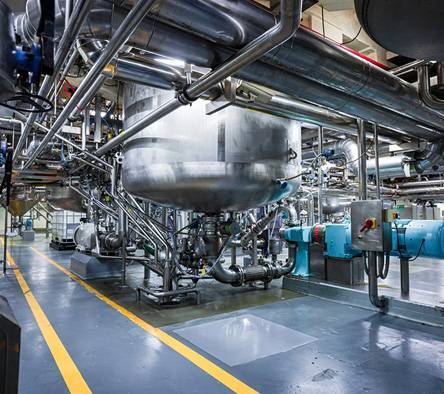
Chemical Plant and Process Pipework
Chemical plants put acid splash, alkali carryover and condensate onto external steel. Pipework feeding reactors, evaporators and heat exchangers takes the same protective system as the equipment it serves. Congested routing packs more bends and flanges into a scope per metre than any cross-country line does, and holding film build over those edges is where the job is won or lost.
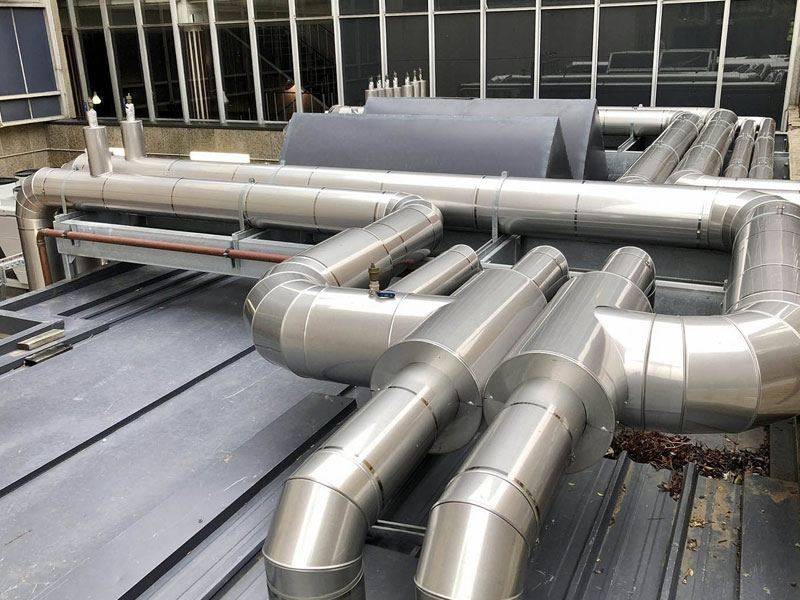
Insulated Lines and Heat-Traced Steel
Insulated pipework makes the clearest case for this chemistry. Any line lagged for heat conservation, personnel protection or process control hides its own steel from view, and moisture finding a way under the cladding stays there. Coating before insulation goes on costs a fraction of stripping lagging later.

Offshore and Marine Structural Steel
Marine and port work exposes steel to chloride, humidity and wet-dry cycling together. Deck pipework, jetty services and fabricated steel there take a system specified against ISO 12944-9 or a NORSOK coating system, and phenolic chemistry appears where chemical exposure sits on top of the marine one.
Phenolic Epoxy Compared With Other Epoxy Systems
Specify phenolic where chemical range and operating temperature govern, reinforcement where permeation and abrasion govern, a powder route where a thin heat-cured film is named. All of them run here, which makes the table a selection guide.
| Factor | Phenolic epoxy | Glass flake epoxy | Amine-cured epoxy | FBE |
|---|---|---|---|---|
| Resin backbone | Epoxy phenol novolac | Bisphenol-A epoxy with lamellar glass | Bisphenol-A epoxy | Thermosetting epoxy powder |
| Principal strength | Chemical, solvent and heat resistance | Permeation barrier and abrasion resistance | Cure speed and film hardness | Thin bonded film, heat-cured |
| Applied as | Two-pack liquid | Two-pack liquid | Two-pack liquid | Powder onto preheated steel |
| Common duty | Hot process lines, solvent and acid exposure, insulated steel | Immersion, splash zone, buried and abrasive service | General atmospheric steel | Buried pipeline and water pipe |
Reinforcement rather than resin chemistry is what glass flake epoxy coating sells, so it answers a permeation and abrasion problem instead of a solvent one. Because novolac systems are themselves amine-cured, amine-cured epoxy coating names a cure route that overlaps with phenolic rather than competing with it. Powder sits outside the comparison, since FBE coating reaches preheated steel as a thermosetting powder. Potable water and food contact service needs a product certified for that duty, such as NSF/ANSI/CAN 61 for drinking water. The amine-cured novolac grades we apply are chosen for process duty, not for that service. Bore work runs as internal pipe coating, on sizes from 3 inches to 200 inches.
Phenolic Epoxy Coating Price in India
Coating is priced per square metre of coated surface, and the minimum order stands at 200 square metres. No flat rate exists, because the phenolic epoxy coating price on any square metre shifts with the steel underneath and the document it answers to. Six inputs move the figure on a quotation:
- How much surface area does the scope carry in total, and the diameter it is spread over
- The dry film thickness is specified, and how many coats are required to reach it
- Condition of the steel, since re-preparing corroded pipe costs more labour than new material
- Component mix, because bends, flanges and fittings demand more labour for the area they present than plain lengths do
- Which product grade does your document specify, as solids content and coat count vary between systems
- Testing and documentation the contract calls for
Why Choose Radisson Impex for Phenolic Epoxy Coating
Choose Radisson Impex for reliable phenolic epoxy coating backed by ISO 9001 certification and strict adherence to your project specification.
- Hand application makes bends, fittings and flanges no harder to schedule than plain pipe.
- Corroded pipe already in service is stripped to bare metal at Sa 2½ and given a fresh build.
- Preparation grade, film build and testing come out of your project document, never a house figure.
Frequently Asked Questions: Phenolic Epoxy Coating
What is an Epoxy Phenolic Coating?
Epoxy phenolic is a name used for two related chemistries. The system we apply is a liquid, two-pack epoxy built on a phenol novolac backbone and cured with an amine. Extra epoxy groups along that backbone cure into a denser network than bisphenol-A forms, and that density widens chemical, solvent and heat resistance.
What is Phenolic Epoxy Lining used for?
Phenolic epoxy lining protects steel in continuous contact with aggressive fluids, process pipework included, and it's specified where a standard epoxy would swell or soften. Drinking water and food contact duty calls for a different system.
What temperature can a Phenolic Epoxy Coating handle?
The grade your specification names decides that, not the chemistry as a family. ISO 19277 frames coating under insulation from -45 °C to 204 °C for topside and aboveground service, and the data sheet for the named system carries the figure governing your job.
Is Phenolic Epoxy Coating the same as a powder coating?
No, phenolic epoxy is mixed and applied as a liquid, then cured with an amine. The powder route in our range is FBE coating, which melts onto preheated steel instead.
What sizes and materials can you coat?
Externally, we handle 1 inch through 200 inches outside diameter, at 18 metres and 24 tonnes maximum per piece, across mild steel, LTCS and alloy steel. Seamless, ERW, LSAW and spiral welded pipe all qualify, as do fittings, bends and flanges.
Which standard do you work to?
We work on the document for your project names. EN 10289, ISO 12944-5, ISO 19277 and NORSOK M-501 are the frameworks most likely to call up a liquid epoxy of this type.
Share your coated area, substrate condition, and specifications. Our technical team will deliver a precise, scope-based quotation.