
Epoxy coating is a protective film applied to steel surfaces to form a durable barrier against corrosion, chemicals and abrasion. It is widely used on pipes, fittings and flanges, where the steel needs long-term protection in buried, immersed or process service.
The coating is made from an epoxy resin and a curing agent, also called a hardener. The two react and cure into a hard, strongly bonded film over the prepared steel. In FBE powder, heat starts the reaction; in liquid epoxy, mixing the two parts starts it. Surface preparation matters a great deal here, because the coating's adhesion and service life depend on how clean and well-profiled the steel is before coating.
Radisson Impex is a Mumbai-based pipe coating contractor, working since 2012 and certified to ISO 9001. We apply epoxy coating at our Vasai factory and at project sites across India, mainly on epoxy coating pipeline projects for EPC contractors and government tenders.
Epoxy Coating Services: Factory and On-Site
-
At our facility
Factory coating
· FBE and liquid epoxy applied on our line at Vasai, on pipe you send us or on pipe we supply
-
At your project site
On-site coating
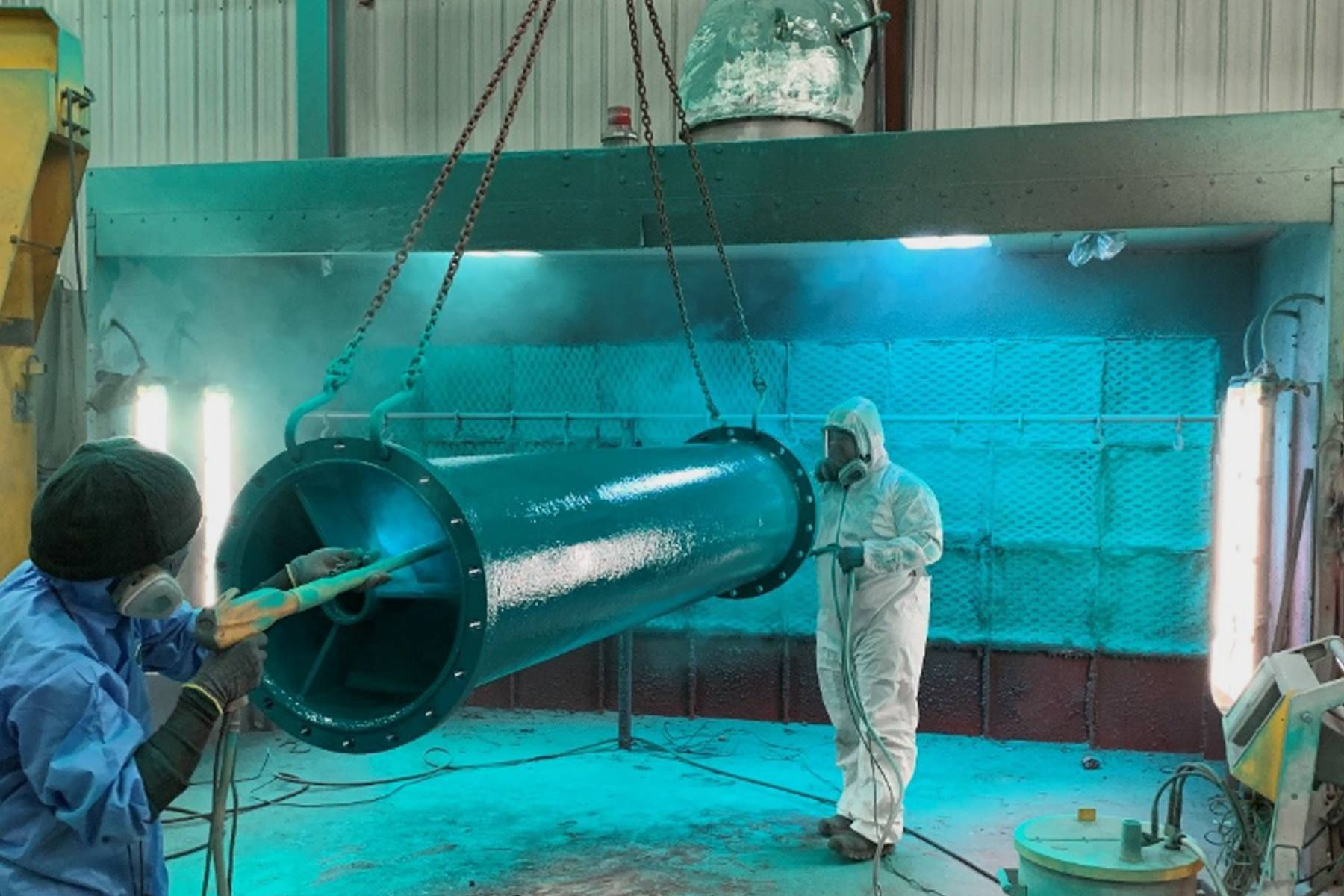
· Liquid epoxy applied at your project site anywhere in India, on pipe already delivered or already installed
Epoxy Coating Specifications
| Parameter | Scope |
|---|---|
| Coating systems | Powder: single-layer and dual-layer FBE. Liquid: general-purpose, epoxy phenolic, glass flake and potable water epoxy |
| Coating chemistry | Thermoset epoxy: one-part fusion bonded powder or two-component (2K) liquid |
| Surfaces coated | External wall, internal bore, or both |
| Pipe types | Seamless, ERW, LSAW, spiral welded (HSAW) |
| Materials accepted | Carbon steel (MS black), low-temperature carbon steel (LTCS), alloy steel, galvanised (GI) |
| Line pipe | API 5L, Grade B to X120 |
| Components | Straight pipe, bends, fittings, flanges |
| Diameter range | 1 to 200 inches external; 3 to 200 inches internal |
| Maximum length | 18 metres |
| Maximum weight | 24 tonnes per pipe; the length, diameter and weight limits apply together |
| Surface preparation | Abrasive blasting to Sa 2½ (ISO 8501-1) on bare steel; galvanised (GI) pipe is prepared by the method agreed in your specification |
| Coating materials | FBE powders from 3M Scotchkote and Jotun; liquid epoxies from Jotun, Hempel and Berger |
| Liquid epoxy types | Solvent-free and high-solids liquid grades, as the specification requires |
| Coating thickness | Dry film thickness as stated in your specification |
Epoxy Coating Standards
We coat to the standard named in your project specification, and that document sets our test scope, coating thickness and inspection plan. The standards we work to for epoxy pipe coating are listed below. We use the ISO 12944 series only where your specification calls for it, since that series covers steel structures rather than line pipe. The FBE standards listed below apply to bare carbon steel pipe. For galvanised (GI) and alloy steel, surface preparation, coating selection and acceptance criteria are agreed with you and the coating manufacturer before work starts.
- FBE, external
- ISO 21809-2:2026Plant-applied single-layer external FBE for buried or submerged oil and gas pipelines
- FBE, external
- IS 15659 (Part 2):2006Indian Standard for fusion bonded epoxy external coatings on buried or submerged pipelines carrying gas and liquid hydrocarbons
- FBE, external
- NACE SP0394-2023 (published by AMPP)Application, performance and quality control of plant-applied single-layer FBE on the external surface of carbon steel pipe
- FBE, single and dual layer
- CSA Z245.20 (latest edition)Plant-applied external FBE, including multi-layer FBE systems
- FBE, internal and external
- AWWA C213-22FBE coatings and linings for steel water pipe and fittings
- Liquid epoxy
- AWWA C210-24Liquid epoxy coatings and linings for steel water pipe and fittings
- Liquid epoxy, external
- EN 10289:2002External liquid epoxy and epoxy-modified coatings for pipelines
- Liquid epoxy, internal
- EN 10301:2003Internal coating to reduce friction, for conveyance of non-corrosive gas
- Liquid epoxy, internal
- EN ISO 15741:2021 (ISO 15741:2016)Friction-reduction coatings for the interior of on- and offshore steel pipelines for non-corrosive gases
- Liquid epoxy, internal
- EN 10339:2007Internal liquid epoxy linings for water pipelines
- Drinking water
- NSF/ANSI/CAN 61Health effects certification for drinking water system components
- Steel structures
- ISO 12944-5:2019Protective paint systems for steel structures, including epoxy (EP)
- Steel structures
- ISO 12944-2:2017Corrosivity categories C1 to CX and immersion categories Im1 to Im4
- Surface preparation
- ISO 8501-1:2007Rust grades and preparation grades, including Sa 2½
Epoxy Coating for Pipes
We apply epoxy coating to steel pipe on the outside wall, inside the bore, or both. Customers can send their own pipe for coating, or buy coated pipe from us. As epoxy coated pipe suppliers, we deliver it ready for installation.
We coat seamless, ERW, LSAW and spiral welded (HSAW) pipe in carbon steel, LTCS, alloy steel and galvanised (GI), including API 5L line pipe from Grade B to X120. Bare steel is blasted to Sa 2½, then coated with FBE on our line or with liquid epoxy built up coat by coat to the dry film thickness your specification calls for. GI pipe follows the preparation and coating method agreed in your project specification, with the zinc layer left intact. Finished lengths are handed over at our factory or your site, ready to install.
Epoxy Coating on Fittings and Flanges
Epoxy coated fittings  bends, tees and reducers  are coated by hand at a dedicated station. They receive either the same system as the straight pipe or a compatible system approved in your specification, most often a liquid epoxy on the fittings, matched to the FBE on the straight pipe.
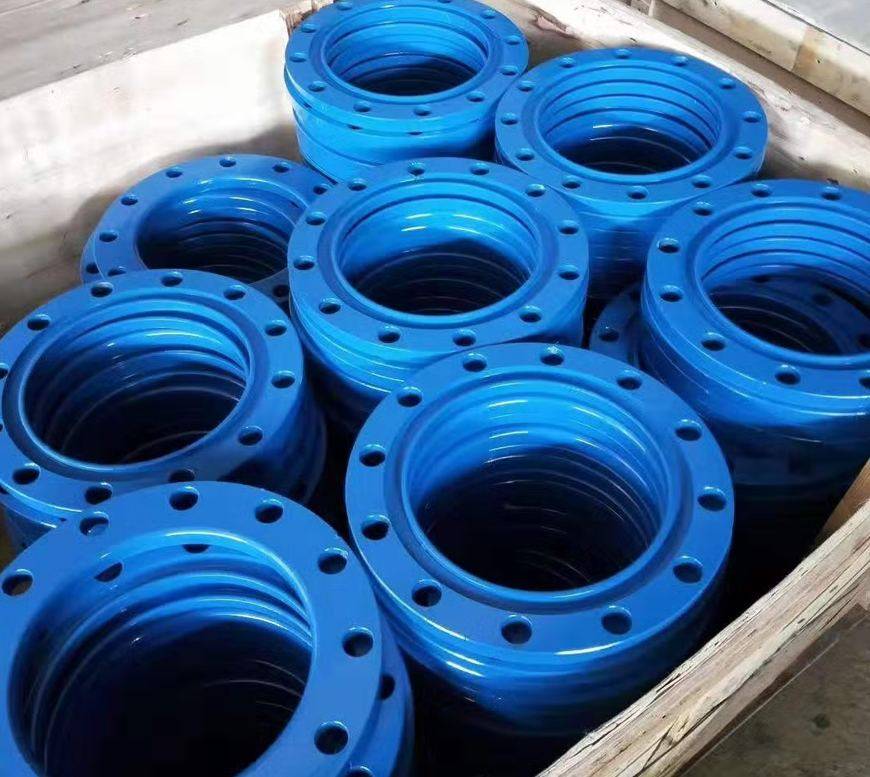
Epoxy coated flanges follow the same specification as the pipe. Gasket faces are masked and left uncoated unless your specification says otherwise.
How Epoxy Coating Protects Steel
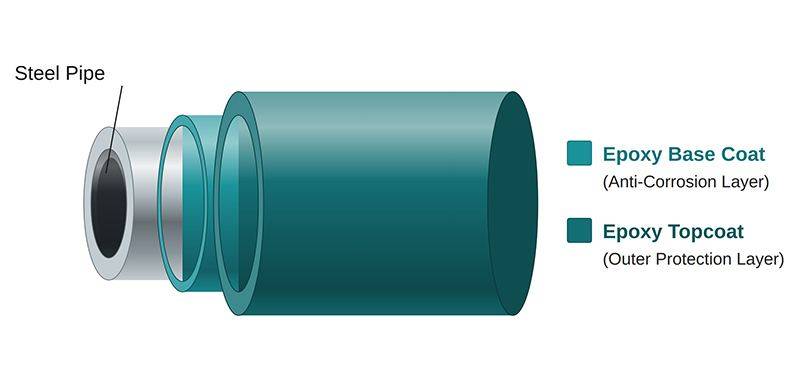
Steel rusts when water and oxygen reach its surface. Dissolved salts, such as chlorides in soil or seawater, speed the process up. Epoxy coating slows corrosion in two ways, and on buried pipelines it also works alongside cathodic protection.
-
A Dense Barrier Film
A cured epoxy film is dense, which makes it difficult for water, oxygen and salts to pass through to the steel. Most pipeline epoxies protect purely as a barrier; they are not consumed in the process. The exception is an epoxy zinc-rich primer, where the zinc adds sacrificial protection beneath the film. Because barrier protection depends on an unbroken film, even a single pinhole is treated as a defect.
-
Strong Adhesion to the Steel
Epoxy wets and bonds tightly to clean, blast-cleaned steel, and the blast profile gives it additional mechanical grip. This bond resists corrosion spreading sideways under the coating if the film is damaged. Oil, mill scale or a shallow profile weakens the bond, so the quality of surface preparation has a direct effect on coating life.
-
Working with Cathodic Protection
On buried and submerged lines, the coating protects most of the steel surface, while a cathodic protection (CP) system protects the small areas exposed at coating defects. A well-bonded coating keeps the current demand on the CP system low over the life of the pipeline.
Types of Epoxy Coating
Epoxy pipe coatings fall into two main groups: fusion bonded epoxy, applied as a powder, and liquid epoxy, applied as a two-part mix. The table compares them.
| Feature | Fusion Bonded Epoxy (FBE) | Liquid Epoxy |
|---|---|---|
| Form | One-part dry powder | Two-part liquid, mixed before use |
| How it cures | Heat from the pre-heated pipe, plus a post-cure oven where the powder data sheet requires it | Chemical reaction, usually at ambient temperature; some grades need heat, as stated on their data sheet |
| Best suited to | Straight line pipe, external and internal | Fittings, flanges, spools and site work |
| Build | Single layer for corrosion protection, or dual layer where the second powder layer is the abrasion-resistant overcoat, as the specification requires | One or more coats to the specified thickness |
Fusion Bonded Epoxy (FBE)
Fusion bonded epoxy coating is supplied as a dry powder that contains both the resin and the curing agent in each particle. In fusion bonded epoxy coating, pipe is heated first, and the charged powder is sprayed onto the hot steel, where it melts, flows into the blast profile and cures. Single-layer FBE provides corrosion protection, adhesion and resistance to cathodic disbondment in one film. Dual-layer FBE adds a second epoxy layer on top for abrasion and impact resistance, which is useful on rocky routes and directionally drilled crossings.
FBE also forms the first layer of 3LPE coating and 3LPP coating, where an adhesive and a polyethylene or polypropylene jacket are applied over it.
Liquid Epoxy Coating
Liquid epoxy is supplied as two separate components, a base and a curing agent, which are mixed in the ratio set by the manufacturer. With liquid epoxy coating, pipe needs no pre-heating in most grades, so the system reaches shapes that a powder line cannot handle, such as flanged assemblies, fabricated spools and pipe already installed on site. A few grades do call for heat, and we follow what the product data sheet states. The film is built up in one or more coats until it reaches the specified dry film thickness. Getting the mix ratio right is essential. An off-ratio mix does not cure properly: the film may stay soft or become brittle, and it will not reach its rated chemical resistance. Adding thickness will not correct it.
We apply four main liquid epoxy grades: general-purpose epoxy, epoxy phenolic, glass flake epoxy and potable water epoxy.
Epoxy Phenolic Coating
Epoxy phenolic coatings incorporate phenolic chemistry into the epoxy, producing a denser film with better resistance to solvents, acids and hot liquids than a standard epoxy. They are commonly specified for refinery and chemical process lines.
Glass Flake Epoxy Coating
Glass flake epoxy coating contains thin glass platelets that overlap within the film. Moisture has to travel around the flakes rather than straight through, which improves barrier performance at a given film thickness. It is well suited to immersion, splash zones and abrasive buried service.
General-Purpose (Amine-Cured) Epoxy
Amine-cured epoxy is a liquid epoxy that hardens with an amine curing agent. It covers routine corrosion duties on pipe, fittings and flanges, and most grades cure at ambient temperature.
The amine type decides cure speed, film hardness and chemical resistance. We apply the grade your specification names, to your dry film thickness. Amine hardeners are also used in glass flake and potable water grades.
Potable Water Epoxy
Linings for drinking water lines, whether liquid or FBE, must be certified as safe for contact with drinking water. We use linings certified to NSF/ANSI/CAN 61, or to the approval your water authority requires, and apply them in line with that certification.
Epoxy Primer
An epoxy primer is the first coat in a multi-coat system. Depending on the specification, it may be a liquid epoxy primer under a build coat, an epoxy zinc-rich primer, or the FBE layer at the base of 3LPE and 3LPP. We follow the primer sequence set out in your project document.
FBE vs Liquid Epoxy: Which Should You Choose?
Choose FBE for new straight pipe coated in a plant, and liquid epoxy for fittings, spools and work at site. Many projects use both, so the straight lengths carry FBE and the shaped pieces carry a compatible liquid epoxy. The table matches common situations to a system.
| Your situation | System that usually fits |
|---|---|
| New straight line pipe, coated before dispatch | Single-layer FBE |
| Rocky trench or directionally drilled crossing | Dual-layer FBE |
| Bends, tees, flanges and fabricated spools | Liquid epoxy, compatible with the pipe coating |
| Pipe already delivered to your site | Liquid epoxy applied at site, compatible with the specified system |
| Hot service, solvents or acids | Epoxy phenolic |
| Immersion, splash zone or abrasive service | Glass flake epoxy |
| Drinking water line | Certified potable grade, FBE or liquid |
| Internal bore with a smooth finish | Internal FBE or liquid epoxy |
If your specification already names the system, we work to that document. Where it leaves the choice open, send us the fluid, the temperature and the installation method, and we will recommend one.
Features and Benefits of Epoxy Coating
Epoxy suits a wide range of pipeline service conditions, because one coating family can be matched to many different duties. The main benefits for a pipeline project are listed below.
-
Chemical resistance chosen for the duty
The choice of resin and hardener decides what the film will resist, so a specification can call for a phenolic grade for hot, acidic service or a glass flake grade for immersion, rather than a general-purpose product.
-
Protection inside and outside
The same chemistry works as an external coating against soil and water and as an internal lining against the conveyed fluid, including certified linings for drinking water.
-
Two application routes
FBE powder suits high-volume straight pipe in a plant, while liquid epoxy handles fittings, flanges, spools and site work, so the whole line can carry compatible epoxy protection.
-
A base for multi-layer systems
FBE forms the first layer of 3LPE and 3LPP, so epoxy provides the corrosion protection underneath the polyolefin jacket in those systems too.
-
Smoother bore
An internal epoxy lining gives a smoother surface than bare steel, which reduces friction losses inside the pipe.
-
Measurable acceptance
Film thickness, holiday detection, adhesion and cure can all be tested and recorded, so a coating package is accepted on documented results.
Internal and External Pipe Epoxy Coating
Internal Epoxy Coating
Internal epoxy coating for pipelines protects the bore of the pipe from the fluid it carries, whether that is raw water, treated water, sewage or process chemicals. A smooth epoxy lining also reduces friction inside the pipe. We line bores from 3 to 200 inches using internal FBE or liquid epoxy, selected to suit the conveyed fluid. For drinking water lines, we use a certified potable grade of either.
Cross-section of an epoxy-lined steel pipe, showing the lining between the steel wall and the flow channel.
External Epoxy Coating
External epoxy coating protects the outside of the pipe from soil, groundwater and moisture. On buried pipe it is used together with cathodic protection. Epoxy chalks and fades in direct sunlight, so pipe that stays above ground generally needs a UV-resistant topcoat over the epoxy.
Industrial Applications of Epoxy Coated Pipe
Oil and Gas Pipelines
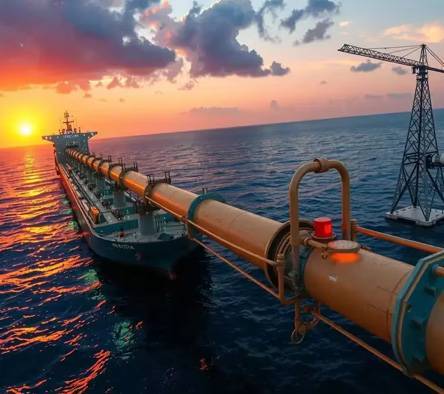
Cross-country crude and gas transmission lines are a major use of pipeline epoxy coating, either as FBE on its own or as the first layer of 3LPE and 3LPP. City gas networks use the same chemistry on smaller pipe sizes. Once a line is backfilled, access for repair is very limited, so the coating has to come through handling and installation intact.

Water Supply Pipelines
Steel water mains often need protection on both surfaces: an external coating against soil and groundwater, and an internal lining against the water itself. Drinking water lines use a certified potable water lining.
Sewer and Effluent Lines
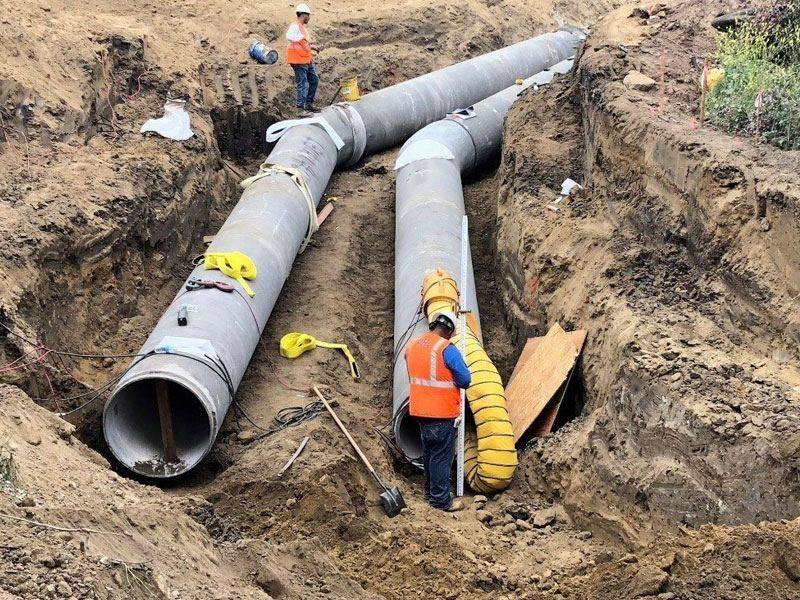
An epoxy lining protects the bore of sewer pipes and effluent rising mains. Hydrogen sulphide released from the sewage is turned by bacteria into sulphuric acid on the pipe wall, and that acid attacks unprotected steel. Chemical-resistant liquid epoxy linings are used for this service.
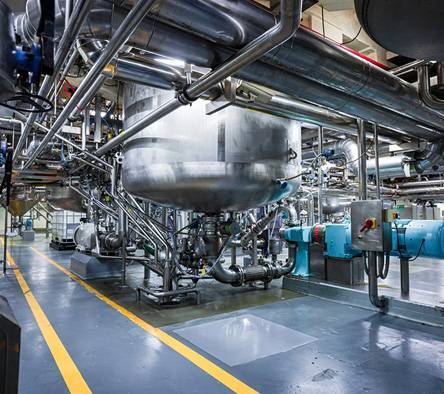
Chemical, Process and Power Plants
Cooling water headers, fire-fighting mains and acid transfer lines in process and power plants carry a high number of fittings, so much of this work is done with liquid epoxy.
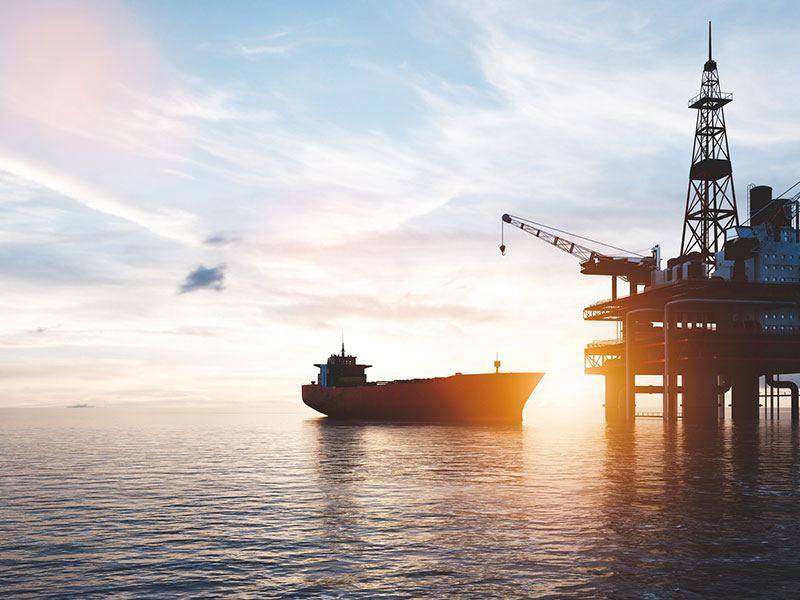
Marine and Port Piping
Jetty pipework, seawater intake lines and risers face repeated wetting, drying and salt exposure, where glass flake epoxy is a common choice.
Pipe Epoxy Coating Process
The epoxy coating process follows the same sequence on every job: prepare the surface, apply the coating, then cure, inspect and document.
-
Surface Cleaning and Checks
Oil and grease are removed first, since blasting would only spread them across the surface. Steel temperature and air humidity are then checked to make sure moisture cannot condense on the steel before coating.
-
Abrasive Blasting
Abrasive blasting takes bare steel to Sa 2½ under ISO 8501-1, or to the grade your specification sets. It removes mill scale, rust and old coating, and leaves a surface profile within the range given on the coating data sheet. Too shallow a profile gives the epoxy too little to grip; too deep a profile can leave steel peaks poking through or sitting just under a thin film, where corrosion can start.
-
Primer Application
Where the specification calls for a primer, such as an epoxy zinc-rich primer or a separate first coat, it is applied at this stage. Single-layer FBE does not need a separate primer, as the powder bonds directly to the steel.
-
Epoxy Application
For FBE, the pipe is heated and the powder is sprayed on electrostatically, where it melts and cures on the hot steel. For liquid epoxy, the base and hardener are mixed in the stated ratio and applied coat by coat within the pot life until the specified dry film thickness is reached. Fittings and flanges are coated by hand at a separate station.
-
Curing, Repair and Handover
FBE cures from the heat held in the pipe, or in a post-cure oven where the powder manufacturer requires it. Liquid epoxy cures through its own chemical reaction and is given its full cure time. Any area that fails inspection is repaired and tested again. Inspection records carry the job number and are sent with the pipe. A standard job takes about seven days, depending on the coated area and the system.
Send Us Your Pipe Schedule for a Coating Quote
Send us your complete coating schedule to receive one rate covering the full scope.
Epoxy Coating Testing and Inspection
| Test | Purpose |
|---|---|
| Dry film thickness (DFT) | Measures the cured coating thickness at points across the surface and compares each reading with your specification. |
| Holiday detection | Uses an electrical probe to find pinholes and gaps in the film. Each fault is repaired and the area is tested again. |
| Adhesion | Confirms the coating is bonded to the steel, using the adhesion tests named in your specification. |
| Cathodic disbondment | Checks how far the coating lifts from the steel around a deliberate defect when cathodic protection current is applied. Carried out where your FBE standard or specification requires it. |
| Cure check | Confirms the coating has fully cured before the pipe is handled or stacked. |
Epoxy Pipe Coating Price
Epoxy pipe coating is priced per square metre of coated area, with a minimum order of 200 m². There is no single rate for all work, since a thin FBE film on straight pipe and a multi-coat liquid system on a spool of bends involve very different effort. The main factors that affect the price are:
- The coating system named in your specification
- Total coated area, pipe diameters and required dry film thickness
- Whether the external surface, the bore, or both are coated
- The number of bends, fittings and flanges, which take longer per square metre than straight pipe
What We Need for a Quote
Send these six details with your enquiry and we can price the job in one pass.
| What to send | Why we need it |
|---|---|
| Pipe sizes, wall thickness, lengths and quantity | Sets the coated area and the rate |
| Which surfaces to coat: outside, bore or both | Decides the system and the working method |
| The coating specification or standard in your tender | Sets preparation grade, thickness and tests |
| Service fluid and operating temperature | Decides the epoxy grade, including drinking water grades |
| Count of bends, fittings and flanges | These take longer per square metre than straight pipe |
| Where the pipe is currently located, and your required delivery date | Decides factory or on-site coating and the schedule |
Why Choose Radisson Impex for Epoxy Coating
• Powder and liquid in-house: FBE and liquid epoxy are both applied by our own teams, so no part of your scope is subcontracted.
- • Specification-led work: preparation grade, film thickness and testing follow your project document, and any conflicts in it are raised at quotation stage.
- • Consistent coating on fittings: flanged spools and bends receive the same system as the straight pipe, or a compatible system approved in your specification.
- • Two supply options: coating on your pipe, or supply of epoxy coated pipe from us.
- For other coating systems, see our pipe coating services.
Frequently Asked Questions
What is epoxy coating on pipes?
It is a cured epoxy film applied to blast-cleaned steel pipe. The film blocks water and oxygen from the steel and bonds strongly to it, which protects the pipe from corrosion.
Is epoxy coating better than ordinary paint for pipes?
For buried and immersed pipe, yes. Cured epoxy bonds tightly to blast-cleaned steel and forms a dense, cross-linked film, which gives it stronger adhesion and better water and chemical resistance than ordinary air-drying paint.
Should I choose FBE or liquid epoxy?
FBE suits straight line pipe coated in a plant, while liquid epoxy suits fittings, flanges, spools and site work. Many projects use both.
What is amine cured epoxy?
Amine cured epoxy is a two-part liquid epoxy that hardens through a reaction between the epoxy resin and an amine hardener. It is the most common curing route for liquid epoxy pipe coatings. The amine type affects cure speed, film hardness and chemical resistance, so the grade is chosen from the fluid and temperature in your specification.
Are epoxy pipes made of epoxy?
Usually not. In most cases "epoxy pipe" means steel pipe with an epoxy coating or lining, where the steel carries the pressure and the epoxy protects it. Glass-reinforced epoxy (GRE) pipe, made from epoxy resin and glass fibre, is a separate product, and we do not make it.
How long does an epoxy pipe coating last?
Buried epoxy systems applied to a recognised standard and used with cathodic protection are designed for decades of service. Actual life depends on surface preparation, film continuity and choosing the right system for the environment.
Can epoxy coated steel pipe be used above ground?
Yes, but epoxy chalks and fades in direct sunlight, so above-ground pipe usually needs a UV-resistant topcoat.
Share your pipe sizes, coated surfaces and project specification to receive a system recommendation and quotation.