
Internal FBE coating is an epoxy lining applied to the inside of a steel pipe. It is made from a powder that melts onto heated steel and hardens into a strong protective film. This film keeps the fluid away from the steel and creates a smoother surface, reducing friction and flow losses. Internal corrosion is more difficult to control because cathodic protection works only on the outside of the pipe. Once the pipe is welded and buried, the inside cannot be easily accessed. For this reason, internal FBE coating is specified before construction begins.
Radisson Impex is an ISO 9001-certified company that applies internal FBE lining to steel pipe in India. Bore lining is available for seamless, ERW, LSAW, and spiral-welded pipes made of mild steel, LTCS, and alloy steel. It can be applied to pipes from 3 to 200 inches in diameter, up to 18 metres long and weighing up to 24 tonnes each. Fittings, bends, and flanges can also be lined. The pipe surface is prepared by abrasive blasting to Sa 2½. Coating thickness follows the project specifications, and test certificates are provided for every job. We mainly serve EPC contractors and government projects across India.
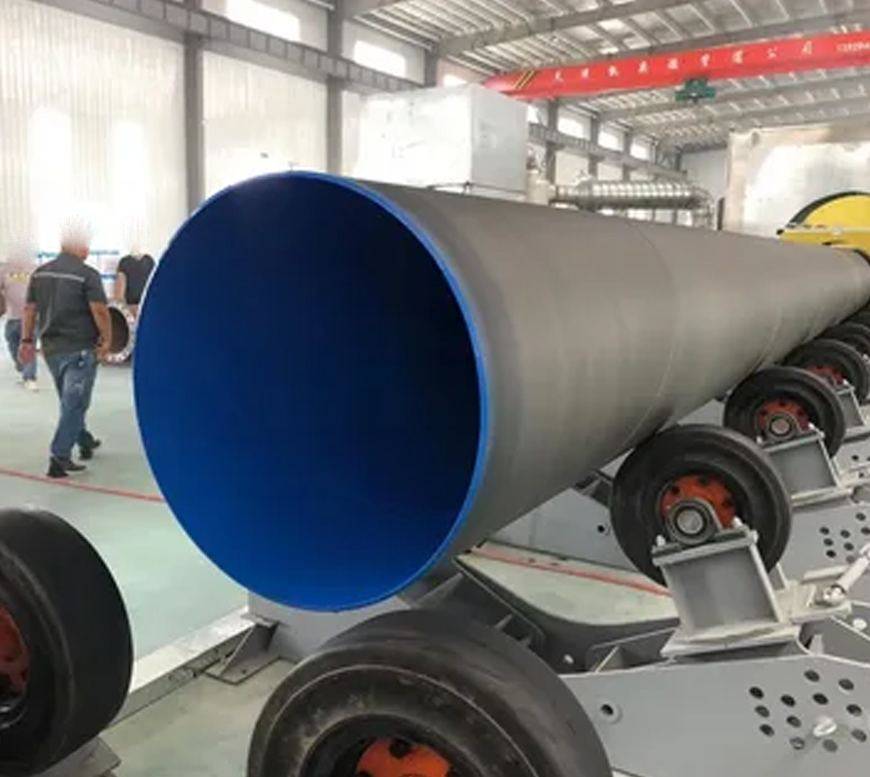
Internal FBE Coating Service Options
Applied at our Vasai factory or at your project site, pan-India.
-
At our facility
Factory coating
- Vasai factory
- Pipe transport arranged
-
At your project site
Onsite coating
- Pan India
- Coated at your project site
How Internal FBE Lining Protects the Pipe Bore
An internal lining works on three fronts inside the pipe: corrosion control at the wetted surface, flow efficiency along the line, and protection of whatever the pipe carries. Single layer and dual layer builds, as well as an additional protection layer, are available. What changes on the inside is exposure, because the film meets the product continuously at line pressure and line temperature.

-
Corrosion Control at the Wetted Surface
The epoxy film separates the pipe wall from the fluid moving through it. Water carried with crude, oxygen dissolved in a municipal main and carbon dioxide in a gas stream all attack bare steel from the inside. Cathodic protection can't counter any of it, because impressed current and sacrificial anodes act on the outside. Internal anti-corrosion epoxy coating is the barrier doing that work, and its value comes from how continuous the film is.
-
Flow Efficiency and Reduced Friction
A blast-cleaned steel bore is rough enough to cause real friction loss. Cured epoxy leaves that surface far smoother, so frictional pressure drop falls and the line moves more product for the same pump or compressor duty. Over a long route, the difference turns into fuel and power saved every day it operates.
-
Protection of the Transported Medium
Some products need protecting from the pipe far more than the pipe needs protecting from what it carries. Drinking water picks up iron, colour and taste from a corroding steel main. Rust particles and scale released from bare walls travel downstream into filters, pumps, meters and control valves. A lined bore delivers the product at the quality it had at the inlet, and that's often the whole reason it is preferred.
Internal FBE Lining Specifications
These fusion bonded epoxy coating specifications set the boundaries of what we line. Raise anything outside these figures at the enquiry stage, along with your service fluid.
Internal epoxy powder coating is a materials-led service, so the powder grade decides much of the performance.
| Parameter | Scope |
|---|---|
| Coating system | Internal fusion bonded epoxy, applied as a thermosetting epoxy powder lining to the pipe bore |
| Build options | Single layer FBE, dual layer FBE, and an additional protection layer where the specification calls for one |
| Pipe types accepted | Seamless, ERW, LSAW, spiral welded (HSAW) |
| Substrates accepted | Mild steel (MS black), LTCS, alloy steel |
| Line pipe | API 5L line pipe, Grade B through X120 |
| Components coated | Straight pipe, fittings, bends, flanges |
| Substrate condition | New pipe |
| Diameter range | 3 inch to 200 inch |
| Maximum pipe length | 18 metres |
| Maximum weight per pipe | 24 tonnes |
| Surface preparation | Abrasive shot blasting to Sa 2½ |
| Coating thickness | Applied to the thickness stated in the customer specification |
Internal FBE Coating Standards
The internal lining standard your project names governs surface preparation, film thickness and the test regime, and we work to that document. Internal fusion bonded epoxy coating sits under a narrower set of standards than external FBE coating, because fewer standards were written specifically for the bore.
Region / Body / Designation / Standard title and scope
- USA (AWWA)
- AWWA C213-22Fusion-Bonded Epoxy Coatings and Linings for Steel Water Pipe and Fittings. Covers the interior lining alongside the exterior coating.
- USA (API)
- API RP 5L7Recommended Practices for Unprimed Internal Fusion Bonded Epoxy Coating of Line Pipe, second edition 1988. API has withdrawn the document, and older project specifications still name it.
- China (SY/T)
- SY/T 0442-2018Technical standard for fusion bonded epoxy powder internal anti-corrosion coating of steel pipelines. Effective March 2019, replacing the 2010 edition, and scoped to service up to 80 °C.
Features and Benefits of Internal FBE Pipe Coating
Five properties explain why FBE internal lining stays the default choice for the bore, and each relates to the project as throughput, product quality or risk.
-
Serving where cathodic protection cannot go
The lining provides the bore with a dedicated barrier against corrosion, making it an essential part of the pipeline design rather than an optional extra.
-
Throughput gained without extra compression
A smoother bore lowers frictional loss, so the same line carries more product at the same inlet pressure. Operators count that as extra capacity.
-
The delivered product stays clean
Iron pickup, taste, colour and rust particulate all come from bare steel meeting the flow. Lining the bore removes that source.
-
A thin film that barely reduces bore area
Epoxy powder builds a hard, bonded film without the wall thickness that a mortar lining adds, so the internal cross-section stays close to design.
-
Fittings and bends take the same build
Protection stays continuous through the parts of a system where flow is most disturbed.
Internal FBE Lining Process
The internal FBE coating procedure runs in sequence: blast cleaning of the bore, pre-heating, Powder Application and Fusion onto the hot internal surface, then cure, inspection and repair of any holiday found. The internal FBE coating process is identical in chemistry for straight pipe, fittings, bends and flanges. What changes between them is the access to the surface being coated.
-
Surface Preparation Inside the Bore
Abrasive shot blasting takes the internal surface to Sa 2½, the near-white metal grade epoxy powder systems call for. Mill scale, rust and any previous lining come off. The blast profile then gives the powder an anchor pattern to key into, and bore cleanliness decides performance here more than any other single variable, because a film cannot bond through contamination. We clear spent abrasive and dust out, then check the surface before any powder goes on.
-
Powder Application and Fusion
The blasted pipe is pre-heated, and epoxy powder then reaches the internal surface, melts against the hot steel, flows out and cross-links. Timing is what produces a bonded film rather than a loose deposit. The powder has to arrive while the steel sits inside its application temperature window, and curing follows from the heat already held in the wall. Getting powder into the bore is what separates internal work from external work, since powder must travel the full length from the pipe ends instead of around an exposed outside surface.
-
Curing, Inspection and Handover
The film cures to a thermoset state before the pipe moves anywhere. We record dry film thickness, holiday, adhesion and curing results against the job, repair any holiday found and re-test that spot. The documentation package stays with the pipe. That's the bore lining sequence end to end, from bare steel to a documented, lined length.
FBE Internal Pipe Coating Thickness and Performance
Fusion bonded epoxy coating thickness inside the pipe is set by your project specification rather than by a house figure, and we apply the film as your document states. Temperature limits and resistance behaviour follow from the powder grade that the document names.
Film Thickness Inside the Pipe
Your specification sets the dry film thickness for the bore. There is no house range, because substituting our number for yours would put the lining outside the specification it has to meet. Internal film thickness is set by your specification. AWWA C213, for example, sets the same 12 mil (305 µm) minimum for the interior lining as for the exterior coating.
Service Temperature and Chemical Resistance
Service temperature belongs to the powder grade your specification names, not to internal FBE as a category. SY/T 0442-2018 gives a reference point, scoping its internal linings to pipelines operating up to 80 °C. Cured epoxy holds up against water, produced water and hydrocarbon streams, and against the pH range met in municipal water and effluent duty. Confirm the grade against your fluid analysis first.
Adhesion and Film Continuity
Two properties decide how long an internal lining lasts: adhesion to the blasted steel and continuity of the film. A pinhole in a bore that nobody can reach becomes a corrosion cell that works outward under the coating. Adhesion loss lets the product travel between the film and the wall. Both properties are measurable before despatch, which is why holiday detection runs on every length, and adhesion is tested at the frequency your specification sets.
Send Us Your Internal FBE Coating Schedule for a Coating Quote
ISO 9001 certified coating operations, running from Mumbai since 2012 with pan-India execution. Factory photos, video of live application and a sample test certificate are available on request.
Testing and Inspection of the Internal FBE Pipe Coating
Lining quality is confirmed by measurement and documented records. Four checks run on every internal lining job:
-
Dry film thickness (DFT)
Readings are taken across the lined surface and compared against the thickness your specification states.
-
Holiday or spark testing
The bore is swept electrically to find pinholes and thin spots that the eye cannot reach, and each one is rebuilt and re-swept before the length passes.
-
Adhesion testing
Bond strength is checked by knife test (ASTM D6677) or the method your specification names, at the frequency it sets, and each test spot is repaired.
-
Curing testing
The epoxy is checked for full cure, since an incomplete reaction leaves the film softer and less chemically resistant than the specification assumes.
Nominated inspection agencies and resident inspectors are permitted on the work where your contract requires them. Signed certificates and the coating report travel with the pipe. On internal work that record carries unusual weight, because nobody sees the coated surface again once the line is joined.
Internal FBE Lining Industrial Applications
Internal epoxy coating for pipelines is specified wherever the bore meets a fluid that would attack the steel, or carries a product that has to arrive clean. Four end uses account for most of the internal coating of pipes we carry out, and FBE coated pipe serves them all.

Oil and Gas Gathering and Transmission Lines
Produced water travelling with the hydrocarbon is what corrodes a gathering line from the inside. Wet crude, formation water and multiphase streams carry the water and dissolved gas that attack bare steel, usually along the bottom of the pipe. Internal anti-corrosion epoxy coating keeps that contact off the wall. Sweet gas pipelines take the same lining, often with flow efficiency as the second reason.

Drinking Water and Municipal Mains
Water utilities line steel mains internally to keep iron out of the supply and hold hydraulic capacity across the design life. Water utilities use FBE lining on steel distribution and transmission mains, and AWWA C213 is the document most FBE water specifications point to. For drinking water service, AWWA C213 requires the lining to be certified to NSF/ANSI 61. Outside the USA, also check what your local water authority requires, and confirm the powder grade carries the right approval. Where a project needs food contact approval instead, our food grade epoxy coating covers that requirement.
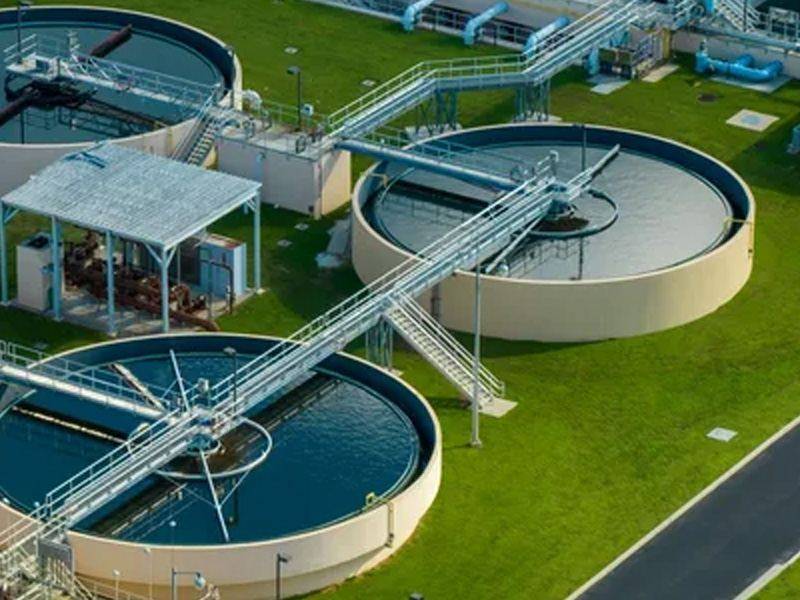
Treated Sea Water and Effluent Lines
Treated seawater attacks bare steel continuously, and cooling water intakes, desalination feeds and marine service lines run it around the clock. Effluent and sewage rising mains present a different chemistry: sulphide, swinging pH and abrasive solids.An epoxy powder film handles both duties.
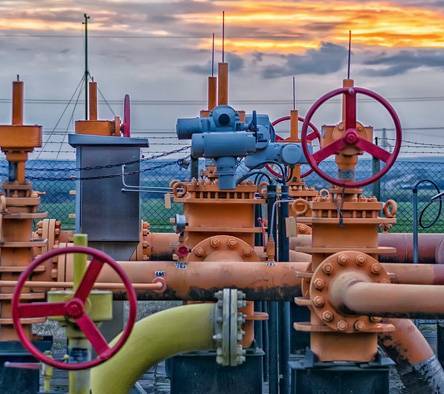
Gas Transmission Lines Requiring Flow Efficiency
Non-corrosive gas transmission is the original flow efficiency application. A smoother bore cuts frictional pressure drop, so the line moves more gas for the same inlet pressure, or the same gas for less compression. Internal flow coating, also written as flow efficiency coating (FEC), is bought here as a throughput decision rather than a corrosion one. ISO 15741 and EN 10301 both cover this duty, but both are written for liquid epoxy paint, not epoxy powder. If your document names either one, check with us whether FBE is acceptable.
Internal FBE Coating Cost
Lining work is charged per square metre, with a minimum order of 200 square metres. There is no single fusion bonded epoxy coating price, because the cost per square metre depends on the pipe type and specification. Three factors influence the quotation:
- Internal diameter and total lined length, since a small bore takes more work per square metre
- Film thickness and the standard your specification names
- Component mix, because bends, fittings and flanges need more handling than straight lengths
Send Us Your Pipe Schedule and Service Fluid. Give us the diameter, quantity and the specification, and we'll respond to your scope.
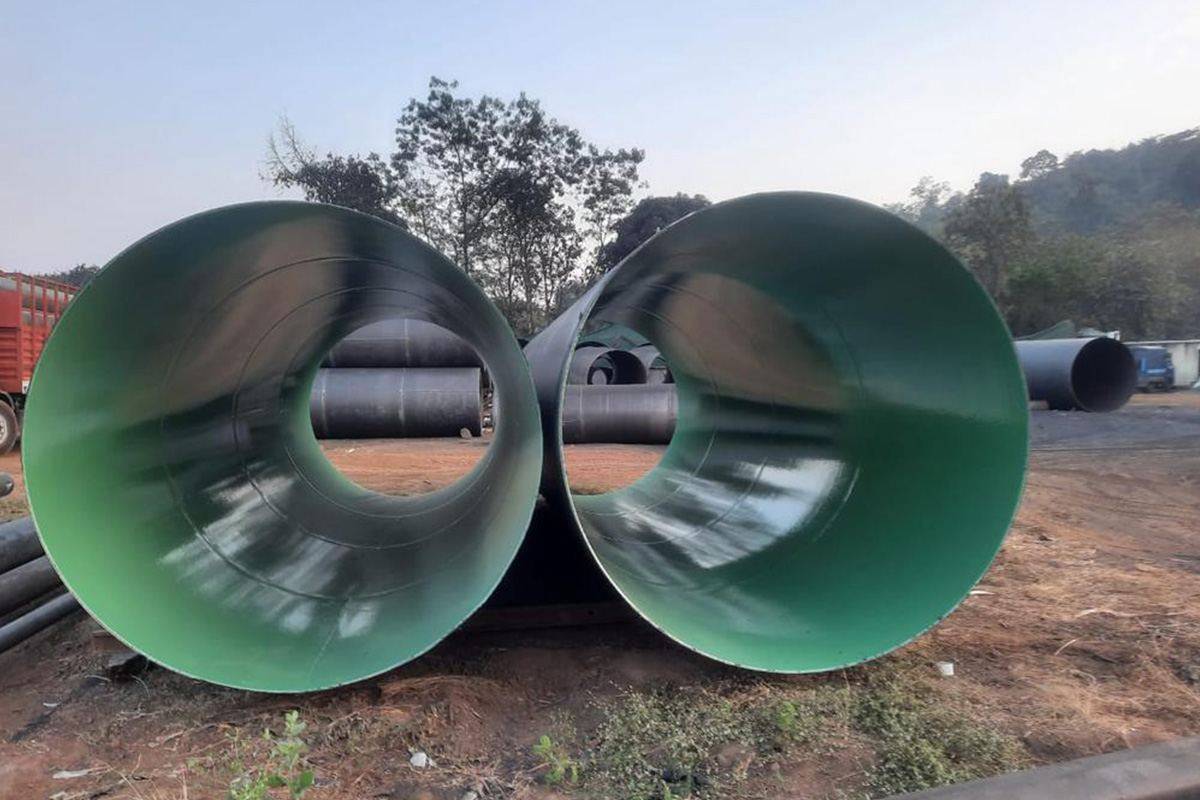
Why Choose Radisson Impex for Internal FBE Coating
Three reasons to place your bore lining with us, backed by the same team that handles our other coating systems.
- Technical assistance runs from surface preparation through to inspection, testing and documentation.
- Film thickness, blast grade and test regime follow your project document rather than a house standard.
- Thickness, holiday, adhesion and cure results are written up for each job, and your inspector or a nominated agency can witness any of it.
Internal FBE Coating: Frequently Asked Questions
What does FBE stand for in internal FBE Coating?
FBE stands for fusion bonded epoxy, written informally as fusion bond epoxy. It's a one-part thermosetting powder that melts onto preheated steel and cures into a bonded film. Applied to the bore, it gets shortened to IFBE in some correspondence.
What is the procedure for Internal FBE Coating?
The procedure to apply internal FBE coating is divided into three stages: Surface Preparation, Powder Application & Fusion, and Curing, Inspection & Handover.
What film thickness do you apply inside the pipe?
The lining is built to the figure your specification carries, never to an in-house default. We confirm the figure in the quotation, then confirm the finished film with thickness readings taken along the bore before despatch.
What pipe sizes and materials can be internally coated?
We line pipe from 3 inches to 200 inches, up to 18 metres long and 24 tonnes per pipe, in mild steel, LTCS and alloy steel. Seamless, ERW, LSAW and spiral welded pipe all qualify, as do fittings, bends and flanges.
Which standard do you line to?
Whichever specification your project is written to. AWWA C213, API RP 5L7 and SY/T 0442 are the principal designations written for internal fusion bonded epoxy coating, so send that document with your enquiry.
Contact Us for Internal FBE Lining. Send your pipe schedule, service fluid and coating specification, and we'll confirm the scope.