
Internal coating of pipes is a protective lining applied to the inside surface, or bore, of a steel pipe. It separates the steel wall from the water, gas, oil or chemicals that the pipe carries.
This inside pipe coating is also called internal lining or ID coating. It serves as internal pipeline coating for corrosion protection, and it also keeps the product clean and improves flow.
External coating and cathodic protection (CP) protect only the outside of a buried pipeline. The inside surface needs its own protection: an internal lining, supported where needed by corrosion inhibitors or regular pigging.
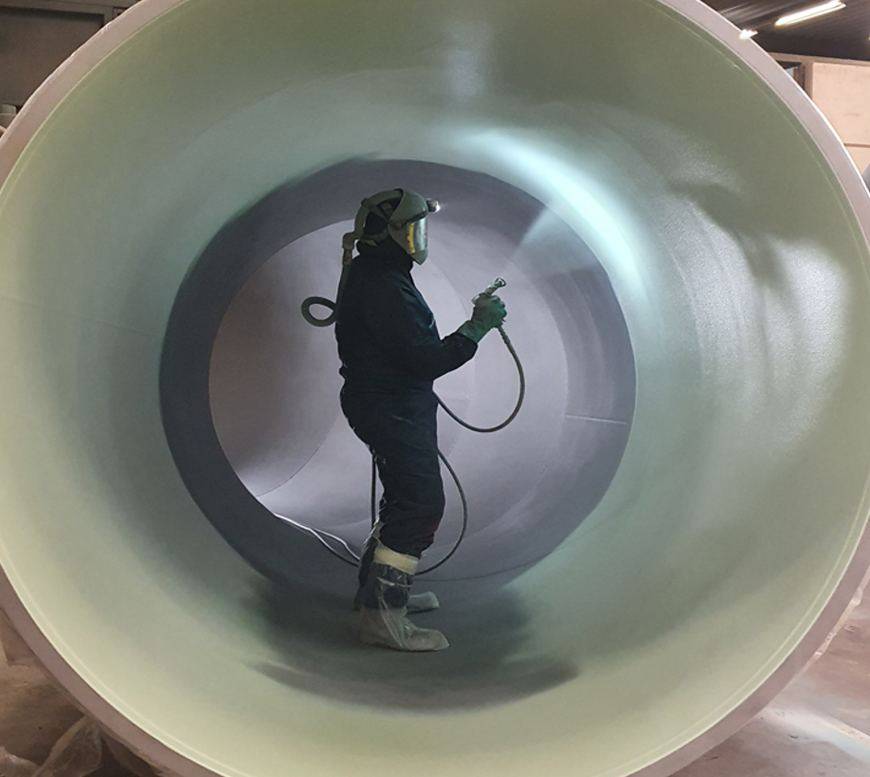
Internal Pipe Coating Services at Radisson Impex
At Radisson Impex, based in Mumbai, we line steel pipes at our Vasai factory and at project sites across India. We were established in 2012 and are ISO 9001 certified.
We manufacture and supply internal coated pipe, and we also line pipe that customers send to us. Straight pipe, fittings, bends and flanges are lined on the same job.
For factory lining, each pipe can be up to 18 m long and weigh up to 24 tonnes. Whichever limit is reached first applies. Internal lining is part of our wider pipe coating scope, which also covers external coating systems.
| Service option | What it covers |
|---|---|
| Factory lining | Lining at our Vasai factory, with pipe transport arranged. FBE lining is done only at the factory. |
| Onsite lining | Liquid epoxy lining and in-place cement mortar lining at your project site, anywhere in India. |
Why Steel Pipes Need Internal Coating
Internal corrosion depends on what the pipe carries. The fluid, the chemistry of any water present, the temperature and the operating conditions decide the main cause in each line.
| Cause | What happens inside the pipe | Common in |
|---|---|---|
| Produced water | Water separates from the oil and collects along the bottom of the line. The water, not the oil, corrodes the steel. | Crude oil and gathering lines |
| Carbon dioxide (CO₂) | CO₂ dissolves in the water and forms carbonic acid, which attacks the steel. | Oil and gas lines |
| Hydrogen sulphide (H₂S) | Increases local corrosion, depending on water chemistry and operating conditions. H₂S can also cause cracking of the steel, which is controlled by material selection under ISO 15156, not by the lining. | Sour oil and gas lines |
| Dissolved oxygen | A main cause of corrosion in water systems. Uneven oxygen at the wall leads to pitting. | Water and cooling systems |
| Chlorides | Make water more corrosive to steel. Seawater and desalination feed are more severe than drinking water. | Seawater and desalination lines |
| Bacteria | Bacteria grow in low-flow areas. Sulphate-reducing bacteria (SRB) produce sulphide at the steel and cause local pitting. | Stagnant mains and dead-ends |
Internal Corrosion from the Conveyed Fluid
A continuous internal lining keeps these fluids and bacteria off the steel surface.
Product Contamination
Some pipes are lined to protect the product. A corroding steel water main releases iron into the supply, which reaches consumers as discoloured water. In process plants, rust particles can foul filters, control valves and heat exchangers downstream.
Flow Efficiency and Friction Loss
Friction loss inside a pipe depends on flow velocity, pipe length and diameter, the roughness of the inner wall, and the density and viscosity of the fluid. Unlined steel has a rough surface, and mill scale or rust makes it rougher. Over time, rust nodules (tuberculation) build up and reduce flow further.
A cured epoxy lining gives a much smoother bore, so friction and pressure drop are lower. The line can then carry more flow at the same pressure, or the same flow with less pumping or compression energy.
On non-corrosive gas pipelines, lower friction is often the main reason for lining. ISO 15741 and EN 10301 cover these friction-reduction coatings.
Types of Internal Pipe Coating
We apply three families of internal lining: internal fusion bonded epoxy (FBE), cement mortar lining and liquid epoxy.
Internal Fusion Bonded Epoxy (FBE) Lining
Fusion bonded epoxy is a powder coating applied to pre-heated steel. The powder melts, flows over the blasted surface and cures into a hard, smooth film. We apply internal FBE in single-layer and dual-layer builds at our Vasai factory. Some FBE powders also need a post-cure oven.
Cement Mortar Lining
Cement mortar lining is a thick layer of mortar on the pipe wall. It acts as a barrier and keeps the steel surface highly alkaline, which protects the steel from corrosion. Our typical range is 6.5 to 12 mm, for bores from 3 to 36 inches. Where AWWA C205 applies, thickness follows that standard for each pipe size.
Liquid Epoxy Linings
Liquid epoxy is a two-part coating. Unlike FBE, it is applied without pre-heating the pipe. Most grades cure at ambient temperature, and some need heat to cure. We apply four grades:
Most liquid epoxy grades use an amine hardener. The hardener type affects chemical resistance, so it is chosen from the fluid analysis.
| Grade | Used for |
|---|---|
| General-purpose epoxy | Barrier lining for process fluids and wastewater |
| Epoxy phenolic | Higher temperatures and stronger resistance to solvents and chemicals |
| Glass flake epoxy | Abrasive and immersion service; overlapping glass flakes give moisture a longer path to the steel |
| Food grade epoxy | Drinking water lines; WRAS approved grades as standard, or the approval your project specification names |
Cement Mortar Lining vs Epoxy Lining
The epoxy coating range explains each epoxy grade and its limits in more detail.
| Factor | Cement mortar lining | Epoxy lining |
|---|---|---|
| Bore size (our scope) | 3 to 36 inches | 3 to 200 inches |
| Lining thickness | Typically 6.5 to 12 mm, or as the specification sets | Measured in microns |
| Flow area | Noticeable loss of bore on small sizes | Bore almost unchanged |
| Typical fluids | Raw and treated water (check soft or aggressive water and heavily chlorinated water first), non-acidic sewage and effluent. Best for lines that stay full of water | Water, hydrocarbons, chemicals and solvents, depending on grade |
| Acid service | Not suitable | Chosen by resin and hardener type |
| At a fine defect | Steel at a fine crack can stay protected by the alkaline mortar | A break in the film can become a corrosion site |
| Abrasion from solids | High tolerance because of its thickness | Moderate; better with glass flake grades |
| Bore smoothness | Good | Highest; used for flow-efficiency work |
What We Need From Your Project
The right lining depends on the pipe, the fluid and the project specification. These details help us recommend a system and quote correctly.
| Your input | Why it matters | What we confirm |
|---|---|---|
| Pipe OD, wall thickness, length and material | Sets coated area, pipe length and whether the pipe fits factory limits | Factory or onsite lining, and the rate per running metre |
| Conveyed fluid and operating temperature | Decides the lining family and grade | Recommended lining system |
| Governing standard or project specification | Sets surface preparation, thickness and tests | Preparation grade, thickness and test scope |
| Drinking water use | Needs a certified potable lining | Food grade epoxy with WRAS approval, or the approval your specification names |
| Field welding plan | Welding heat affects the lining near the joint | Cutback length at pipe ends and joint protection method |
| Quantity of pipe, fittings, bends and flanges | Fittings take longer to line than straight pipe | Rate and schedule for the full scope |
Internal Pipe Coating Specifications
| Parameter | Scope |
|---|---|
| Service | Lining of the bore of pipe, fittings, bends and flanges (also written as ID coating on oilfield schedules) |
| Systems applied | Internal FBE (single layer and dual layer), general-purpose epoxy, epoxy phenolic, glass flake epoxy, Food grade epoxy, cement mortar lining |
| Pipe types | Seamless, ERW, LSAW, spiral welded (HSAW) |
| Materials | Carbon steel (including mild steel / MS black), LTCS and alloy steel |
| Line pipe | API 5L, Grade B to X120 |
| Bore size range | 3 to 200 inches for epoxy; 3 to 36 inches for cement mortar. AWWA C205 applies from 4 inches; 3-inch lining follows the project specification |
| Cement mortar thickness | 6.5 to 12 mm, or as set by the project specification. Where AWWA C205 applies, thickness follows that standard for each pipe size. |
| Epoxy film thickness | As per project specification, in microns (DFT - dry film thickness) |
| Surface preparation | Abrasive blasting to Sa 2½, with the surface profile in your specification, for epoxy; cleaning to remove mill scale, loose rust and oil for cement mortar |
Internal Pipe Coating Standards
The standard in your project specification sets the preparation, thickness, tests and acceptance criteria. These standards are commonly used for internal lining work.
Region / Standard / Scope
- USA (AWWA)
- AWWA C210-24Liquid epoxy coatings and linings for steel water pipe and fittings
- USA (AWWA)
- AWWA C213-22FBE coatings and linings for steel water pipe and fittings, inside and outside
- USA (AWWA)
- AWWA C205-24Shop-applied cement mortar lining and coating for steel water pipe, 4 inches (100 mm) and larger
- USA (AWWA)
- AWWA C602-23In-place cement mortar lining of installed water pipelines, 4 inches (100 mm) and larger
- International (ISO)
- ISO 15741:2016Liquid epoxy friction-reduction coatings for the inside of steel pipelines carrying non-corrosive gas. Also published in Europe as EN ISO 15741:2021
- Europe (EN)
- EN 10301:2003Internal liquid epoxy coating to reduce friction in steel pipes and fittings carrying non-corrosive gas
- China (SY/T)
- SY/T 0442-2018Internal FBE coating of steel pipelines for operating temperatures up to 80 °C
- India (IS)
- IS 11906:1986Cement mortar lining of cast iron, mild steel and ductile iron pipes and fittings carrying water
- USA (API)
- API RP 5L2 (4th edition 2002, reaffirmed 2015, now withdrawn)Older practice for internal coating of line pipe for non-corrosive gas, still quoted in some older specifications
ISO 15741 and EN 10301 are written for liquid epoxy paint. Other systems are accepted only if they meet the same requirements, so check the tender before offering FBE against either standard.
IS 15659 (Part 2):2006 covers FBE for the outside of buried and submerged pipe. Internal linings follow the standards in the table above.
Internal Pipe Coating Process
1. Surface preparation
• Epoxy: the bore is abrasive blast cleaned to Sa 2½, then spent abrasive and dust are cleared out.
• Cement mortar: the bore is cleaned of mill scale, loose rust and oil.
• Good surface preparation is the base of a long-lasting lining.
2. Lining application
• FBE: the pipe is pre-heated, and the powder melts and cures on the hot steel.
• Liquid epoxy: sprayed onto the bore, which suits pipe that cannot be heated.
• Cement mortar: placed by centrifugal spinning in the shop, or by a lining machine on site, to the specified thickness.
3. Curing and release
• Epoxy cures into a hard film and is then tested. Some FBE powders need a post-cure oven.
• Cement mortar is kept moist and protected until it reaches its required strength, so it holds up when the line is first filled.
Coating the inside of a pipe follows three stages. All tools work through the pipe ends, which is the main difference from external coating.
Send Us Your Internal Pipe Coating Schedule for a Coating Quote
ISO 9001 certified coating operations, running from Mumbai since 2012 with pan-India execution. Factory photos, video of live application and a sample test certificate are available on request.
Testing and Inspection of Internal Linings
Third-party inspectors and client representatives witness tests where the specification requires it. Signed test certificates and a coating report go with every shipment.
| Test | Epoxy lining | Cement mortar lining |
|---|---|---|
| Thickness | Dry film thickness (DFT) in microns, measured with magnetic DFT gauges (ASTM D7091) | Pin-depth readings confirm the specified thickness for the pipe size, within tolerance |
| Holiday (pinhole) test | Under ASTM D5162-24, films of 0.5 mm or less are normally tested with a low-voltage wet sponge, and thicker films with a high-voltage spark tester. Films over 0.25 mm and under 0.5 mm may be spark tested if the voltage is set correctly and the coating manufacturer agrees. | Not used; this test applies only to non-conductive coatings on metal |
| Adhesion | Adhesion tests to the method in the specification (for example, pull-off to ASTM D4541 under AWWA C210) | Not applicable |
| Cure | Cure tests confirm the lining has cured to the specified level | Curing checks confirm the mortar has reached its required strength |
Applications of Internal Pipe Coating
Internal coating for pipeline service is used when the fluid attacks the steel, when the product must stay clean, or when better flow is needed.
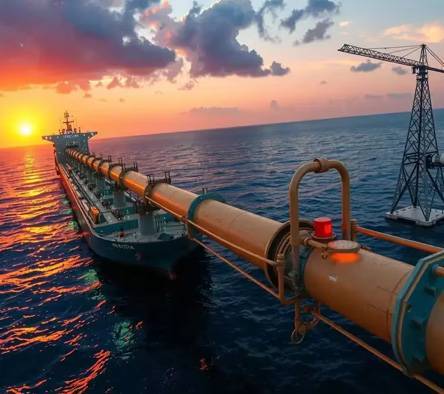
Oil gathering lines
Conditions inside the pipe: Water carried with the oil corrodes the bottom of the line. Usual lining: Epoxy lining.
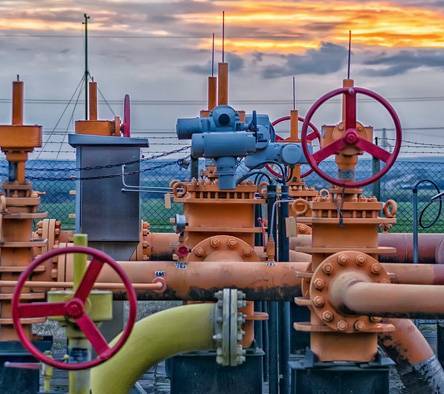
Gas transmission lines
Conditions inside the pipe: Little corrosion; lining is mainly for flow efficiency. Usual lining: Liquid epoxy friction-reduction coating.
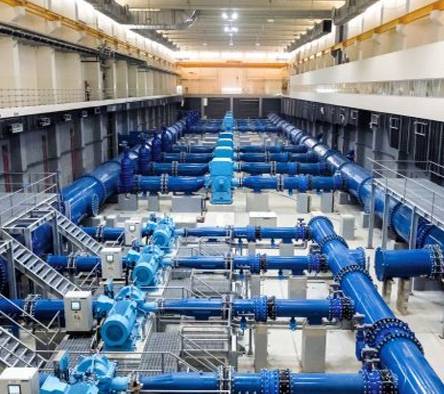
Water transmission and distribution mains
Conditions inside the pipe: Iron pick-up and loss of flow from tuberculation. Usual lining: Cement mortar from 3 to 36 inches (our scope), epoxy from 3 to 200 inches. Certified Food grade epoxy lining for drinking water.
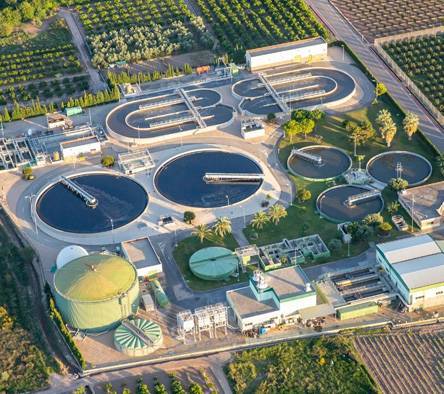
Sewage and effluent rising mains
Conditions inside the pipe: Sulphide, changing pH and abrasive solids. Usual lining: Chemical-resistant liquid epoxy or cement mortar for non-acidic effluent.
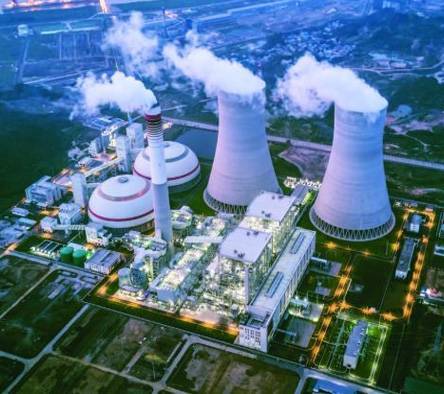
Cooling water headers
Conditions inside the pipe: Iron released from the pipe can foul heat exchangers. Usual lining: Epoxy or cement mortar, by water chemistry.
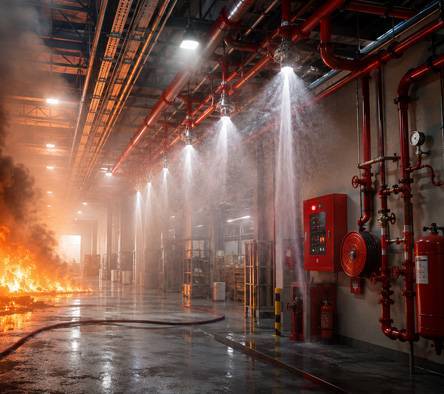
Fire water ring mains
Conditions inside the pipe: Always full of water, rarely flowing. Usual lining: Epoxy or cement mortar lining, to stop tuberculation and keep full flow available.
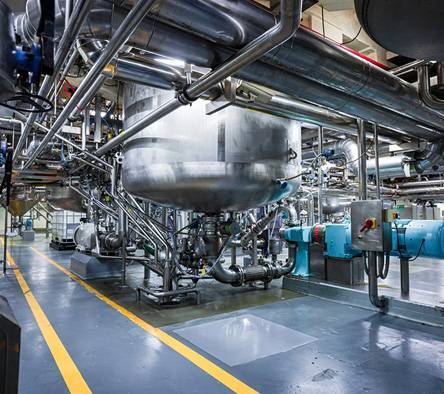
Process fluid transfer lines
Conditions inside the pipe: Solvents, acids, hot condensate or demineralised water. Usual lining: Epoxy grade matched to the fluid and the plant's cleaning methods.
Benefits of Internal Pipe Coating
-
Bore protection
Protects the one surface that external coating and cathodic protection cannot reach.
-
Cleaner product
Keeps rust and iron out of drinking water and process fluids.
-
Lower friction
Reduces pressure drop, which increases capacity or lowers pumping and compression energy.
-
Lining matched to the fluid
Cement mortar and several epoxy grades let the lining be chosen from the fluid analysis and bore size.
-
Permanent records
Test certificates and the coating report become the lasting record of lining quality.
Internal Pipe Coating Price
- Internal coating pipe work is priced per running metre of pipe for each diameter, with a minimum order of 200 m² of coated bore. The rate depends on:
- • The lining system: cement mortar, FBE and liquid epoxies have different material costs
- • Bore diameter: small bores take longer to line and finish
- • Specified thickness: a film in microns, or 6.5 to 12 mm of mortar, or as your specification sets
- • Share of fittings, bends and flanges compared with straight pipe
- A standard ID coating job takes about seven days once the pipe and an approved specification are ready. Send your full pipe schedule so the whole scope can be priced as one lot.

Why Choose Radisson Impex for Internal Pipe Coating
• Mortar and epoxy in one place: our recommendation is based on your fluid and bore size.
- • Internal and external in one order: a lined bore and external pipe coating can run on the same lengths, with one vendor.
- • Fittings on the same job: fittings, bends and flanges receive the same system as the straight pipe.
- • Specification-led work: thickness and surface preparation follow your project specification.
- • Factory or site: lining at our Vasai factory or at your project site.
Frequently Asked Questions
What is Internal Coating of Pipes?
It is a lining applied to the bore of a steel pipe to separate the steel from the fluid or gas it carries. External coating and cathodic protection protect only the outside, so the bore needs its own lining.
What are the types of Internal Pipe Coating?
The two main groups are cement mortar lining, applied in millimetres, and epoxy lining, applied in microns. Epoxy comes as FBE powder or liquid epoxy, which gives three lining families in total. On oilfield projects, internal epoxy coatings are also called internal plastic coating (IPC).
How do I choose between Cement Mortar and Epoxy Lining?
Choose by bore size and fluid chemistry. Cement mortar suits raw water, drinking water and non-acidic effluent in lines that stay full; check soft, aggressive or heavily chlorinated water first. It also reduces the bore. Epoxy keeps the bore almost unchanged and can be chosen for hydrocarbons, sour gas or chemicals, depending on the grade.
Does Internal Pipe Coating improve flow?
Yes. A cured epoxy lining is much smoother than bare steel, which lowers friction and pressure loss. On gas transmission lines, better flow is often the main reason for lining.
What happens to the lining at a girth weld?
Welding heat damages epoxy near the joint, so pipe for field welding has a bare cutback at each end. After welding, the joint is protected with corrosion-resistant internal sleeves or by robotic internal coating of the weld area. For cement mortar lined pipe, the joint is finished with mortar as set out in AWWA C205 or the project specification.
Which bore sizes and steels can you line?
Bores from 3 to 200 inches with epoxy and 3 to 36 inches with cement mortar. For factory lining, each pipe can be up to 18 m long and up to 24 tonnes. We line carbon steel (including mild steel), LTCS and alloy steel in seamless, ERW, LSAW and spiral welded pipe, plus fittings, bends and flanges.
Do you supply Internal Coated Pipe?
Yes. We manufacture and supply internal coated pipe, with bare pipe sourced and lined to your specification. You can also send your own pipe to us for lining and inspection.
Send your pipe schedule, service fluid and lining specification, and we will confirm the scope and price.