
External pipe coating is the anti-corrosion barrier applied to the outside wall of a steel pipe before the line goes into the ground or into water. Wet soil can conduct electricity and create the conditions for corrosion. When bare steel is exposed to this environment, corrosion occurs at specific areas of the pipe wall, depending on the ground conditions. The coating separates the steel from the surrounding environment. Its performance depends on how completely it covers the steel and how long it keeps that cover over the required service period. Design lives of 30 to 40 years are normal for buried transmission pipes. Each route needs its own external anti-corrosion coating because soil chemistry, operating temperature, backfill conditions and component shape all pull the selection in different directions.
Radisson Impex is a Mumbai-based coating contractor and an external pipe coating applicator, established in 2012 and certified to ISO 9001. Four pipe constructions reach the shop: seamless, ERW, LSAW and spiral welded (HSAW). Substrates accepted are mild steel (MS black), LTCS and alloy steel, at diameters between 1 inch and 200 inches, with 18 metres and 24 tonnes as per-piece limits. On API 5L line pipe, the grade span runs from B to X120. Straight barrel, fittings, bends and flanges all go through. Surface preparation is carried out by abrasive blasting to Sa 2½. Coating thickness follows the project specification, and certificates accompany the consignment. Most of our volume comes from EPC contractors and from government tender work.
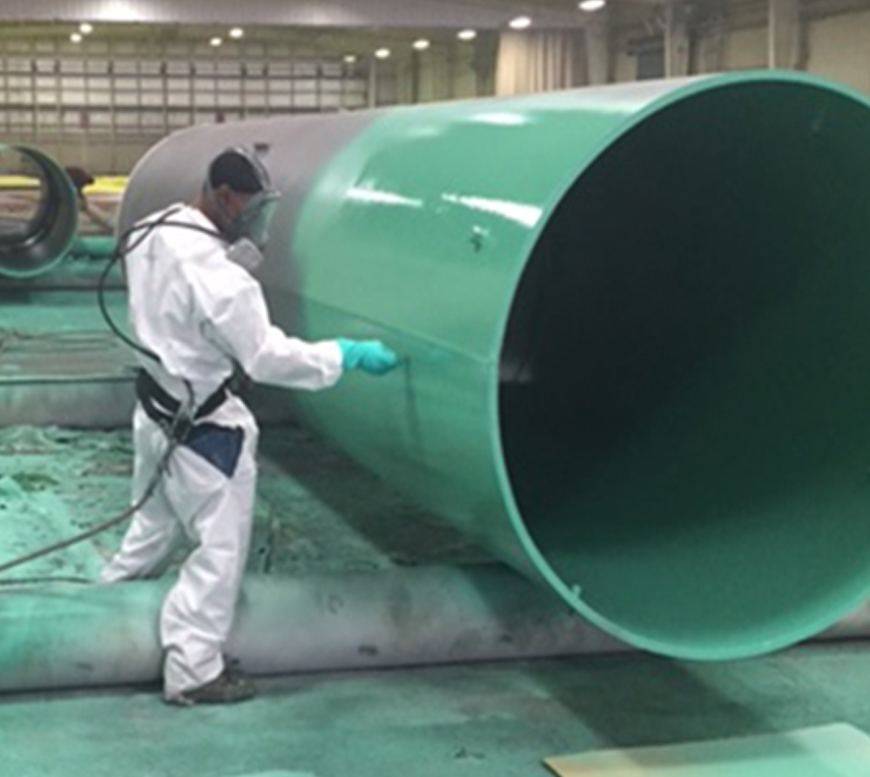
External Pipe Coating Service Options
Applied at our Vasai factory or at your project site, pan-India.
-
At our facility
Factory coating
- Vasai factory
- Pipe transport arranged
-
At your project site
Onsite coating
- Pan India
- Coated at your project site
-
For existing pipes
Re-coating
- Old, used or rusted pipe
- Stripped, blasted, recoated
Why the Outside Wall of a Buried Pipe Corrodes
Four conditions account for most of the damage done to the soil side of a steel pipe: moisture held against the wall, dissolved salts in the groundwater, stray direct current from nearby sources, and mechanical wear from the backfill.
-
Soil Moisture and Resistivity
Wet ground can conduct electrical current, which supports the corrosion process. Clay can retain water against the pipe wall for long periods, while sand and gravel generally drain more quickly. Low-resistivity soils allow corrosion current to flow more easily.
Corrosion can also change where the soil type changes along the pipeline. For example, a transition from clay to sand can create differences in oxygen availability along the pipe. This can cause one section to corrode more actively than another.
-
Chlorides, Sulphates and Dissolved Salts
Chlorides do two things to buried steel. They raise the conductivity of the soil water, and they encourage localised pitting rather than even wastage. Coastal alignments and saline aquifers carry the heaviest loads. Sulphates can contribute to another form of corrosion in waterlogged, oxygen-poor soil. Sulfate-reducing bacteria can produce conditions where iron sulfide forms on the steel surface instead of conventional rust.
-
Stray Direct Current
Direct current that was never meant for your pipeline finds it anyway. Traction systems, welding returns and impressed current protection on a neighbouring line all leak current into ground that conducts far worse than the pipe does. The pipe collects that current at one point and discharges it at another. Metal leaves where the current leaves, so the damage is deep local pitting rather than even loss, and it concentrates at the places the coating has already failed.
-
Backfill Abrasion and Soil Stress
Mechanical damage arrives before the corrosion does. Stringing, lowering-in and initial backfilling can expose the coating to stones and other mechanical damage. Thin coating films are generally more vulnerable to this type of damage than thicker protective jackets. After burial, seasonal movement in clay soils can place stress on the coating and gradually affect its adhesion to the pipe.
How External Coating and Cathodic Protection Work Together
External coating and cathodic protection work together as two parts of the same protection system. The coating provides the main barrier against corrosion, while cathodic protection provides additional protection at areas where the coating has defects. Their interaction also affects cathodic protection current requirements and coating performance requirements.
-
The Coating Carries the Load and Cathodic Protection Covers the Gaps
A film with no discontinuities would need no cathodic protection at all. Every field coating carries some small defects. Handling damage, application holidays, bare girth welds, and moisture ingress expose small steel patches to the soil. Cathodic protection effectively polarises these vulnerable areas, mitigating active corrosion mechanisms at the substrate. Cathodic protection current requirements generally increase as more steel becomes exposed. A coating that leaves only a small area exposed therefore requires less protective current than a coating with extensive defects. This can reduce the required cathodic protection capacity. Coating quality on a buried line is an operating cost.
-
Cathodic Disbondment at a Holiday
Cathodic protection current can change the chemical conditions around a coating defect. This can increase alkalinity around the exposed steel and contribute to the lifting of a poorly bonded coating at the edge of the defect.
If the coating begins to separate from the steel, the affected area can spread beyond the original defect. The quality of the bond between the coating and prepared steel is therefore an important consideration, along with the specified surface preparation and cleanliness.
-
Coatings That Shield Cathodic Protection Current
The worst failure mode is a coating that lifts away from the wall and then blocks protection current from reaching the steel underneath. Water can enter the gap and allow corrosion to continue underneath the coating. The cathodic protection system may still show acceptable readings at the pipe surface even though the current is not reaching the affected steel. Thick dielectric wraps are what this concern is written against, and transmission line specifications often restrict them for that reason. Bonded epoxy behaves the other way: where it fails, it tends to fail permeably, so current still reaches the defect. Settle the interaction between coating and cathodic protection design before the system is selected.
External Pipe Coating Specifications
The table fixes our acceptance criteria for OD coating work and sets the technical limits applying across every system detailed below.
| Parameter | Scope |
|---|---|
| Service | External anti-corrosion coating applied to steel pipe. |
| Coating families | Polyolefin jacket, epoxy powder and liquid epoxy, tape wrap, concrete weight coating |
| Pipe types accepted | Seamless, ERW, LSAW, spiral welded (HSAW) |
| Substrates accepted | Mild steel (MS black), LTCS, alloy steel |
| Line pipe | API 5L line pipe, Grade B through X120 |
| Components coated | Straight pipe, fittings, bends, flanges |
| Substrate condition | New, used or rusted pipe |
| Outside diameter range | 1 inch to 200 inches, subject to 18-metre length and 24-tonne per-piece limits (maximum diameter and maximum length cannot be combined; contact engineering to confirm exact wall thickness and piece weight). |
| Maximum pipe length | 18 metres |
| Maximum weight per pipe | 24 tonnes |
| Surface preparation | abrasive blast cleaning with steel grit or a shot-and-grit mix to ISO 8501-1 Sa 2½, producing the angular anchor profile specified for liquid and powder adhesion, verified by replica tape or profile gauge. |
| Concrete weight coating build | 30 mm and 60 mm, reinforced with two layers of galvanised wire mesh, 25 x 63 x 2.5 mm |
External Pipe Coating Standards
Coating thickness follows the requirements of the project document. Surface preparation is carried out to Sa 2½, and the finished coating is checked for thickness, holidays, adhesion and cure where applicable.
Coating system / International / India / Other markets
- 3LPE and 3LPP
- ISO 21809-1:2018IS 15659 (Part 1) : 2006 DIN 30670-1:2024 for PE, DIN 30678-1:2024 for PP, CSA Z245.21 for PE, JIS G 3477-1 for PE
- Single-layer FBE
- ISO 21809-2:2014IS 15659 (Part 2) : 2006 CSA Z245.20:22, AWWA C213-22 for water pipe, AMPP SP0394 (formerly NACE SP0394)
- Liquid epoxy
- ISO 21809-2 covers powder onlyIS 16676:2017 EN 10289:2002 for external liquid epoxy
- Coal tar tape
- No ISO part covers coal tar tape as a full-length pipe coatingIS 15337:2003, with IS 10221:2008 as the code of practice AWWA C203-25
- Cold applied polyolefin tape
- EN 12068:1998IS 18910:2024 DIN 30672-1/-2:2026-07, AWWA C209-25
- Machine applied polyolefin tape
- EN 12068:1998No Indian standard specific to machine application AWWA C214-24
- Heat shrink sleeves
- ISO 21809-3, EN 12068 (and DIN 30672)No Indian standard has been published AWWA C216-22, CSA Z245.30
- Concrete weight coating
- ISO 21809-5:2017, for 25 mm and aboveProject specification governs The contract specification governs
Standards vary by coating system and market. The table below maps the principal standards to the coating families covered above.
ISO 21809-1, ISO 21809-2, CSA Z245.20, CSA Z245.21 and the relevant DIN 30670 and DIN 30678 standards include requirements for plant- or factory-applied coating systems. These requirements are intended for controlled coating operations rather than unrestricted field application.
GOST R 51164-98 is different in scope. It provides general requirements for corrosion protection rather than serving as a specific product standard.
External Coating Systems We Apply
We apply four external coating families: polyolefin jackets (3LPE and 3LPP), epoxies (single-layer FBE, dual-layer FBE and liquid epoxy), tape wrap systems, and concrete weight coating. We also supply heat shrink sleeves for field-joint crews.
-
Polyolefin Jacket Systems
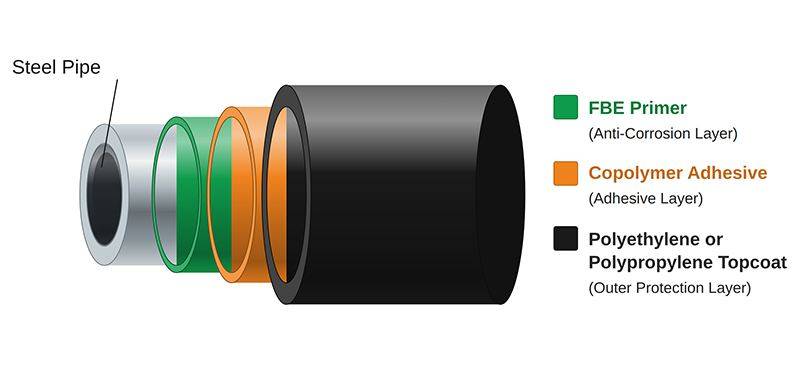
Three-layer polyolefin systems provide exceptional corrosion protection for buried transmission pipelines, combining an epoxy primer, a copolymer adhesive, and an outer extruded polymer jacket.
3LPE Coating
Medium- or high-density three-layer polyethylene systems offer robust mechanical protection and outstanding corrosion resistance for the vast majority of standard onshore pipeline applications.
3LPP Coating
Three-layer polypropylene systems handle higher operating temperatures than standard polyethylene, providing superior thermal resistance for demanding high-temperature pipelines at a higher material cost.
-
Epoxy Systems
Epoxy reaches the pipe wall through two distinct application routes: dry thermoset powder or liquid application, where the application method is more critical than the core chemistry.
External FBE Coating
Applied as a dry thermoset powder onto preheated, blast-cleaned steel, Fusion Bonded Epoxy melts and cross-links into a continuous, tough protective film for pipeline walls.
Glass Flake Epoxy
Aligned glass flakes lengthen the path water and aggressive ions must travel through the film, giving markedly lower permeability and high resistance to mechanical wear.
Amine-Cured Epoxy
Utilising amine curing agents to cross-link the resin, this liquid epoxy system cures into a highly durable film with robust chemical, solvent, and water resistance for demanding pipeline environments.
Phenolic Epoxy
Engineered by combining epoxy with phenolic resins, this specialised coating delivers maximum chemical resistance and withstands severe operating temperatures, making it ideal for aggressive internal and external service.
-
Tape Wrap Systems
Machine-applied tape wrapping is covered by AWWA C214 and cold-applied hand wrapping by AWWA C209, making the family adaptable to both straight pipe runs and irregular fittings.
Cold-Applied Tape
This system uses a polyethylene backing with a butyl rubber adhesive. It can be applied without heat and provides moisture and mechanical protection for wrapped pipe.
Coal Tar Tape
Combining a coal tar-impregnated carrier with a dedicated primer, this traditional wrapped system holds an extensive performance history protecting buried water mains throughout India.
Polyolefin Tape
Laid down with controlled tension and precise overlap, these machine- or hand-applied tapes utilise multi-layer polyolefin backings to meet rigorous project-specific pipeline coating standards.
-
Heat Shrink Sleeves
Mill coating stops short at pipe ends to permit field girth welding. Once welding and non-destructive testing are complete, a cross-linked polyolefin sleeve with a hot-melt adhesive inner face is heat-shrunk over the bare joint and overlap zone, restoring continuous corrosion protection.
-
Concrete Weight Coating
Concrete weight coating addresses buoyancy rather than corrosion. A pipe laid across a riverbed, through marshland or below the water table may require additional weight to remain stable. Reinforced concrete adds this weight over the anti-corrosion coating.
Choosing an External Coating
Five questions settle the selection, and an industrialist able to answer them can specify the system unaided. What temperature does the line run at? What will the backfill do to the coating? Does the pipe need weight as well as protection? What shape are the components, and is the steel new or already corroded?
3LPE
- Build
- Epoxy, adhesive, polyethene jacket
- Mechanical protection
- High
- Best fitted to
- Buried and submerged lines to around 80 °C
3LPP
- Build
- Epoxy, adhesive, polypropylene jacket
- Mechanical protection
- Highest
- Best fitted to
- Hot lines to around 110 °C
External FBE
- Build
- One thermoset epoxy film
- Mechanical protection
- Limited
- Best fitted to
- Controlled backfill, high fitting counts
Liquid epoxy
- Build
- Brush or airless spray applied film
- Mechanical protection
- Moderate
- Best fitted to
- Immersed and chemically aggressive service
Coal tar and cold applied tape
- Build
- Primer plus wrapped carrier
- Mechanical protection
- Moderate
- Best fitted to
- Buried water and utility mains, re-coating work
Concrete weight coating
- Build
- Reinforced concrete over the anti-corrosion coat
- Mechanical protection
- Very high
- Best fitted to
- Negative buoyancy on crossings and marine work
Features and Benefits of External Pipe Coating
Five reasons a project spends money on the outside wall long before the pipe reaches the trench.
-
Corrosion held off from day one
An intact external barrier separates the steel from soil moisture, chlorides and dissolved oxygen. This helps prevent the conditions required for corrosion.
-
A smaller current draw for the life of the line
Bare steel would put the whole surface onto the cathodic protection system. Coating leaves only the defects, so anode life and rectifier output stay manageable for decades.
-
Protection that survives the trench
Stringing, lowering in, and backfilling against stone are where thin films get cut. Systems carrying a mechanical outer layer reach the ground with less to repair and less holiday testing to redo.
-
A system chosen against the ground it sits on
Rocky backfill, a high water table, a river crossing and a hot line all pull towards different builds, and the external range covers each of those cases rather than forcing one answer.
-
Decades of service without access for maintenance
Once a buried line is commissioned, nobody reaches the outside wall again, so the coating has to work untouched. That is the constraint every external system is designed around.
The External Coating Process
Every system here runs the same three stages: the steel is cleaned, the coating goes on by whichever route that system uses, and the finished build is measured and released. Only the middle stage differs between families.
-
Blast Cleaning to Sa 2½
Surface preparation relies on Sa 2½ to ISO 8501-1 (defined as very thorough blast cleaning, broadly equivalent to near-white metal under SSPC-SP 10 / AMPP NACE No. 2). Scale, rust and old coating leave the wall; what remains is a profile the primer grips. Profile alone isn't the whole test, because soluble salt left behind pulls moisture through a finished film for years afterwards.
-
Application Routes by System
Application methods match the coating family and item geometry:
3LPE / 3LPP: Side-wrap or cross-head extrusion over an electrostatic epoxy primer.
FBE (Single/Dual): Electrostatic powder spray onto preheated pipe.
Liquid Epoxies: Airless spray or plural-component application.
Tape Wraps: Machine-applied on straight pipe runs or hand-wrapped over primed steel for fittings.
Concrete Weight Coating: Applied via high-velocity impinging or wrap-compression methods over cured corrosion coatings.
-
Records and Release
Thickness readings, holiday results, adhesion figures and cure checks are recorded in the test certificates and coating reports supplied with the job.
Send Us Your External Pipe Coating Schedule for a Coating Quote
ISO 9001 certified coating operations, running from Mumbai since 2012 with pan-India execution. Factory photos, video of live application and a sample test certificate are available on request.
Testing and Inspection
Four checks close out an external coating package: dry film thickness, 100% high-voltage holiday detection, adhesion and cure state. Cathodic disbondment, peel and impact tests form part of system qualification under ISO 21809-1/2.
-
Dry film thickness
Gauge readings are set against the figure your specification names. Evenness across the piece counts as much as the average value.
-
Holiday detection
Sparking the film exposes pinholes and breaks, since an undiscovered discontinuity is where stray current and protection current demand concentrate later.
-
Adhesion
Peel and pull-off figures show how tightly the system grips blasted steel and how well layers hold to each other.
-
Cure state
Cross-linking in epoxy systems is verified as complete before a piece moves, since an unfinished cure leaves the film short of its specified properties.
Third-party inspection agencies can be accommodated where your contract calls for an inspector or witnessed testing.
Industrial Applications of External Pipe Coating
External corrosion protection coating goes onto buried, submerged and above-ground steel lines carrying hydrocarbons, water and industrial fluids, along with the fittings installed with them. Four of the sectors we serve are set out below.

Oil and Gas Transmission
Crude and gas trunk lines run long buried routes across the country and depend on external line pipe coating. Design intent reaches forty years with no realistic way of getting at the pipe again.

Water Transmission and Sewage Networks
Utility and irrigation schemes lay big-bore steel mains across ground whose character shifts every few kilometres, and a sewage rising main meets hostile soil outside while carrying a hostile product inside. Indian references for tape-wrapped buried water mains include IS 10221 and IS 15337.
City Gas Distribution
City gas networks run at smaller diameters through congested urban ground, crossing live services and, in several Indian cities, the influence zone of DC traction systems. Stray current interference is a live design case here rather than a theoretical one.

Process Plant, Fire Water and Marine Piping
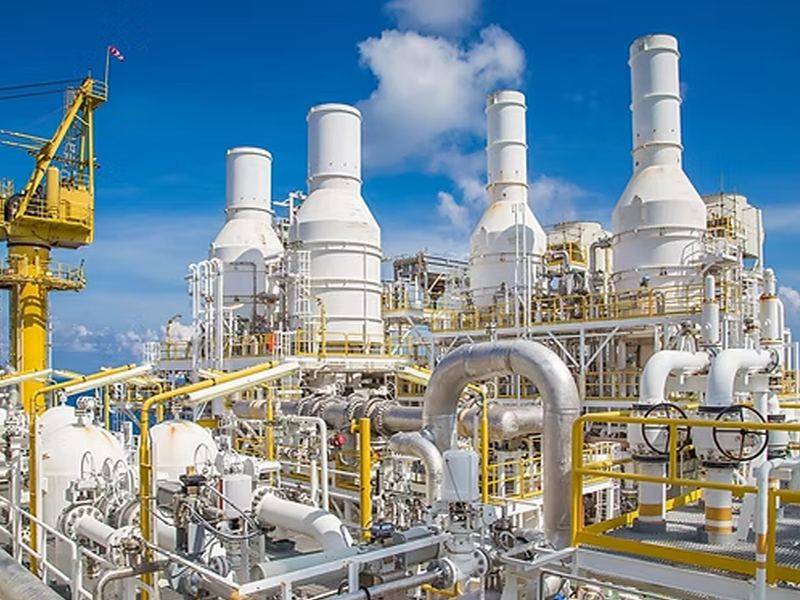
Buried services, cooling headers and fire mains inside a plant boundary face soil no kinder than open country, and they carry many more shaped components per metre of run. Marine approaches and river crossings stay in permanent water contact, where a heavier build is normal.
External Pipe Coating Cost
We charge per square metre of coated surface. The floor is 200 square metres on any order. There is no single external pipe coating rate, because the same square metre can price differently once the coating system and the component are known. Five variables move a quotation:
- The system chosen, given that an extruded jacket, a single epoxy film and a wrapped tape are unrelated material and labour propositions
- Outside diameter, and how much coated area the scope adds up to
- Specified thickness, with the standard your document calls for
- Condition of the steel, because stripping a corroded length is work that new material does not need
- Component mix, since flange faces and bend extrados soak up handling time, plain barrel never does
Quote us the entire schedule instead of one representative line.
Why Choose Radisson Impex for External Pipe Coating
Three points are worth weighing before external work is placed anywhere.
- All four coating families run under one roof, so a project mixing jacketed line pipe with wrapped fittings avoids two contractors and two sets of paperwork.
- A bend, a fitting or a flange receives the build your specification names.
- Coating thickness is read off your project document, every job is blasted to Sa 2½, and testing covers thickness, holidays, adhesion and cure.
External Pipe Coating: Frequently Asked Questions
Why does a buried pipeline need coating if it already has cathodic protection?
External pipe coating is the primary defence, covering almost all of the steel surface, so cathodic protection only needs to protect the small areas left exposed at holidays, girth welds and handling damage.
Which steel pipe coating types do you apply externally?
We apply four external coating families: polyolefin jackets (3LPE and 3LPP), epoxy systems (single-layer FBE, dual-layer FBE with an abrasion-resistant overcoat, and liquid epoxies), tape wrap systems, and concrete weight coating.
What determines which External Coating is applied to a pipe?
Coating selection depends on maximum continuous operating temperatures, geotechnical backfill severity, installation methods like horizontal directional drilling, pipe geometry, and governing client specifications. Operating temperature eliminates unsuitable polymers immediately, while soil shear and rock content determine the degree of mechanical impact and gouge resistance required over the base anti-corrosion layer.
What is the difference between 3LPP and 3LPE Coating?
The main difference lies in the outer polymer jacket and its matching copolymer adhesive layer. 3LPP uses a polypropylene jacket rated to about 110 °C, against about 80 °C for 3LPE, and it is harder and more gouge resistant. Higher temperatures need a specially qualified system.
Which External Pipe Coating standards do you work to?
We work to the standard your tender names. The main ones are listed in the standards table above, including ISO 21809-1 for 3LPE and 3LPP, ISO 21809-2 for single-layer FBE, ISO 21809-5 for concrete weight coating, AWWA C213, NACE SP0394-2023, and the Indian standards IS 15659, IS 15337, IS 10221 and IS 18910.
Do you coat fittings, bends and flanges as well as straight pipe?
Yes. Induction bends, tees, elbows, reducers and flanges are manually blast cleaned and coated in a system compatible with the line pipe coating, most often liquid epoxy or cold-applied tape, to the thickness your specification sets.
Contact Our Coating Team About Your Project. Give us the schedule and the specification, and we'll come back with a coating proposal.